

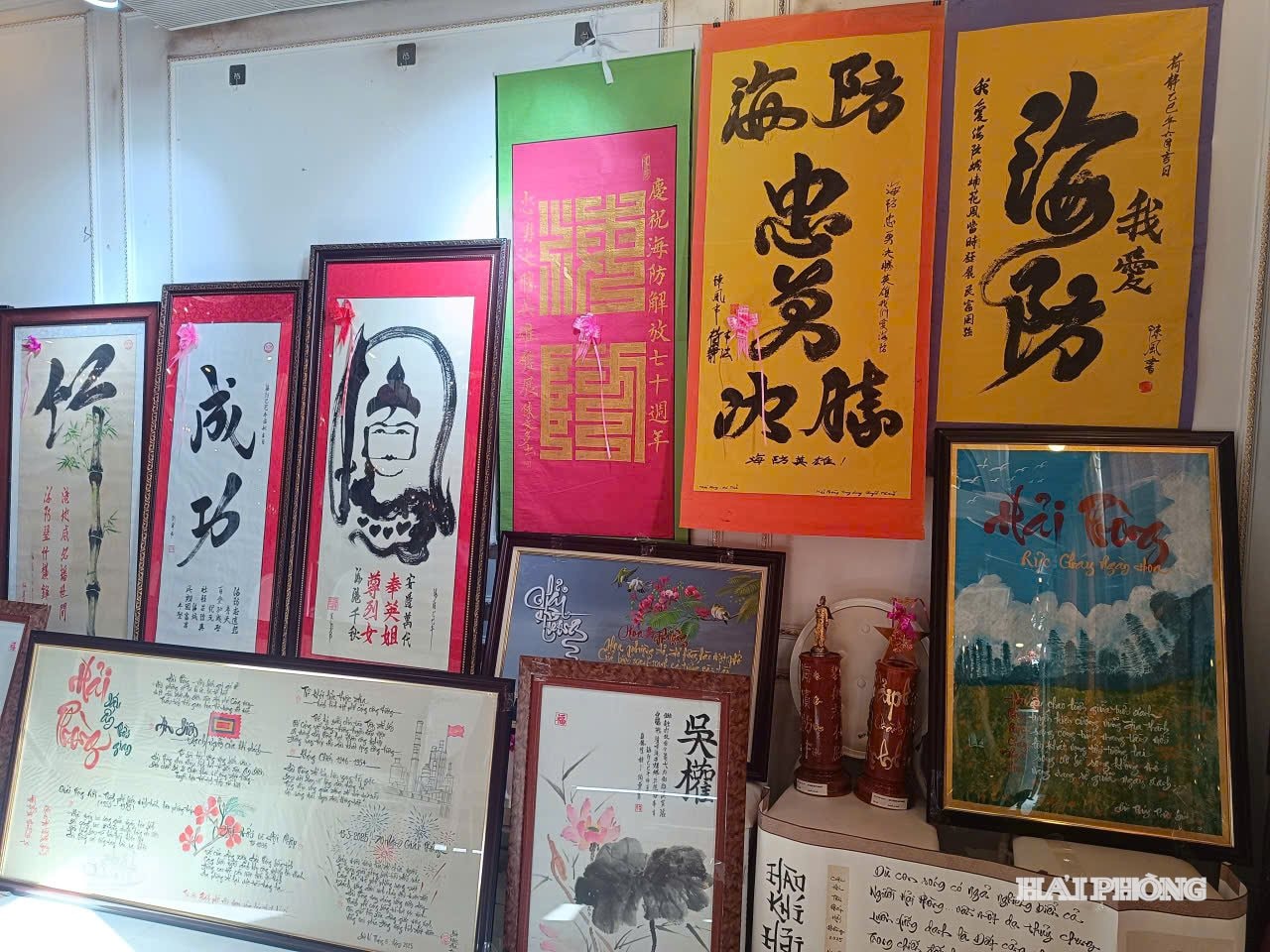
Handwriting reflects the soul of the person.
According to Mr. Dinh Xuan Binh, Deputy Chairman of the Hai Dong Han Nom - Calligraphy Club, calligraphy offers many benefits, both aesthetically and spiritually. "When focusing on practicing calligraphy, the writer must calm their mind. Whether the writing has soul or not depends on that. Even the pictographic characters themselves are beautiful; through skillful brushwork, they further reveal the spirit and emotions of the person holding the brush," Mr. Binh shared.
Calligraphy emphasizes the principles of brushwork, comprising three basic steps: the beginning of the stroke, the movement of the stroke, and the closing of the stroke. From these three movements, the writer creates strokes that are sometimes bold, sometimes thin, sometimes strong, sometimes light. Many artists believe they can "read" the author's mood through each character. This diverse variation is what makes calligraphy an art, not simply a skill of beautiful writing.
In the past, calligraphy was often associated with older people who had knowledge of classical Chinese and Vietnamese script. But now, more and more young people are turning to this art form. They see calligraphy as a way to improve concentration, reduce stress, and even as a creative hobby. In some schools and clubs, calligraphy writing is maintained as an extracurricular activity, helping students develop patience and appreciate the value of written characters.
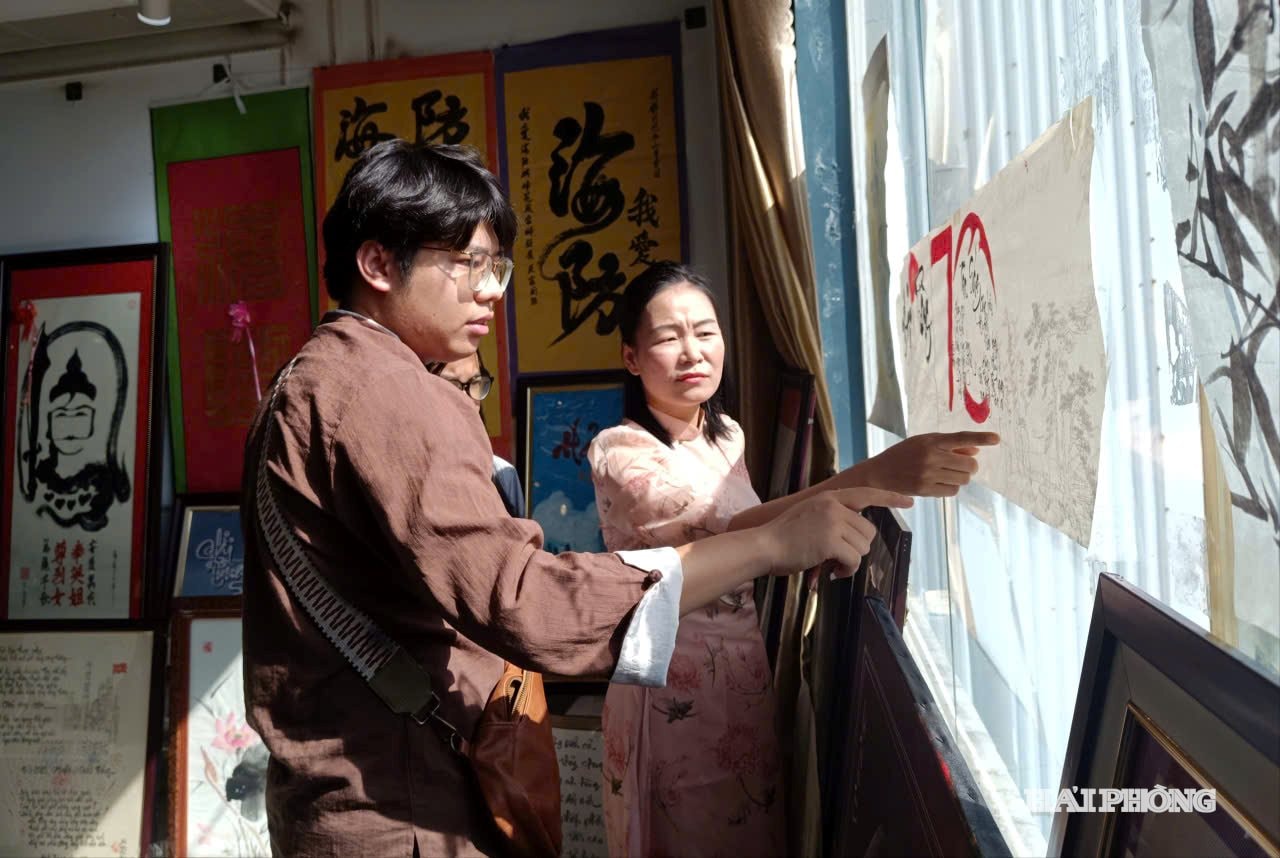
In traditional culture, calligraphy is present in many spaces and customs. The custom of writing the first words of the new year, requesting and giving calligraphy, and hanging red couplets with the characters "Happiness," "Prosperity," "Longevity," "Heart," "Virtue," etc., has become a familiar beauty during Tet (Lunar New Year). In spiritual spaces such as temples, pagodas, shrines, and ancestral halls, calligraphic plaques and couplets create a solemn atmosphere while conveying moral messages and promoting learning.
Mr. Nguyen An Hung, Chairman of the City's Handicraft Village Association, commented: "Couplets are the distillation of the wisdom, culture, and morality of the Vietnamese people. Placed in sacred spaces, couplets serve both as reminders and educational tools. Calligraphy is the art that makes the words more vibrant and valuable." According to Mr. Hung, couplets and calligraphy are always closely intertwined: the words contain the thoughts, while calligraphy makes the form more attractive and harmonious.
New applications, new vitality.
Vietnamese calligraphy originally developed on the foundation of Chinese characters and Nom script. When the Quốc ngữ script became the main writing system, many artists continued to innovate, incorporating the Latin alphabet into the art of calligraphy. This is considered a significant turning point, bringing calligraphy closer to the general public, especially young people.
.jpg)
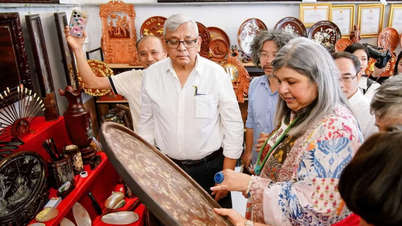
Vietnamese calligraphy today is not limited to hanging paintings in homes but also appears on many handicrafts and goods, especially during the Lunar New Year. Ms. Nguyen Thi Thanh Tam, owner of a flower and wedding service shop on Dao Nhuan Street (Le Chan Ward), shared: "Every Tet holiday, coconuts inlaid with calligraphy and watermelons carved with calligraphy sell very well. Buyers like them because they are both beautiful and meaningful for ancestor worship."
These products demonstrate that calligraphy can adapt flexibly to market demands while still preserving traditional spiritual values.
Beyond handicrafts, calligraphy is also applied in graphic design, fashion , architecture, and advertising. Many designers utilize calligraphic strokes on traditional Vietnamese dresses (áo dài), packaging, or logos, transforming them into unique focal points. As a result, calligraphy is not only a cultural heritage but also a source of creative inspiration in modern industries.
Besides its commercial applications, calligraphy still plays an important role in spiritual life. Recently, the Hai Phong Center for Calligraphy, Couplets and Han-Nom Studies organized the Hai Phong City Calligraphy Competition. The event attracted many artisans, with the theme "Hai Phong City: Courageous and Victorious".
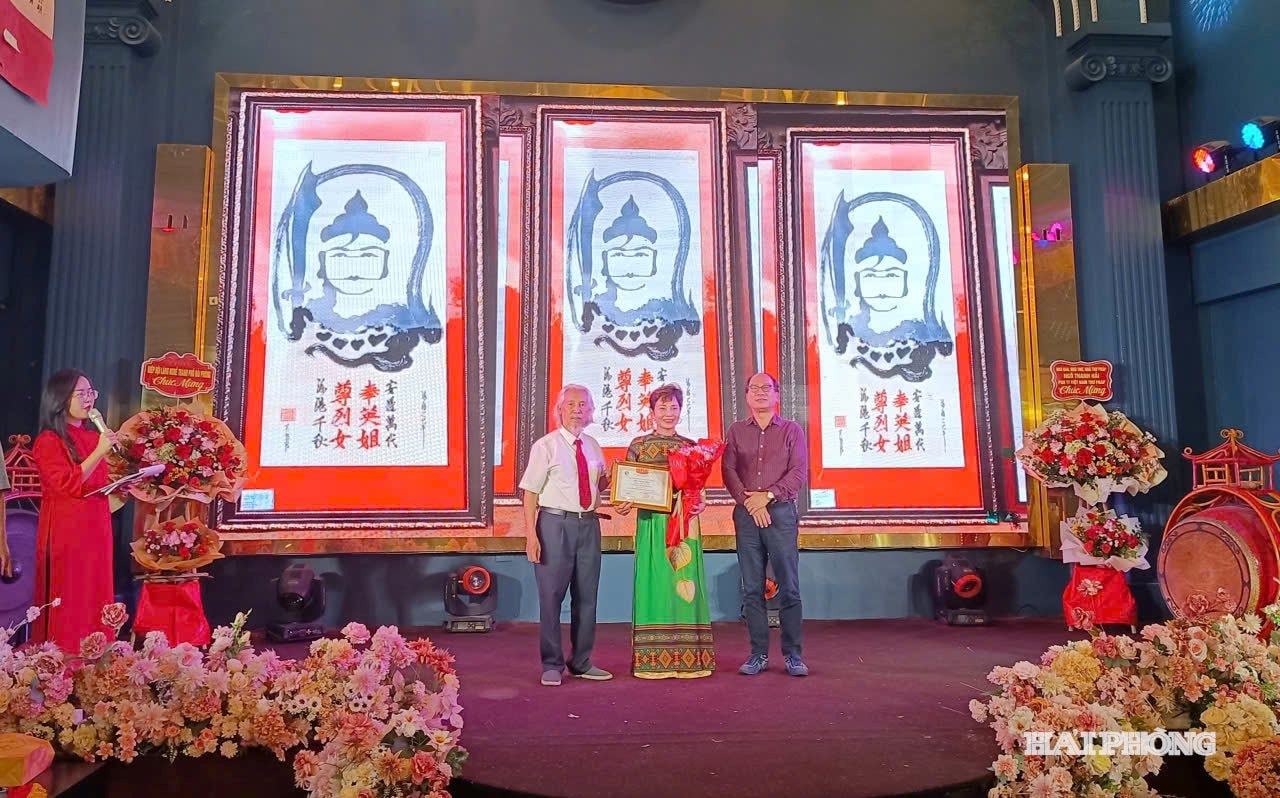
In the competition, author Ngo Thu An won first prize with her work "Phoenix" in Chinese characters using "Human Face Calligraphy," capturing the image of General An Bien - a historical symbol of Hai Phong. Second prize went to author Luu Van Thuan with his work "Changing Chinese Characters."
The submitted works all adhere to the beauty of traditional calligraphy, while also expressing love for their homeland, national pride, and aspirations for innovation.
According to the organizers, the competition is not only an opportunity for artistic exchange but also contributes to bringing calligraphy closer to the public, especially the younger generation. Through this, calligraphy is seen not as "an outdated art form," but as an art that retains its value in modern life.
In reality, calligraphy both preserves the essence of tradition and adapts to modern needs. It not only beautifies living spaces and honors the written word, but also cultivates patience, fosters creativity, and promotes a virtuous spirit. The soulful strokes of the calligraphy affirm that, despite the changing times, calligraphy retains its enduring place in the hearts of the Vietnamese people.
HA LINHSource: https://baohaiphong.vn/giu-hon-xua-lan-toa-gia-tri-moi-qua-nghe-thuat-thu-phap-522103.html
![[Photo] General Secretary and President To Lam presides over a meeting on preparations for the review of one year of operation of the three-tiered government system.](https://vphoto.vietnam.vn/thumb/1200x675/vietnam/resource/IMAGE/2026/06/02/1780391821195_a1-bnd-4595-9717-jpg.webp)




























































Comment (0)