

Encouraging the community to preserve heritage.
Kon Jôt, Kon Nak, and Kon Pơdram are three particularly disadvantaged villages in Hà Đông commune, Đak Đoa district. 95% of the population here are Bahnar people with distinctive cultural values. A project to train these three villages in traditional Bahnar crafts such as weaving and crossbow making, launched in late December 2024, not only aims to pass on traditional skills to the community but also opens up new avenues for livelihood development and tourism .
The project is part of the “Small Grants for Conservation and Sustainable Management of ASEAN Heritage Parks (AHP)” program, led by the General Department of Environment, with the participation of ASEAN National Parks: Ba Be, Hoang Lien, Chu Mom Ray, and Kon Ka Kinh. The Women's Union of Ha Dong commune is the project's lead agency, and Kon Ka Kinh National Park is the supervisory body.
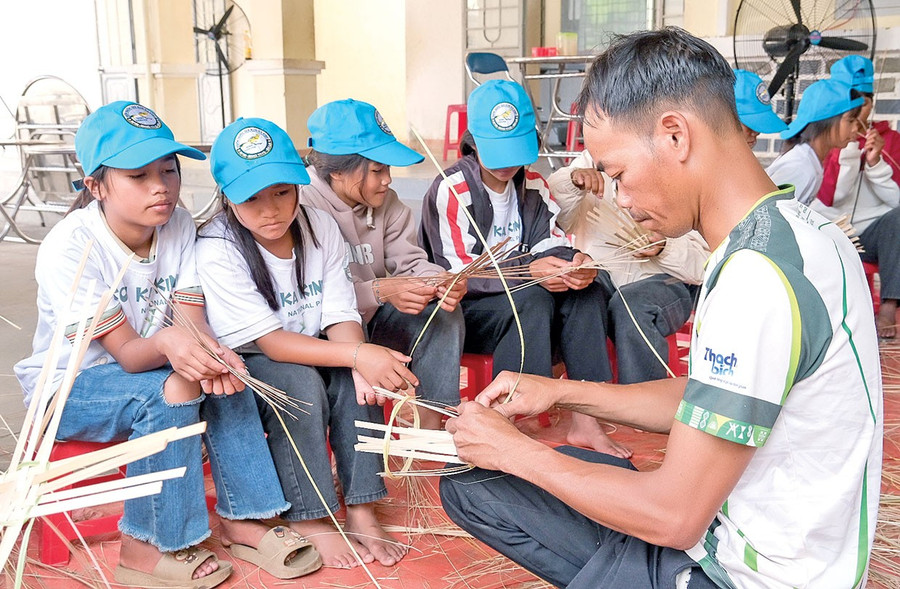
Through the implementation of the project, the Bahnar people in the villages, who previously only used weaving for daily life, have begun to access advanced techniques, creating beautiful and diverse products aimed at the tourism market.
According to Ms. Doat, President of the Women's Union of Ha Dong commune: By participating in the project, people not only learn vocational skills but also how to organize vocational groups, manage and operate them, and especially develop creative thinking and product innovation to suit new consumer trends.
In addition, students from grades 6 to 9 of Tran Kien Ethnic Boarding Junior High School (Ha Dong commune) also participate in vocational training as part of extracurricular activities. Each training session lasts 4 days, directly instructed by artisans from the Ngom Thung weaving village (Ia Pet commune).
Artisan Hyoi said: “We teach them how to sharpen the bamboo strips, weave baskets, create patterns, make the bottom and mouth of the basket… Many people have now created complete, beautiful, and technically correct products. From this basic technique, those who know the craft can create many other woven products.”
In particular, the project's activities also focus on helping people understand how to sustainably exploit and process natural resources—an essential element for creating livelihoods while conserving forest resources.
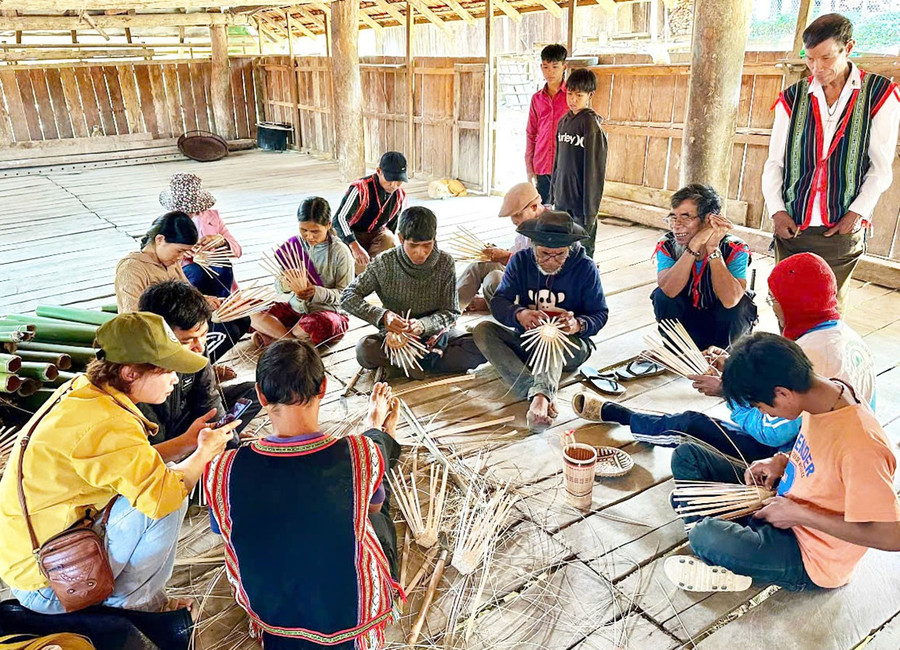
Developing tourism-oriented craft villages.
The formation of craft groups and teams in the villages of Kon Jôt, Kon Nak, and Kon Pơdram is not only a step towards restoring and preserving traditional crafts but also aims to build eco-tourism craft villages associated with Kon Ka Kinh National Park.
Ms. Vu Thi Chinh, representative of the Kon Ka Kinh National Park Management Board, the project's supervisory unit, affirmed: "When experiential tourism services are developed in the buffer zone villages, they will connect and serve tourists from the National Park center to the Bahnar villages, where they can participate in handicraft experiences and immerse themselves in the unique cultural space."
To prepare for this eco-cultural-traditional village tour, the National Park also surveyed and assessed the attractiveness and experiences to develop tourism products.
According to Ms. Chinh, from the center of the National Park, tourists will trek through the forest to reach the peaceful Bahnar villages nestled amidst the mountains of Kon Ka Kinh. Adding guided activities such as experiencing traditional crafts would increase the attractiveness of this tour.
To promote wider dissemination, the project organized visits for local people to the Ngơm Thung weaving village model – home to many highly skilled artisans and an effective group-based craft organization. People in the buffer zone villages had the opportunity to learn from the experience, techniques, and methods of organizing production and product consumption.
According to the Chairwoman of the Women's Union of Ha Dong commune, this is the first time households in the commune have been exposed to methods of producing products for tourism. "Previously, people worked according to customs and habits, without paying attention to appearance. Now they know how to make durable products, focusing on both usability and aesthetic value. Some products such as baskets, trays, and handbags have been sent to us for introduction and promotion," Ms. Doat said.
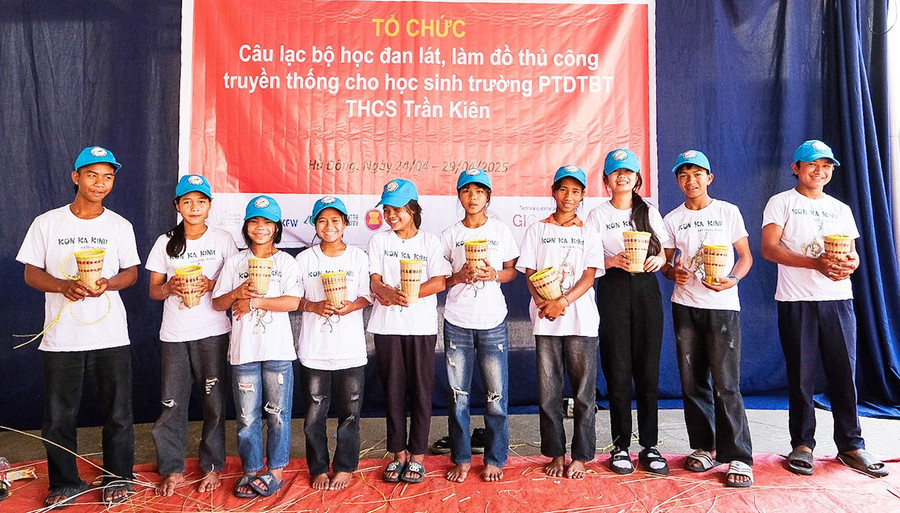
However, the biggest challenge remains finding a market for the products. Although the craft has been taught through training, those involved need stability and access to a favorable market. Therefore, the project has implemented marketing channels such as creating Zalo sales accounts, Facebook, and TikTok Shop; linking with tourist destinations; and registering to participate in cultural fairs to introduce the products.
"We expect that products from the village will quickly reach tourists. When there are experiential tours from the National Park to the village, tourists can participate in weaving, listen to stories about the culture, and choose products to buy as souvenirs," said Ms. Chinh.
Products such as woven baskets, trays, models of communal houses, and crossbows are not only household items but also embody the distinctive cultural values of the Bahnar people. Each product tells a story of the enduring connection between people and the natural environment across generations.
Therefore, despite being in its early stages, the project has created positive changes: the first craft groups have been established, and people have learned how to organize production and create a wide variety of products.
When traditional culture contributes to improving livelihoods, especially through experiential tourism, material and spiritual values will resonate, creating a solid foundation for the development of community tourism in the buffer zone villages of Kon Ka Kinh National Park.
Source: https://baogialai.com.vn/giu-nghe-de-tao-dung-lang-du-lich-post322354.html
![[Photo] Prime Minister Pham Minh Chinh attends the Conference on the Implementation of Tasks for 2026 of the Industry and Trade Sector](/_next/image?url=https%3A%2F%2Fvphoto.vietnam.vn%2Fthumb%2F1200x675%2Fvietnam%2Fresource%2FIMAGE%2F2025%2F12%2F19%2F1766159500458_ndo_br_shared31-jpg.webp&w=3840&q=75)










































































Comment (0)