Village regulations and customs play an important role as self-governing institutions in the lives of ethnic minority communities. Effectively promoting the role of these regulations contributes to regulating social relations within the community, strengthening community cohesion, and changing the mindset and practices of ethnic minority people, especially in preserving and protecting forests.

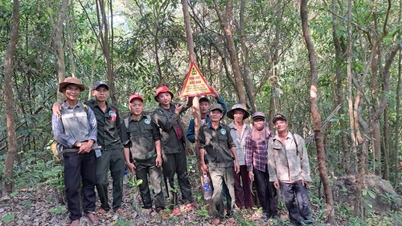
For generations, preserving the primeval forest has been a cultural identity of the Hmong people in Na Hau commune, Van Yen district, Yen Bai province. The Hmong in Na Hau protect the forest through sacred and mystical customs, such as the ritual of worshipping the Forest God in the early days of spring.
The Na Hau forest serves as a shared home for 502 Mong households with over 2,500 inhabitants. The people view the forest as their source of land and water; land and water are the roots of life. To survive and thrive, the descendants of the Mong people must respect the origins of life, which means preserving and respecting the forest.
Therefore, every hamlet in Na Hau commune has its own Forbidden Forest with "inviolable" regulations, located in the most beautiful spot of the hamlet, where the spiritual energy of heaven and earth converges for worshipping the Forest God. The custom of worshipping the Forest God in the early spring to pray for favorable weather, lush vegetation, abundant harvests, healthy children, and a prosperous and peaceful life, combined with regulations on forest protection, has become a unique community cultural festival in Na Hau.
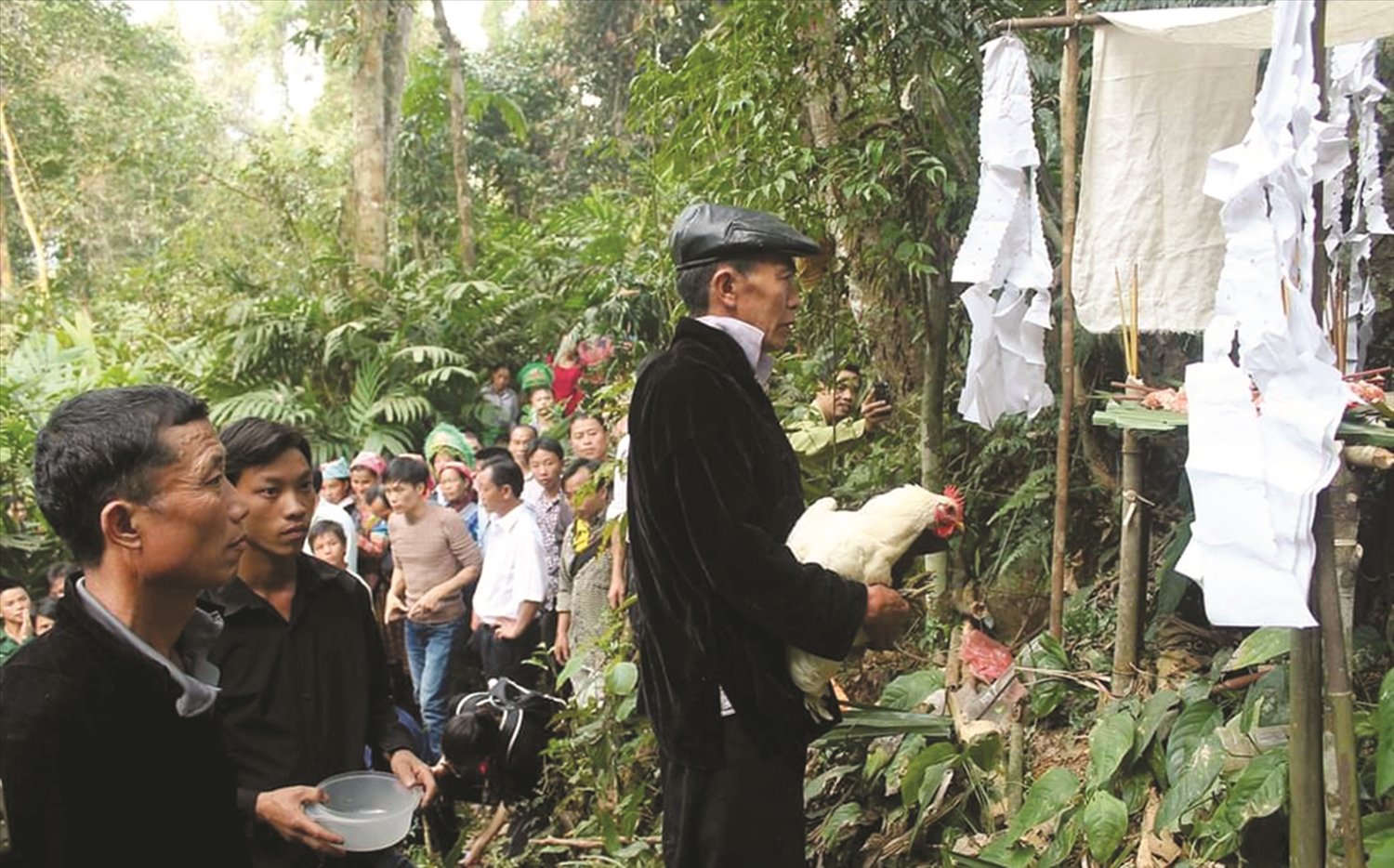



Following the Forest Worship Ceremony, according to the customs of the Mong ethnic people in Na Hau commune, they observe a three-day Tet holiday to thank the Forest God. During these three days, everyone must strictly adhere to the taboos stipulated by custom: no entering the forest to cut down trees, no bringing green leaves from the forest home, no digging up roots or picking bamboo shoots, etc. Thanks to this, the forests remain lush and green, and the Na Hau Nature Reserve, covering over 16,000 hectares, including 4,700 hectares of pristine special-use forest in Na Hau commune, is protected.
Similarly, in Ong Tu village, Trong Hoa commune, Minh Hoa district, Quang Binh province, home to the Chut and Bru Van Kieu ethnic groups, the village elders, heads, Party branch secretaries, and villagers have been working together since 1994 to develop a village charter for forest conservation. The charter stipulates that after burning beehives in the forest, the fire must be completely extinguished; when collecting firewood, people must not cut down living trees or harvest branches and twigs, but only use dry wood; and people are not allowed to burn forests for slash-and-burn agriculture or clear undergrowth near the forest.
Mr. Ho Thay from Ong Tu village said that forest protection and fire prevention efforts have been inherited from the past, as stipulated in the village's forest conservation regulations. The people of Ong Tu village are well aware of the crucial role and importance of forests in their lives; protecting the forest means protecting their livelihoods. Therefore, they do not arbitrarily cut down or burn forests for slash-and-burn agriculture, nor do they destroy the forest. As a result, hundreds of hectares of pristine forest have been protected and are thriving, with no forest fires occurring in the areas protected by the villagers of Ong Tu.
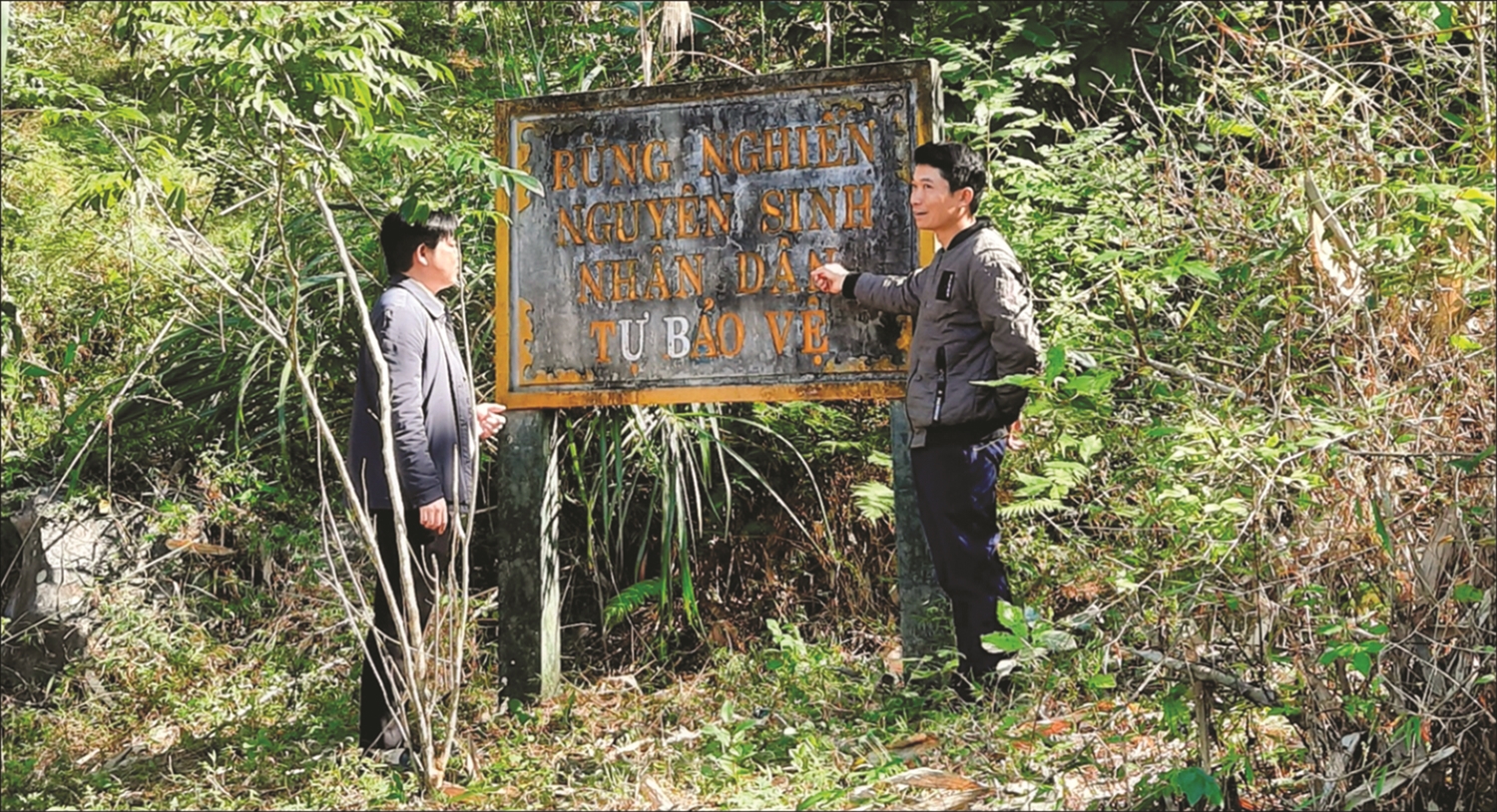
The village regulations of the Tay people in Dong Dang village, Bac Son district, Lang Son province also stipulate: All people are responsible for protecting the forest, not cutting down or burning the forest, not exploiting it illegally; not trapping, hunting, or catching animals in the forest; each household must proactively take measures to prevent and control forest fires during the dry season; and not clearing forests for slash-and-burn farming...
The village regulations also clearly state that the first violation will result in an administrative fine and a public warning in front of the entire village; the second violation will be brought before the community and the organizations and associations of the violator, and disciplinary action will be taken; the third violation will result in expulsion from the "village faction and benevolent association," and the household will be stripped of all rights and privileges within the village...



It is evident that village regulations and customs play an extremely important role in the lives of ethnic minority communities. The value of these regulations and customs is clearly demonstrated in their contribution to regulating and resolving specific relationships within villages, hamlets, and residential areas that are not yet regulated by law. Implementing these regulations and customs helps people become more aware of protecting forests and natural resources, preventing environmental pollution, promoting hygienic living habits, eliminating outdated customs, forming social norms consistent with ethnic traditions and identity, fostering democracy at the grassroots level, and contributing to building a civilized way of life within the community.
Van Hoa (Ethnic Groups and Development Newspaper)
Source: https://baophutho.vn/giu-rung-bang-huong-uoc-222466.htm
![[Photo] "Hanoi Lotus Festival" honors the lotus flower that has been associated with Vietnam for thousands of years.](https://vphoto.vietnam.vn/thumb/1200x675/vietnam/resource/IMAGE/2026/06/27/1782516943048_sen-ha-noi-2026-minh-duy-1-jpg.webp)