After about 20 years of expanding into online media, Vietnamese journalism is now facing both challenges and opportunities that necessitate change as the wave of artificial intelligence explodes.
Digital transformation turning point
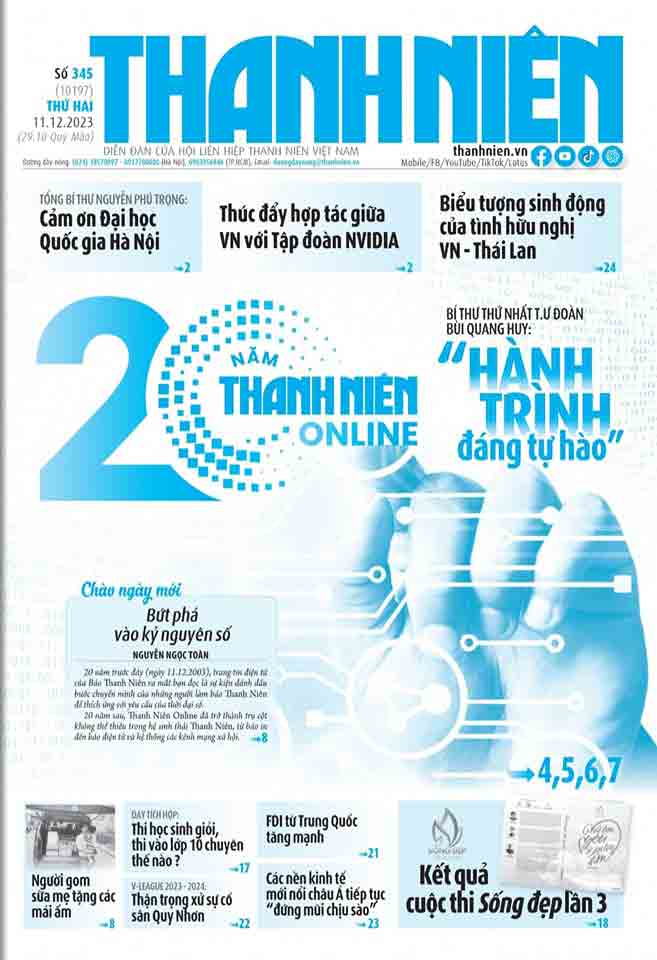
In the first half of the 2000s, Vietnamese media outlets expanded into online formats to keep pace with the times. Traditional print newspapers gradually developed electronic versions to meet the needs of readers as internet access became more widespread.
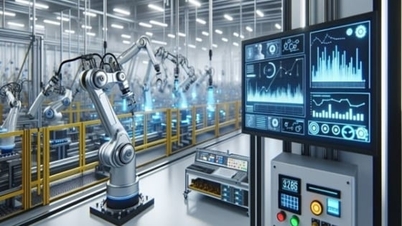
Following the convergence of newsrooms, media organizations are looking to apply AI advancements. (Illustration: Created by AI)
Alongside its expansion on the internet, Vietnamese journalism has continuously refined its multimedia communication model and accelerated digital transformation by diversifying its product formats such as podcasts, videos , megastories, infographics, long-form articles, and data journalism. Notably, Thanh Nien Newspaper's YouTube channel has nearly 6 million subscribers. Simultaneously, Vietnamese journalism has expanded its social media channels to enhance interaction with readers. Most media outlets in Vietnam now have social media accounts, and many have fan pages with extremely large followings; for example, Thanh Nien Newspaper's Facebook fan page has over 2.2 million followers. Thus, social media has become a highly effective communication channel for media organizations. Beyond diversifying formats and products, journalism must also undergo a strong digital transformation in its organizational operations, particularly in converging newsrooms to maximize resources across all media channels: print, online, and social media. Many newsrooms have adopted digital technology to change their operational methods, including managing publishing processes, data, and public interaction. In particular, content management and operation systems are continuously upgraded, gradually integrating new technological advancements to allow reporters and editors to handle multiple multimedia content simultaneously. However, another reality is that many entities, including businesses and not just news organizations, focus too much on multimedia products and content without a systematic organization based on a compatible digital platform.
Challenges from Artificial Intelligence
The digital transformation process is constantly evolving. In less than two years, artificial intelligence (AI) has experienced explosive growth globally. Unlike the internet in the past, AI has quickly become present in Vietnam with remarkable advancements, especially generative AI: creating content, images, videos, etc.
An AI-generated product can hardly become a journalistic product in itself without the standardization efforts of professional journalists.
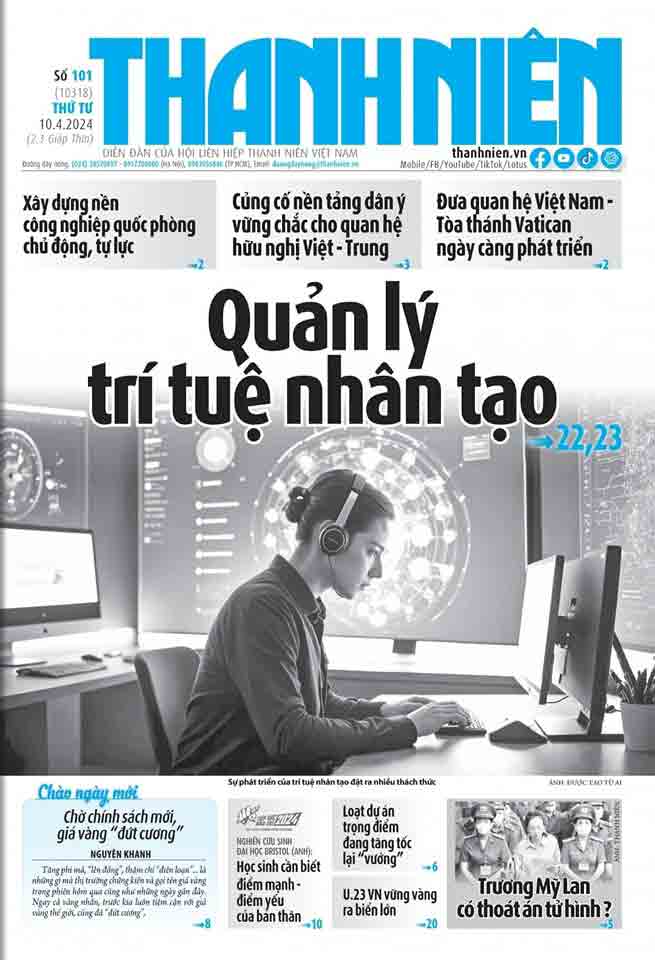
Advances in AI generation can rely on collected information and data to create content ranging from stories and scripts to articles. Some media outlets have even experimented with writing articles and creating illustrations using AI. Thanh Nien newspaper has also experimented with this for illustrations and published articles created by AI. These advancements have led many to question: Can AI replace human journalists? However, practical testing will easily answer that AI cannot, or has not yet been able to, replace humans in journalism! AI-generated products are still very limited. Why is that? First, regarding authenticity, a journalistic product must always carefully verify and assess the authenticity of every detail of the data and information. Furthermore, journalistic products must always adhere to professional principles and legal regulations, such as fully recording information from all relevant parties based on a network of interconnected information sources. Meanwhile, many leading technology experts worldwide have repeatedly expressed concerns about the authenticity of AI-generated content. From the very source of the content, data, and input information, the process of verification is often incomplete. Therefore, an AI-generated product can hardly become a journalistic product without the standardization of professional journalists. The author himself has spent considerable time experimenting with this. Even the most intelligent AI still relies on "machine learning" and "deep learning" taught by humans. Similarly, images and videos from AI-generated content can only be used for illustration to a limited extent. For news-related images and videos reflecting reality, accuracy is paramount, so AI-generated content is practically worthless in such cases. Conversely, despite numerous inaccuracies, the explosion of AI-generated products is forcing journalism to confront a larger and faster flow of information, including a great deal of fake news. This, in turn, is prompting news organizations to strengthen their control over information and data.
However, while AI cannot yet replace human journalists, it still holds significant potential to support them. This includes assisting in data and information synthesis, and suggesting solutions to inspire creativity. This presents an opportunity for media organizations to enhance their work efficiency. However, this opportunity requires thorough preparation in both technological infrastructure and human resources. Regarding technological infrastructure, it requires not only powerful and efficient equipment and tools but also information security. As for human resources, it requires not only a team knowledgeable in technology to develop AI applications but also the knowledge to effectively utilize these applications. For example, even though AI is intelligent, to create an image or perform a task to support information synthesis, users need the knowledge to provide appropriate commands to the application. From the very beginning of basic AI generation applications , users who want to utilize them effectively must have knowledge of "prompt engineering" so that the AI can understand the user's desires. Simply put, they must learn how to "command" the AI to do the work. All of this requires a comprehensive improvement in technology, organization, and resources suitable for the AI era in order to optimize the effectiveness of this wave.
Thanh Nien newspaper has applied AI to test some cover images and illustrations.




























































































Comment (0)