

Deputy Chairman of the Committee on Law and Justice, TRAN HONG NGUYEN:
Review and improve the legal framework for credit in digital agriculture and green agriculture.
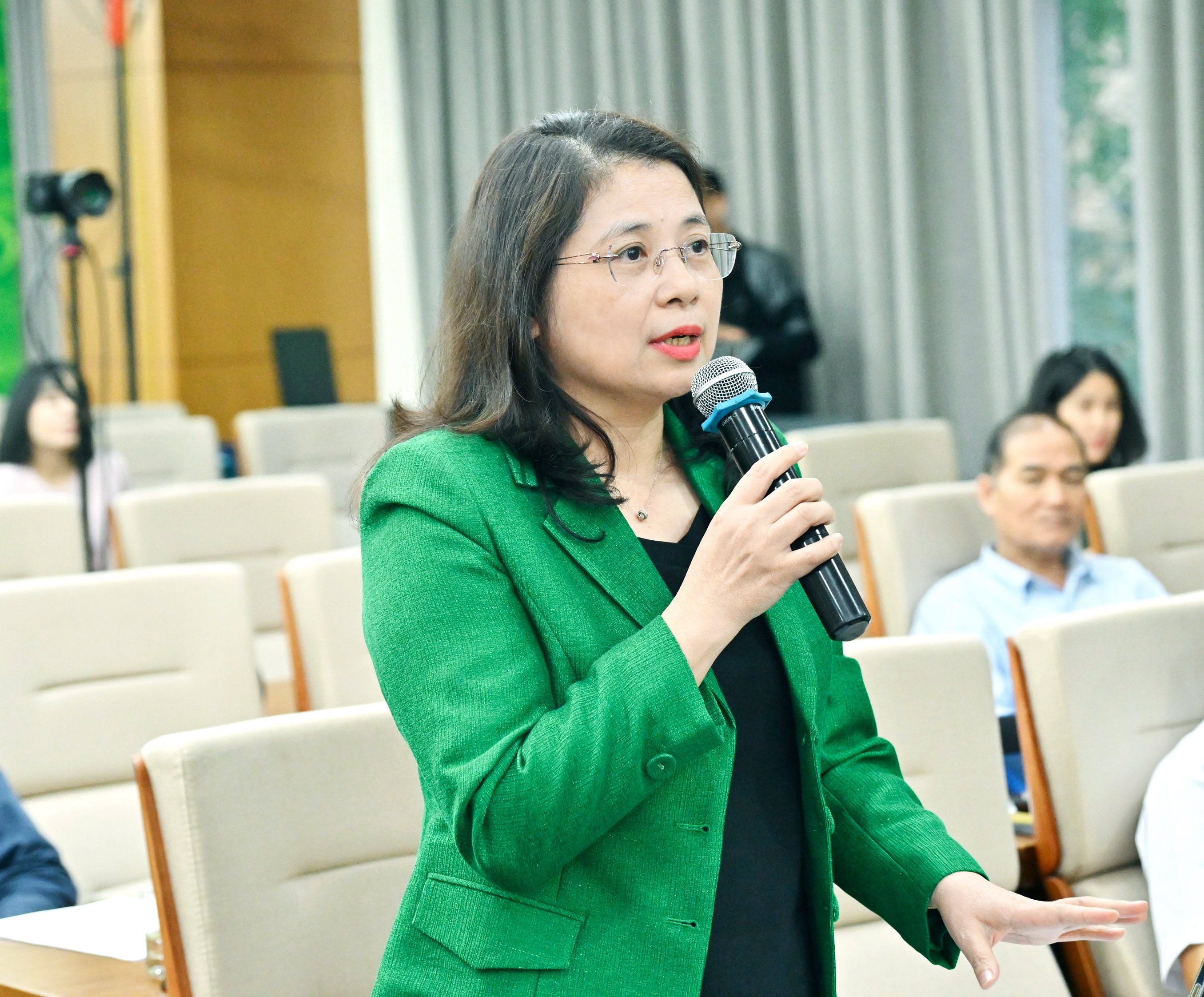
The workshop organized by the People's Representatives Newspaper was very meaningful, especially for policymakers. The discussions focused on core issues of credit for digital agriculture and green agriculture, thereby suggesting many directions for improving policies.
Currently, there is no shortage of policies regarding credit for digital agriculture, and there is no lack of commitment from credit institutions, people, and businesses. However, there is a lack of legal framework for these entities to effectively fulfill their roles. On the one hand, the demand for digital transformation and green transformation is urgent; on the other hand, credit institutions are forced to be cautious due to the high-risk nature of agriculture. Therefore, a breakthrough mechanism is needed to resolve this conflict.
In reality, credit institutions can only feel secure when they have a risk-sharing mechanism, with insurance being a crucial pillar. However, expanding the agricultural insurance market still faces many limitations; therefore, the issue of resources for establishing risk-sharing funds, as well as the mechanism for budgetary support, is a major problem that needs to be clarified.
To address these issues, a two-pronged approach is needed. First, the legal framework related to credit for digital and green agriculture must be reviewed and improved. Fundamental obstacles need to be tackled, such as land mechanisms (land leased with annual payments is difficult to accept as collateral), and the lack of uniformity in the definition and criteria for "digital agriculture" and "green agriculture," which makes it difficult for banks to assess. Simultaneously, research should be conducted to expand the scope of collateral to include intangible assets such as technology or assets that will be created in the future.
Furthermore, in the context of high growth demands and agriculture continuing to play a pivotal role in the economy , breakthrough institutional solutions need to be considered. Perhaps the Government should submit a resolution to the National Assembly to address these urgent issues, thereby shortening the timeframe for completing the legal framework and facilitating the rapid implementation of support policies.
Deputy Head of the Standing Delegation of the National Assembly of Vinh Long Province, THACH PHUOC BINH:
Credit must drive agricultural transformation.
I believe that, in the current phase, credit must lead the digital transformation and green transformation of the agricultural sector, rather than merely being a supporting tool.

In the implementation of value chain credit, several major bottlenecks currently exist. Firstly, there is the issue of breaches and violations of linkage contracts when market prices fluctuate, eroding trust between stakeholders and increasing risks to capital flows. This necessitates the early enactment of legislation on value chain linkages with sufficiently strong sanctions to protect the rights of all parties.
Furthermore, current data-driven credit management across the supply chain is limited. I believe we need to shift strongly towards a data-driven management model, which mandates the application of traceability and electronic production logs. With complete and transparent data, credit institutions will have a more accurate basis for risk assessment, gradually reducing their reliance on collateral. This will give banks, businesses, and farmers alike greater peace of mind.
Another important issue is the need to link value-added credit with agricultural insurance to share risks, especially in the context of increasingly complex natural disasters and epidemics. At the same time, consideration should be given to mechanisms for subsidizing insurance premiums from the state budget, thereby encouraging stakeholders to participate and enhancing the sustainability of the value chain.
National Assembly Deputy from Dong Thap province, Pham Van Hoa:
Establish legal mechanisms to protect supply chain credit.
Dong Thap is the rice, fruit, and catfish granary of the country, and the implementation of value-chain-based credit here has yielded extremely positive results. This model optimizes capital flow: instead of disbursing funds to hundreds of small-scale households, banks only need to provide capital through one leading enterprise. As a result, the enterprise has a solid source of resources to supply materials, provide technical support, and sign product purchase contracts with farmers.

However, this model still faces risks regarding commitment. Businesses worry about crop failures, banks worry about bad debts, and farmers are at risk of breaking contracts when market prices fluctuate higher than the guaranteed price. To ensure safe and effective lending along the supply chain, linked to green and digital agriculture models, I believe the prerequisite is legal guarantees.
Specifically, mechanisms for handling contract breaches need to be clearly defined and have sufficiently strong penalties. Mutual trust between banks, businesses, and farmers is crucial, but we need a robust legal framework to compel all parties to adhere to their commitments. Only when contractual discipline is upheld will credit flows truly become a sustainable lever for agriculture.
Member of the National Assembly representing Tuyen Quang province - Director of Agribank Tuyen Quang, NGUYEN VIET HA:
Expanding unsecured credit
Currently, according to the Law on Credit Institutions, whether or not a loan is secured by collateral is a matter of mutual agreement between the bank and the customer; collateral is not mandatory in all cases.
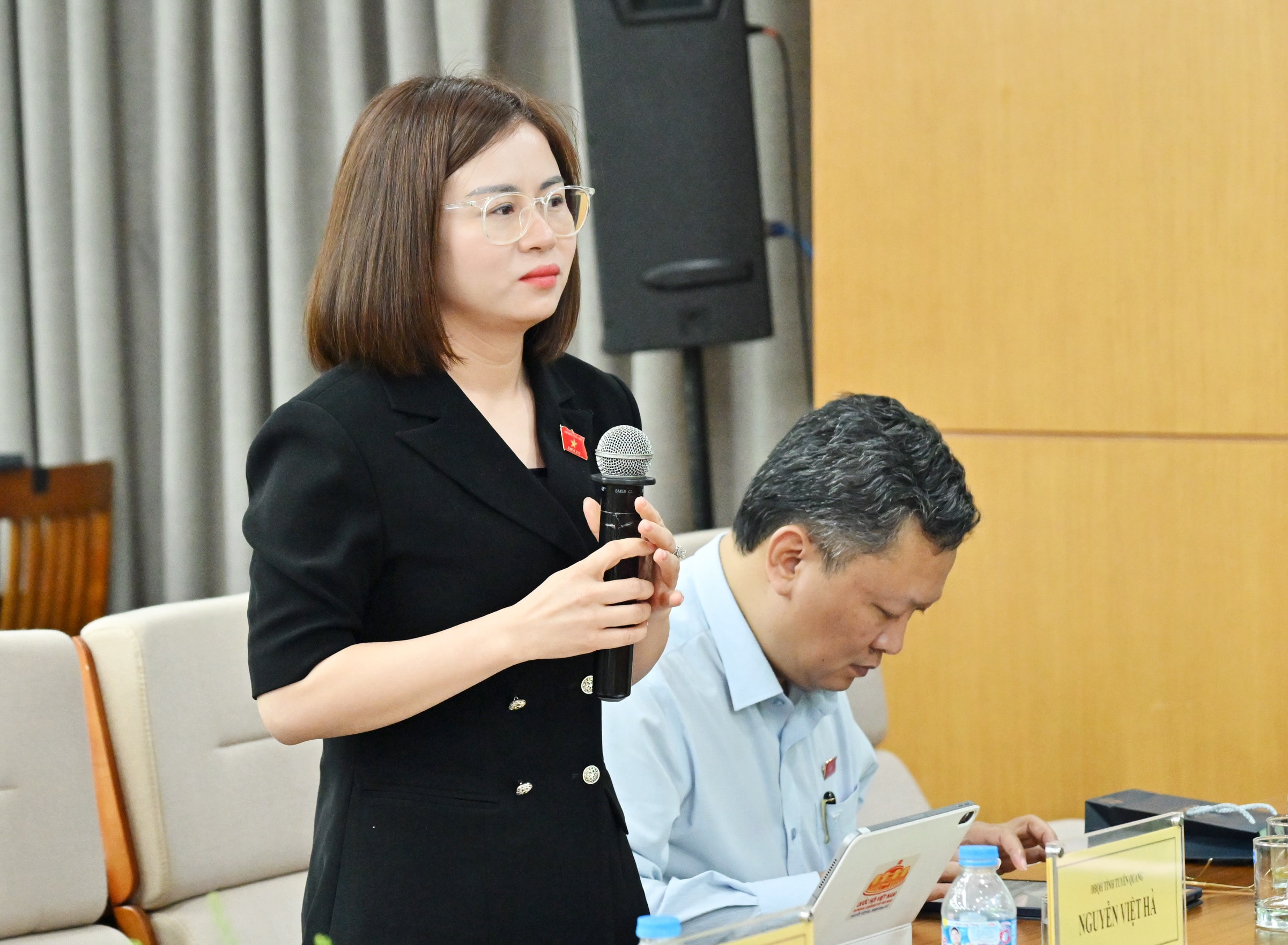
Agribank has established internal regulations outlining the criteria and conditions for customers to be eligible for unsecured loans. Typically, we base our decisions on the customer's transaction history, credit quality, financial capacity, and internal rating. If a business meets these criteria, it can be granted a loan without collateral. This is a crucial mechanism that can be implemented immediately. Therefore, both the bank and the customers need to focus on implementing it more effectively, contributing to unlocking resources for growth.
Source: https://daibieunhandan.vn/go-nut-that-phap-ly-de-tin-dung-di-truoc-mot-buoc-10414903.html




![[Image] Close-up view of the interchange connecting the two expressways and Long Thanh Airport.](https://vphoto.vietnam.vn/thumb/1200x675/vietnam/resource/IMAGE/2026/05/25/1779703378210_ndo_br_z7863716673926-224453a31600126cce10622af6290afd-4549-jpg.webp)























































































Comment (0)