


Most waterways around the world lack accurate flow measurement equipment, making flood forecasting difficult. Low-income countries suffer greatly from this lack of data, while rivers and lakes in higher-income countries are generally better measured and therefore flood forecasts are more accurate.
Google's flood forecasting system can now predict floods up to four days in advance in data-scarce regions like South America and Africa, while it can predict them up to seven days in advance in data-rich regions like Europe and the US.
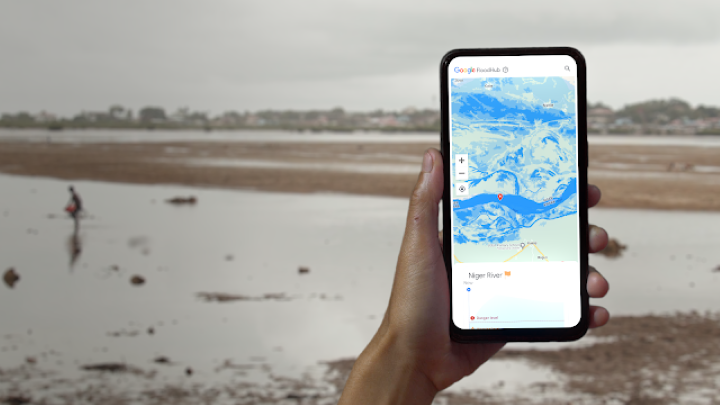
In 2018, Google introduced an AI-powered flood forecasting system for India and Bangladesh, two of the world's most flood-prone countries. Google later expanded the number of countries covered and launched a website called Flood Hub. This system has a high predictive capability for several countries and helps warn residents about potential flooding risks.
As part of its efforts to use artificial intelligence to address the climate crisis, Google AI has now expanded its flood prediction capabilities to 80 countries.
Since October 2022, with the addition of territories in 60 new countries across Africa, the Asia- Pacific region, Europe, and South and Central America, the Flood Hub platform now includes some of the regions with the highest rates of population risk from flooding and experiencing more extreme weather events affecting 460 million people globally.
Google is working to expand flood warnings across its "Search" and "Maps" apps to provide this information to people when they need it most.
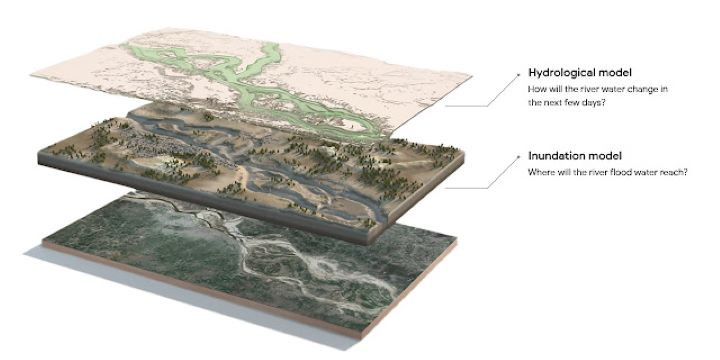
To develop the Google AI model, researchers provided it with publicly available flow data collected by the World Meteorological Organization, as well as earlier ground-based and satellite weather forecasts. Flood Hub's AI utilizes diverse, publicly available data sources. The technology then combines two models: a hydrological model – predicting river flow, and a flood model – predicting which areas will be affected and the depth of the water.
From 1984 to 2021, researchers tested their model on more than 5,000 flow measurements from around the world and found that Google AI's forecasting accuracy was up to 4 days ahead, while the best traditional forecasting systems could only predict 2 days in advance.
Source

















































































Comment (0)