

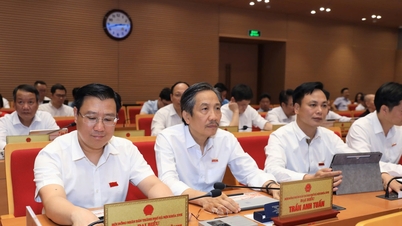
On the afternoon of June 2nd, the Hanoi City People's Council approved a Resolution stipulating the organization and operation of villages and residential areas, and the regime and policies for part-time grassroots officials.
The resolution was issued to concretize the Law on the Capital City, creating a legal basis for streamlining community organization in a way that is practical and enhances the effectiveness of management at the grassroots level.
According to the new regulations, villages are self-governing community organizations at the commune level, while residential groups are organized at the ward level. However, for areas with unique historical, cultural, urbanization, or management requirements, Hanoi allows the organization of villages within wards or residential groups within communes after consulting with residents and obtaining a decision from the commune-level People's Council.

Hanoi is expected to have 2,755 villages and residential areas, a reduction of 2,712, after the merger.
One notable point is that the term of office for the Village Head and Neighborhood Group Leader is set at 5 years. The Deputy Village Head and Deputy Neighborhood Group Leader have a term that matches that of the current leader.
Regarding organizational structure, each village or residential area has a Head or Group Leader and one to two deputies depending on population size and geographical characteristics. Villages with 800 or more households, residential areas with 1,000 or more households, or areas designated as key locations for national defense, security, and order, or areas with special difficulties, may have a maximum of two deputies.
Non-professional personnel at the village and neighborhood level include: Party branch secretary, village head or neighborhood group leader, head of the Fatherland Front Committee and their deputies. The total number shall not exceed 5 people per unit.
The resolution also stipulates that Hanoi will use the city's budget to supplement funding, ensuring that the allowance fund for this group is higher than the national average. For large-scale or key areas in terms of national defense and security, the monthly allowance fund will be 12 times the basic salary; for other areas, it will be 9 times the basic salary.
Non-professional personnel may hold a maximum of one additional position and receive 100% of the allowance for that additional position. They are also entitled to mandatory social insurance, health insurance, and other benefits as stipulated by current regulations.
The resolution takes effect from July 1, 2026, replacing several regulations related to the remuneration for Deputy Village Heads and Deputy Neighborhood Group Leaders currently applied under Resolution No. 18/2023 of the Hanoi City People's Council.
According to the explanatory report from the Hanoi People's Committee, Hanoi currently has 5,467 villages and residential areas. After the reorganization, it is expected that there will be 2,755, a reduction of 2,712 villages and residential areas compared to the present.
The total number of part-time officials, including deputy village heads and deputy neighborhood group leaders, is currently 17,696. According to the proposed plan, the number of part-time officials in villages and neighborhoods will be reduced to 12,909, a decrease of 4,787 people.
The People's Committee of Ho Chi Minh City believes that implementing the resolution will not mechanically increase the number of people participating in activities at the village and neighborhood levels, but mainly will streamline and reorganize the organizational structure.
Source: https://suckhoedoisong.vn/ha-noi-giam-hon-2700-thon-to-dan-pho-sau-sap-nhap-169260602182511845.htm




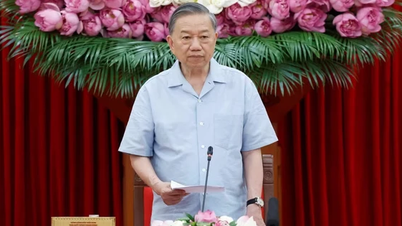
![[Photo] General Secretary and President To Lam presides over a meeting on preparations for the review of one year of operation of the three-tiered government system.](https://vphoto.vietnam.vn/thumb/1200x675/vietnam/resource/IMAGE/2026/06/02/1780391821195_a1-bnd-4595-9717-jpg.webp)




























































































Comment (0)