

South Korea is entering the summer of 2026 with increasingly serious warnings about the impact of climate change. The country's meteorological agency forecasts higher-than-average temperatures and a continued increase in the risk of extreme weather events.
According to the Vietnam News Agency correspondent in Seoul, the Korea Meteorological Agency has just released a climate forecast report for the period from June to August, showing that this summer will not only be hotter but also accompanied by unusually heavy rainfall, raising concerns about prolonged heat waves, localized torrential rains, and the risk of urban natural disasters in many areas across the country.
The agency predicts that temperatures in June and July are likely to exceed the multi-year average, while August will continue the hot trend, although weather volatility may be greater due to the influence of low-pressure systems forming over the Western Pacific.
In particular, July – the peak of South Korea's summer – is predicted to have a 60% chance of exceeding historical average temperatures. This reflects a growing warming trend on the Korean Peninsula amidst continuously record-breaking global ocean temperatures.
South Korean climate experts believe the main cause stems from rising sea surface temperatures in the North Indian Ocean and North Pacific Ocean, which have intensified the high-pressure system covering Northeast Asia.
This phenomenon causes hot and humid air to be trapped longer over the Korean Peninsula, leading to prolonged stuffiness and difficulty in lowering nighttime temperatures.
Besides the heatwave, South Korea also faces an increased risk of extreme rainfall events.
Unlike traditional monsoon rains that spread across wide areas, current climate models show a significantly increased likelihood of localized "bomb blazes"—extremely heavy rainfall concentrated in short periods in narrow regions—due to the increasingly unstable atmosphere caused by climate change.
The Korea Meteorological Agency warned that rainfall in June and July is likely to be above or at average levels, while August poses a risk of localized heavy rainfall due to increased atmospheric instability.
In recent years, Seoul and many other major cities in South Korea have repeatedly suffered from extreme rainfall events causing severe flooding, paralyzing traffic and resulting in significant casualties, especially in semi-underground residential areas which are seen as symbols of urban inequality in the country.
Notably, the El Niño phenomenon is being closely monitored. Sea surface temperatures in the equatorial Pacific are currently neutral, but are forecast to gradually shift towards El Niño this summer.
If that happens, global temperatures could continue to rise sharply, leading to more frequent extreme weather events in East Asia, including South Korea.
Beyond just weather issues, South Korean officials are increasingly viewing heatwaves as a social security and public health challenge. Prolonged heatwaves directly impact the elderly, outdoor workers, low-income earners, and residents in densely populated urban areas.
The surge in electricity demand for air conditioning also increases pressure on the national energy system during the summer. Furthermore, rising temperatures impact labor productivity, the food supply chain, and the risk of forest fires in mountainous areas of southeastern South Korea, where several serious fires have occurred in recent years.
Lee Mi Seon, director of the Korea Meteorological Administration, said temperatures in the country have remained above average since mid-May. The combination of prolonged heat and heavy rainfall during the summer could increase the risk of damage from dangerous weather phenomena such as heat waves and torrential rains.
Against this backdrop, South Korea is stepping up climate adaptation measures, including expanding its early warning system, applying AI in disaster forecasting, strengthening flood control infrastructure, and improving heat shelters for vulnerable populations.
Researchers believe that current extreme weather events are no longer cyclical anomalies but are becoming the new normal under the impact of global climate change.
Source: https://www.vietnamplus.vn/han-quoc-canh-bao-mua-he-2026-khac-nghiet-post1112119.vnp
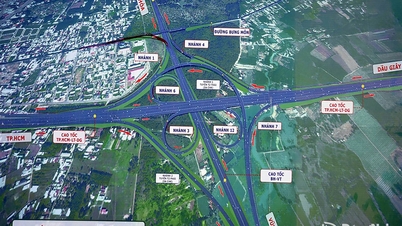
![[Image] Close-up view of the interchange connecting the two expressways and Long Thanh Airport.](https://vphoto.vietnam.vn/thumb/1200x675/vietnam/resource/IMAGE/2026/05/25/1779703378210_ndo_br_z7863716673926-224453a31600126cce10622af6290afd-4549-jpg.webp)
![[Image] Hanoi's urban life under the challenge of a "scorching hot" environment](https://vphoto.vietnam.vn/thumb/1200x675/vietnam/resource/IMAGE/2026/05/25/1779706979265_nang-nong-t5-2026-minh-duy-7-4636-jpg.webp)








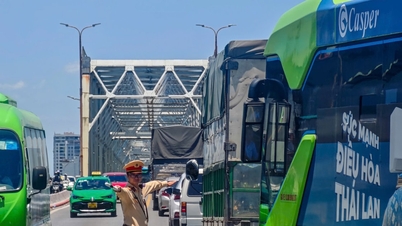


![[Image] Hanoi's urban life under the challenge of a "scorching hot" environment](https://vphoto.vietnam.vn/thumb/402x226/vietnam/resource/IMAGE/2026/05/25/1779706979265_nang-nong-t5-2026-minh-duy-7-4636-jpg.webp)















































































Comment (0)