

Many Vietnamese goods such as pomelos, bananas, tea, textiles, etc., have been exported to the UK and have received support from consumers in this market.

Vietnamese agricultural products are flooding the UK market.
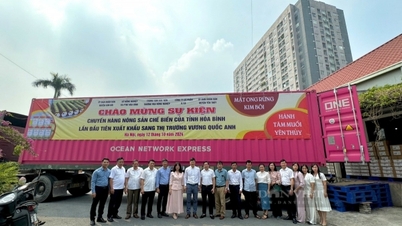
In late October, the Department of Agriculture and Rural Development of Tuyen Quang province, in coordination with the People's Committee of Yen Son district and RYB Joint Stock Company, organized a ceremony to export Soi Ha pomelos (Yen Son district) to the United Kingdom market. The shipment of nearly 8,000 Soi Ha pomelos from Tuyen Quang farmers exported to the UK market met all the required standards.
To meet the demanding requirements of the UK market, Soi Ha pomelos must have a Brix sweetness level of 11.5 or higher, be juicy, have an even yellow color, be free from blemishes and insect bites, weigh between 1 and 1.2 kg per fruit, and undergo pesticide residue testing two weeks before harvesting, with proper certification. certification of compliance with standards European residue.
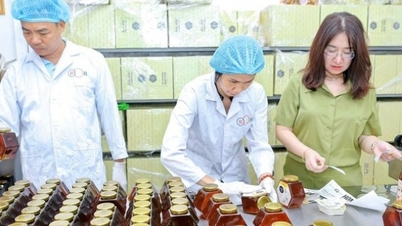
Soi Ha pomelo is one of the agricultural products recently exported to the UK market. About a week prior, six other products from Tuyen Quang were also exported to the UK, including guava tea and male papaya flower soaked in honey from Binh Minh Organic Agricultural Cooperative; dried bananas from Chieu Yen Clean Banana Cooperative; green bean tea bags from Hong Phat Organic Cooperative; and lemon and kumquat syrups from Minh Thao Agricultural and Medicinal Products Cooperative.
According to the Vietnam Trade Office in the UK, in recent years, Vietnamese goods have increasingly appeared and gained a certain position in the UK market. From 2021 to the present, exports from Vietnam to the UK have continuously grown.
Based on my regular market research of consumer goods in the area, I am very pleased and excited to see many products, from clothing, shoes, tools, and equipment "made in Vietnam" to food and vegetables "farm in Vietnam," being sold in large, reputable supermarket chains in the United Kingdom.
Ms. Hoang Le Hang, First Secretary of the Vietnamese Trade Office in the UK (also covering Ireland), stated that many Vietnamese products are being sold through the UK market's distribution system. For example, fashion clothing is sold in M&S stores, which have the largest market share for clothing in the UK, with most items being made in Vietnam. Vietnamese agricultural products and fruits are sold in the UK's largest supermarket chains such as Tesco and Sainsbury's, as well as in high-end supermarkets like Waitrose and Wholes Foods. Furthermore, Vietnamese goods are widely available in Vietnamese supermarkets and supermarkets specializing in Asian products.
"Notably, several reputable Vietnamese businesses have established their brand positions in the UK, such as MEET U coffee, L'amant, and Ong Cua ST25 rice...", Ms. Hoang Le Hang shared.
Ms. Nguyen Thanh Huong, Director of RYB Joint Stock Company – a company that has exported many goods to the UK market in recent years – said that through surveys and testing, the company has highly appreciated the quality of OCOP products, agricultural products, and specialties from various localities. Recently, the company has introduced and offered many local products to European markets. This is a demanding market with strict regulations on plant quarantine and management. Food safety and hygiene quality, and traceability. Overall, Vietnamese products have received positive feedback from European customers.
What should be noted regarding Vietnamese agricultural products?
Mr. Nguyen Canh Cuong, former Commercial Counselor of the Vietnamese Trade Office in the UK, stated that the Vietnam-UK Free Trade Agreement (UKVFTA) has opened up significant opportunities for Vietnamese businesses by eliminating over 99% of tariffs within six years. Sectors such as seafood, textiles, footwear, wood products, and processed agricultural products have benefited considerably. For example, in the seafood sector, pangasius fish and frozen shrimp exports are expected to reach over $30 million in 2024, an increase of more than 10%. Products made from natural and sustainable fibers are attracting British consumers.
However, according to Mr. Nguyen Canh Cuong, the UK market has very strict technical standards and regulations regarding food safety and the environment. Businesses need to prepare thoroughly to meet these requirements and stand out in a highly competitive environment, for example by improving packaging and adopting international standards such as the British Standards Institute (BSI) or ISO to increase competitiveness in this market.

The British Standards Institute (BSI) plays a crucial role in ensuring that a company's products meet the technical, legal, and commercial requirements of the UK market. Products that meet BSI standards are highly regarded for their quality and safety, easily convincing UK importers and consumers, and minimizing the risk of rejection at border crossings due to non-compliance with technical or safety standards. Furthermore, BSI standards are widely recognized, enabling products to access not only the UK market but also the entire European market.
"Businesses should use recycled and biodegradable materials. Clear information about product name, ingredients, usage instructions, and origin is essential. Subtle, elegant colors, avoiding red and bright colors, will suit the tastes of British consumers," Mr. Nguyen Canh Cuong recommended.
Simultaneously, like markets in Europe, the UK market has stringent requirements regarding product sustainability. Specifically, the Law on Deforestation and Forest Degradation could restrict the export of products such as wood, coffee, rubber, vegetable oil, soybeans, and leather. Furthermore, the UK government is currently studying the legislative process to establish a CBAM (Carbon Border Adjustment Mechanism). A carbon tax would be implemented in the UK from 2027.
Therefore, Vietnamese businesses need to prepare a suitable roadmap for the UK's CBAM and maintain competitiveness in the UK market by: conducting thorough assessments of their carbon emissions; implementing measures to reduce their carbon emissions; collaborating with lower-carbon suppliers; investing in cleaner technologies, etc.
Besides the challenges mentioned above, the UK market also has many advantages that attract Vietnamese businesses to increase exports. For example: The UK market has good potential, is one of the world's leading economies, has approximately 68 million inhabitants with a high average per capita income of £34,632/person/year in 2023, and a diverse population (with over 5.5 million people of Asian origin).
Furthermore, the UK's total import demand for goods is enormous, approximately £581.5 billion in 2023; the Vietnamese market has more competitive advantages compared to other markets due to preferential tariff treatment under trade agreements such as UKVFTA and CPTPP.
Vietnam has a significant advantage in products favored by the UK market, especially agricultural products and specialty products like those under the OCOP program. These are precisely the types of products Vietnam can boost exports to establish its brand presence in the UK market.
Source


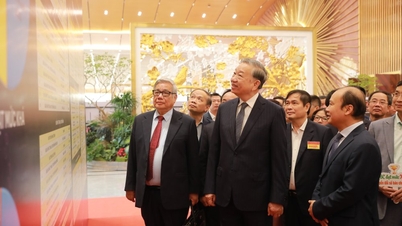
![[Photo] General Secretary To Lam visits the exhibition space showcasing books, photo exhibitions, and achievements of digital transformation in journalism.](/_next/image?url=https%3A%2F%2Fvphoto.vietnam.vn%2Fthumb%2F1200x675%2Fvietnam%2Fresource%2FIMAGE%2F2025%2F12%2F19%2F1766110879215_1766110240024-jpg.webp&w=3840&q=75)
![[Photo] Enchanting ancient rose garden on the mountainside in Nghe An](/_next/image?url=https%3A%2F%2Fvphoto.vietnam.vn%2Fthumb%2F1200x675%2Fvietnam%2Fresource%2FIMAGE%2F2025%2F12%2F19%2F1766109900916_vuon-hong-chin-do-thu-hut-du-khach-toi-check-in-o-ha-noi-3-20162778-1671624890024-1671624890104198100259.jpeg&w=3840&q=75)































































Comment (0)