

Recently, a number of European countries have introduced new regulations for exported goods, adding technical barriers to Vietnamese exports to this market region.
Markets are raising standards for exports.
According to statistics recently released by the General Department of Customs, the total import and export turnover of the whole country in 2024 reached a new record of 786.3 billion USD. Compared to 2023, the total import and export turnover of the whole country increased by more than 105 billion USD. Of which, exports reached 405.53 billion USD, an increase of 14.3%; and imports reached 380.76 billion USD, an increase of 16.7%.
Thanks in part to the Free Trade Agreements (FTAs) and integration frameworks that Vietnam participates in, Vietnam's exports to many markets are expected to improve in 2024.
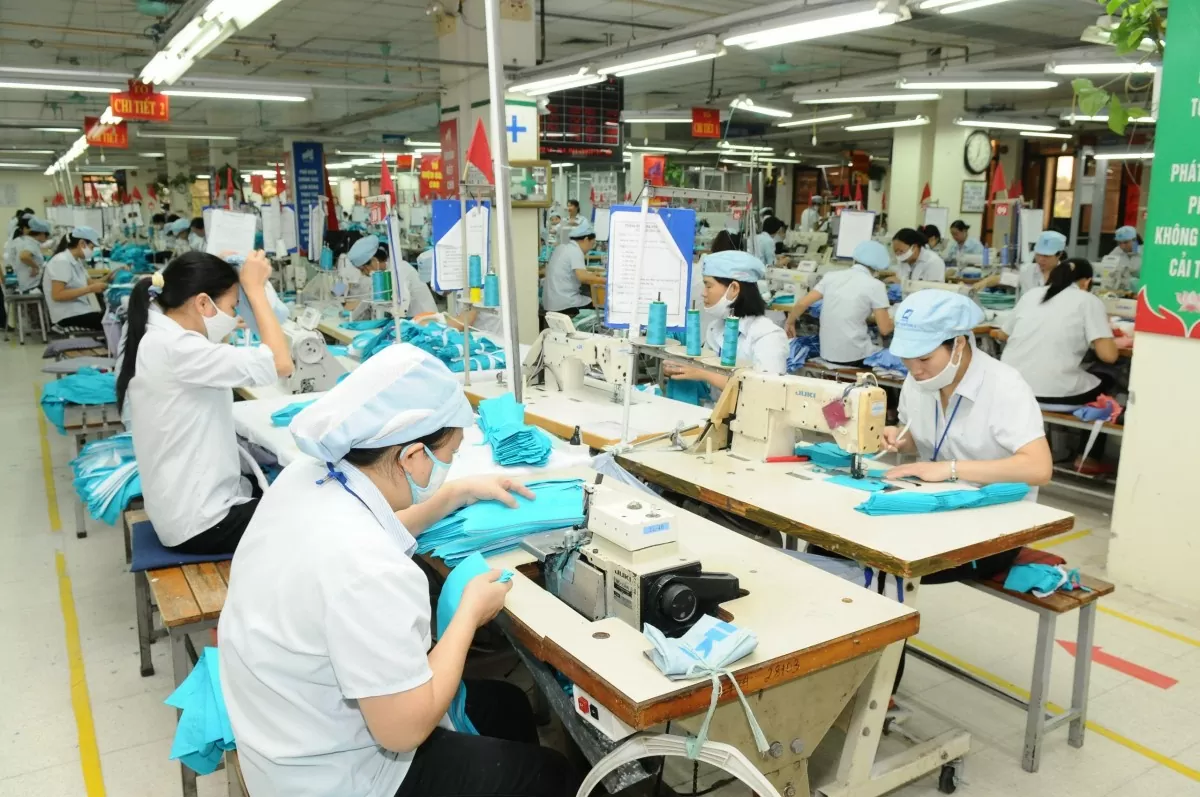 |
| Many markets are raising their standards for imported goods (Photo: Can Dung) |
However, Vietnam's exports to many markets are facing new barriers that businesses must overcome. For example, according to information from the Center for Industry and Trade Information ( Ministry of Industry and Trade ), the United Kingdom is one of Vietnam's major export markets for agricultural products and food. Exports of Vietnamese agricultural products and food to the UK have shown promising growth, despite numerous challenges.
Specifically, according to statistics from the General Department of Customs, in the first 10 months of 2024, the export value of many key Vietnamese agricultural products to the UK showed positive growth compared to the same period in 2023. Coffee was the largest export item, reaching 24.05 thousand tons in the first 10 months of 2024 with a value of US$108.2 million, a decrease of 23.4% in volume but an increase of 29.1% in value compared to the same period in 2023. Cashew nut exports reached 17.03 thousand tons, valued at US$87.3 million, an increase of 9.6% in volume and 10% in value. Exports of vegetables and fruits reached US$31.5 million, an increase of 55.7%, and pepper exports reached 5.2 thousand tons, worth US$26.7 million, an increase of 22% in volume and 45.8% in value compared to the same period in 2023…
The UK market is still considered a potential market for Vietnamese goods. However, recently, the UK has repeatedly notified the WTO about its intention to apply maximum residue limits (MRLs) to certain active ingredients such as fludioxonil, isotianil, and flonicamid in imported products such as mangoes, papayas, nuts, and shelled beans.
For the EU market, Vietnam's textile and garment exports to the EU in the first 10 months of 2024 reached US$3.54 billion, an increase of 10.2% compared to the same period in 2023, accounting for 11.5% of the country's total textile and garment export turnover.
However, according to information from the Center for Industry and Trade Information, on September 20, 2024, the European Commission published Commission Regulation (EU) 2024/2462 on the addition of a new Article 79 to Annex XVII of Regulation (EC) No. 1907/2006 (REACH Regulation) concerning undecafluorohexanoic acid (PFHxA), its salts and related substances. This regulation imposes restrictions on this PFAS in various products such as textiles, footwear, food packaging, fire-fighting foam, etc. Accordingly, the chemical 'PFHxA' and products containing it (including textiles and footwear) will be banned in the EU.
Another ban recently implemented by the EU is the announcement by the European Commission (EC) on December 20, 2024, prohibiting the use of bisphenol A (BPA) in materials that come into contact with food and beverages.
Sustainability should be prioritized in export products.
According to experts, consumer trends in Europe are generally shifting strongly towards organic, environmentally friendly, and sustainable products.
Therefore, to maintain export growth to this market region, in addition to quality and price, Vietnamese manufacturing and exporting businesses need to research and understand market demand, invest in improving production processes, and meet technical standards.
For example, regarding textiles and garments, Ms. Nguyen Thi Hoang Thuy - Director and Head of the Vietnam Trade Office in Sweden, concurrently responsible for Northern Europe - stated that the sustainable fashion and textile market in Northern Europe in particular and Europe in general is developing strongly, thanks to the increasing awareness of consumers about the impact of the fashion industry on the environment. Consumers always prioritize environmentally friendly and socially responsible products. Products made from organic or recycled materials, produced according to environmental protection standards and labor rights, are increasingly dominating the market.
“ The EU’s promotion of the Sustainable Textile Strategy opens up many opportunities for Vietnamese textile businesses, especially in the context of the increasingly strong trend of sustainable fashion consumption in Northern Europe. Vietnam has many advantages to exploit this market, such as abundant natural resources and traditional craftsmanship, meeting the demand for sustainability and cultural factors. However, it also presents challenges as it requires businesses not only to use environmentally friendly materials but also to ensure that production processes do not cause pollution and that products are highly recyclable,” said Ms. Nguyen Thi Hoang Thuy.
For the leather and footwear industry, according to representatives of the Vietnam Leather, Footwear and Handbag Association, the opportunities and potential for development in Vietnam's leather, footwear, and handbag industry are still enormous. However, the global "greening" trend is increasingly demanding standards from businesses, especially export businesses.
For footwear businesses, the pressure to transition to a greener environment is immense, as the textile and footwear industries are still high contributors to environmental pollution. Therefore, footwear businesses cannot afford to be left out of the Fourth Industrial Revolution, adopting automated production lines, artificial intelligence (AI), and green development, if they do not want to be excluded from the global supply chain.
Experts also believe that the European region is one of Vietnam's key markets. Therefore, export businesses need to continuously update relevant regulations and policies from countries in this region to avoid risks, coupled with appropriate export strategies and thorough preparation, to expand the position of Vietnamese goods in the international market.
| In 2025, the Ministry of Industry and Trade set a target of increasing merchandise export turnover by 12% compared to 2024. This target is considered relatively challenging given the increasingly high standards that markets are demanding for imported goods. |
Source: https://congthuong.vn/hang- loạt-thi-truong-them-rao-can-voi-hang-nhap-khau-369389.html
![[Photo] Prime Minister Pham Minh Chinh presides over a meeting on private sector economic development.](/_next/image?url=https%3A%2F%2Fvphoto.vietnam.vn%2Fthumb%2F1200x675%2Fvietnam%2Fresource%2FIMAGE%2F2025%2F12%2F20%2F1766237501876_thiet-ke-chua-co-ten-40-png.webp&w=3840&q=75)














































































Comment (0)