

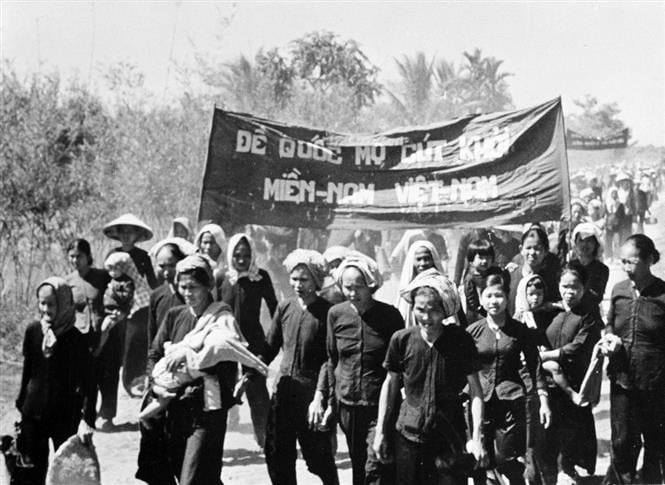
"The Long-Haired Army" protested against American imperialism during the Đồng Khởi Uprising. Photo: VNA archives.
Entering a new era, women in Ben Tre continue the glorious tradition of the "long-haired army," pioneering in building a sustainable, integrated, and developed future, becoming one of the key forces in building a prosperous and beautiful homeland, and making important contributions to the development of the country in the 21st century.
"The Long-Haired Army" - a unique and special military unit.
The Đồng Khởi movement erupted in January 1960, notable for the large and active participation of women, not only in logistical roles but also directly on the political front. From demonstrations against the Saigon government, the women of Ben Tre quickly developed into an organized force with clear tactics, thus forming the "Long-Haired Army" - an unarmed army, yet powerful enough to shake the repressive apparatus of the enemy.
One of the key figures in organizing and leading the movement was Mrs. Nguyen Thi Dinh. With unwavering determination, she mobilized thousands of women to participate in the struggle using the "three-pronged attack" strategy: political, military, and armed. Under her leadership, the "army of long-haired women" achieved many resounding victories, not only in Ben Tre but also throughout Southern Vietnam.
Unlike traditional forms of armed struggle, this army did not use guns and bullets, but relied on unity, unwavering will, and creative intelligence to achieve victory. Women participated in the struggle not only as wives and mothers, but also as tenacious fighters on the political and military fronts.
From the Đồng Khởi movement, the "Long-Haired Army" quickly expanded to other provinces in the South, becoming a revolutionary struggle method with a powerful ripple effect. And from this movement, Ms. Nguyễn Thị Định became a symbol of unwavering will, the first female general of the Vietnam People's Army, who contributed to making women a special revolutionary force in the national liberation struggle.
Ms. Le Thi Hong (born in 1950) from Cam Son commune, Mo Cay district (now Mo Cay Nam district), Ben Tre province – who later became the political commissar of the Ben Tre Provincial Special Forces unit – shared that, born amidst the flames of war, she witnessed the Dong Khoi movement firsthand at the age of 10. In 1967, at the age of 16, she enlisted in the Ben Tre Town Special Forces Detachment, operating openly and legally behind enemy lines, with the main task of building a base.
During her participation in combat, she demonstrated determination and boldness, infiltrating deep into enemy territory to launch surprise attacks, directly participating in 8 battles in urban areas, killing and wounding many enemy soldiers, and destroying weapons and ammunition. The female commando also cleverly transported weapons successfully to the troops to attack important targets. In 1968 and 1969, Hong participated in several battles, killing and wounding dozens of enemy soldiers, destroying 6 tons of various types of ammunition, and 2 walkie-talkies.
Le Thi Hong, a female commando from Ben Tre province, recounted that in 1969, she was discovered and captured three times by the enemy. They tortured her with electricity and beat her ribs until they were dented, but she remained steadfast and resolutely refused to confess. Later, they resorted to destroying her virginity; she had to be hospitalized for emergency treatment. After escaping imprisonment, Hong returned to continue fighting with her unit. “The brutal acts and savage torture of the enemy did not discourage me; instead, they fueled my hatred and fighting spirit,” Hong said.
For her outstanding achievements in combat, Ms. Le Thi Hong was awarded the First and Second Class Liberation War Merit Orders by the State; and was posthumously awarded the title of Hero of the People's Armed Forces in November 1978.
Proud of the glorious tradition of the "Long-Haired Army," the Chairwoman of the Ben Tre Provincial Women's Union, Nguyen Thi Kim Thoa, stated that during the Dong Khoi movement, a unique army emerged – the "Long-Haired Army," which, according to General Nguyen Thi Dinh, was "a special branch of women's forces organized into a tightly structured unit, with offensive, reserve, logistical, medical , and first-aid units...". From the Coconut Land, the "Long-Haired Army" expanded throughout Southern Vietnam, and by 1965, its standing force had reached 2 million women.
“Despite not having received formal training or being equipped with modern weapons, the ‘Long-Haired Army,’ comprised of ordinary women—farmers, workers, small traders, intellectuals, nuns…—skillfully employed three prongs of attack: military mobilization, political action, and armed struggle. Despite imprisonment and torture, these women remained steadfast and loyal, serving as exemplary models of fervent patriotism and the strength of women who, unarmed and with only hatred and a will to win, triumphed over the enemy,” shared the Chairwoman of the Ben Tre Provincial Women's Union.
Upholding the spirit of the "New Uprising"
Continuing to inherit the indomitable spirit of the legendary "Long-Haired Army," today's generations of women in Ben Tre are stepping out of their comfort zones, asserting their capabilities and leading roles in many fields, from production and business, agricultural innovation, digital transformation to environmental protection and social development, with the spirit of a "New Uprising."
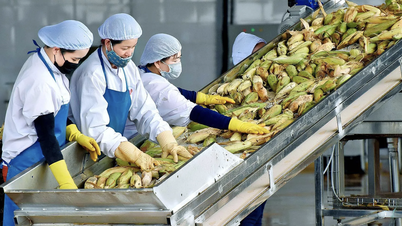
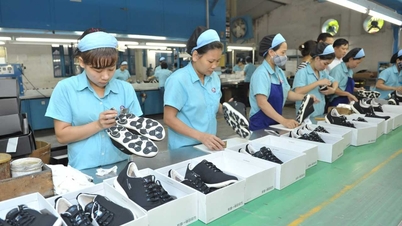
According to Nguyen Thi Kim Thoa, Chairwoman of the Ben Tre Provincial Women's Union, women in Ben Tre are demonstrating a proactive and pioneering role in entrepreneurship and collective economic development. From small-scale businesses, they have boldly expanded their scale, embraced digital transformation, sought new markets, and exported local products internationally. Over 1,300 businesses owned by women have not only affirmed their management and operational capabilities but also created tens of thousands of jobs, improving the lives of the community.
Cooperatives and cooperative groups managed by women are thriving, especially in the fields of clean agriculture, agricultural product processing, and e-commerce. Loan support programs have helped tens of thousands of women access finance, with total outstanding loans reaching over 3,750 billion VND, enabling them to expand production, business, and increase income.
In the context of building new rural areas, women not only play a role in production but also actively participate in creating green, clean, and civilized living spaces. The "5 No's, 3 Cleanliness" campaign, the "Women Say No to Plastic Waste" movement, and the "Building Green, Clean, Bright, and Safe Roads" initiative have been widely implemented, contributing to changing the face of rural areas towards a civilized and sustainable direction. To date, more than 73% of women's association member households have met the "5 No's, 3 Cleanliness" criteria, significantly improving the quality of the living environment and raising community awareness of the responsibility to protect the landscape and maintain general hygiene.
In particular, women in Ben Tre have made significant contributions to the political field, pioneering in the implementation of gender equality and affirming their role in management and leadership. The percentage of women participating in the political system in Ben Tre is increasing. Currently, the percentage of women participating in Party committees reaches 30.05% at the grassroots level; 18.71% at the district level and 20.4% at the provincial level.
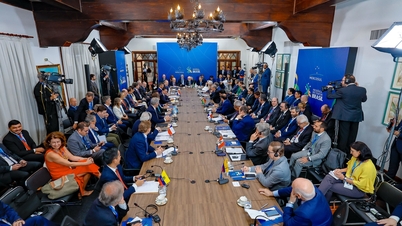
According to Ben Tre Provincial Party Secretary Ho Thi Hoang Yen, over the past 10 years of implementing Project No. 01/DA/TU of the Provincial Party Committee, the number and quality of female leaders and managers with professional qualifications and political theory suitable for their positions have increased; their age is becoming younger; and their position has been affirmed and enhanced. Women's associations at all levels need to do a good job of understanding the thoughts, feelings, and aspirations of female cadres and young female cadres; thereby, propagating and educating them, building political fortitude, ensuring that words match actions, and daring to take responsibility; raising the self-awareness of female cadres and young female cadres in learning and training, and continuing to promote the study and emulation of Ho Chi Minh's thought, morality, and style.
On the other hand, units need to build a team of female cadres and young female cadres with qualities and capabilities, ensuring standards commensurate with the assigned tasks; especially focusing on forces outside the political system, talented female entrepreneurs, and outstanding social activists who need to be trained and developed to supplement the female cadre force.
Source: VNA/News Agency
Source: https://baodongkhoi.vn/thoi-su/tin-trong-nuoc/hao-khi-dong-khoi-bat-diet-cua-doi-quan-toc-dai-a145305.html


![[Photo] Prime Minister Pham Minh Chinh presides over a meeting on private sector economic development.](/_next/image?url=https%3A%2F%2Fvphoto.vietnam.vn%2Fthumb%2F1200x675%2Fvietnam%2Fresource%2FIMAGE%2F2025%2F12%2F20%2F1766237501876_thiet-ke-chua-co-ten-40-png.webp&w=3840&q=75)












































Comment (0)