

 |
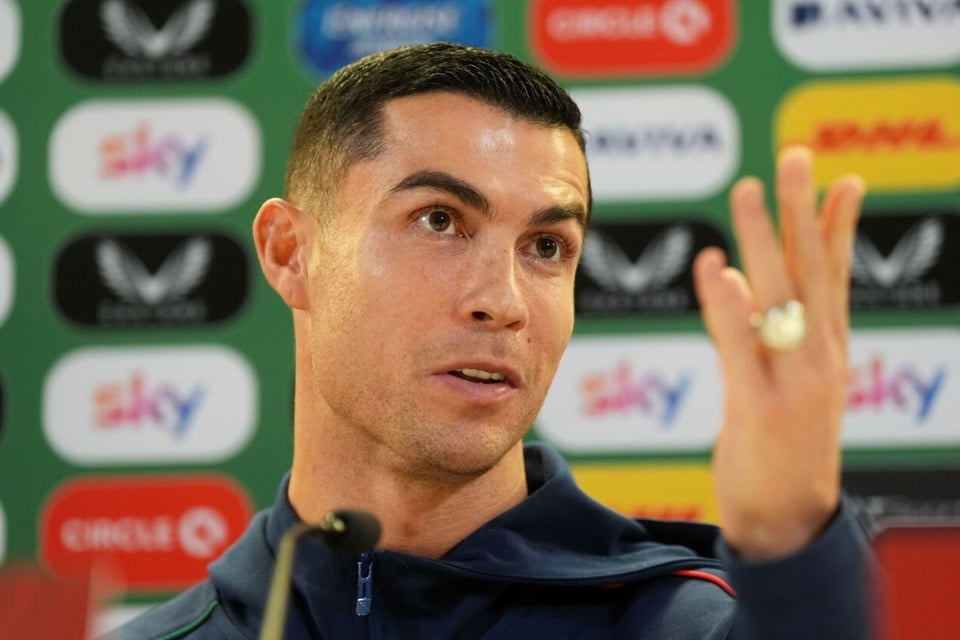
Cristiano Ronaldo at a press conference before Portugal's match against the Republic of Ireland in the fifth round of Group F of the 2026 World Cup qualifiers in the European region on November 12, 2025. Photo: Alamy. |
On May 6th, Chinese media was shaken by the news that, with less than two months remaining before the opening of the 2026 World Cup, China Central Television (CCTV) had still not finalized a contract with FIFA.
The prospect of the world's most populous nation "shutting down" the tournament – something that hadn't happened since 1978 – nearly became a reality. For many generations of Chinese people, the World Cup on CCTV was more than just sports – it was a family memory, a picture of the whole family gathered around the screen like in the classic 1990s sitcom "My Family Loves You."
Although the two sides reached an exclusive agreement on May 15th for a rumored price of around $60 million (a significant reduction from FIFA's initial expectations), this crisis exposed deep cracks in the relationship between the broadcaster and the world's most powerful football governing body.
FIFA's exorbitant price tag
The reason for this tug-of-war is that FIFA confidently demanded $250-300 million when the tournament increased from 64 to 104 matches, viewing China as a lucrative market on par with North America. However, CCTV saw a harsh reality: all matches in the US, Canada, and Mexico would take place between midnight and noon the following day, Beijing time.
FIFA saw the number of matches increase from 64 to 104. CCTV, on the other hand, only saw the number of prime-time matches decrease from 31 to zero.
As a free-to-air public broadcaster, CCTV can only recoup its costs through advertising. This is not an option – Chinese law mandates that CCTV must purchase broadcasting rights and broadcast them for free, prohibiting it from reselling exclusive rights to paid platforms to cover costs.
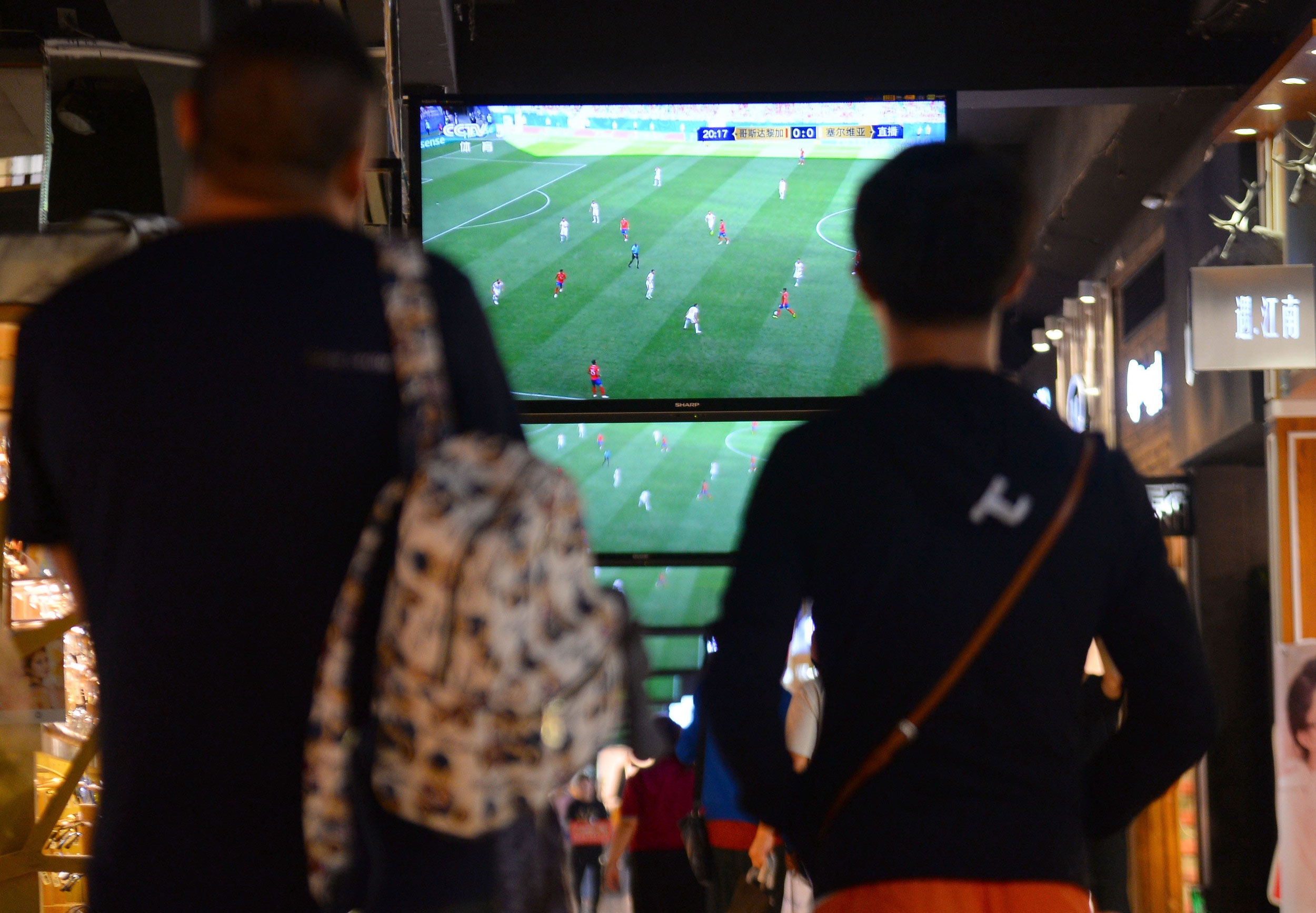 |
Spectators watch the 2018 World Cup, broadcast by CCTV, Shenyang, Liaoning province, June 2018. Photo: VCG . |
No company is willing to spend billions of dong on matches at 3 AM. Furthermore, increasing the number of teams to 48 has resulted in the group stage being filled with less appealing matches. Viewers and broadcasters are becoming more realistic: why pay huge sums for a tournament that doesn't feature their home team and lacks high-profile matches at prime time?
"Village-level football" reigns supreme.
The indifference to the World Cup also stems from a new trend: the rise of amateur domestic football leagues.
From the "Village Super League" in Guizhou, overflowing with colorful local ethnic costumes, to the "Su Chao" tournament in Jiangsu – where actor He Rundong once set the audience ablaze by transforming into Xiang Yu, the King of Western Chu, right on the football field – these "village-level" competitions without international stars are becoming cultural phenomena by tapping into the pride of national identity.
It is that original emotion that connects historical heritage with the community, something the Chinese national team, which has been in decline for decades, has been completely unable to provide.
The intense matches, packed stadiums, and festive atmosphere in the local area sometimes hold a more direct appeal than staying up late to watch international stars compete on television. Sports have returned to their true nature: personal enjoyment and pure emotional connection.
This trend was actually evident from the 2024 Paris Olympics, when Chinese audiences followed the event almost entirely through the lens of "how their home athletes performed" rather than focusing on the global sporting landscape.
Throughout this trend, it's evident that the new generation no longer views major sporting events through the lens of "globalization" seeking external recognition, as was the case during the 2008 Beijing Olympics. On the other hand, traditional football is gradually losing its dominant position to the encroachment of time from esports, short dramas, and short -video platforms like TikTok.
Young people have far more attractive options than staying up late to watch unfamiliar football matches. This doesn't mean China is "turning its back on the world." Streaming platforms are still expanding rapidly, and many new international sports like mountain climbing or swimming continue to attract young audiences – it's just that football is no longer the default top choice.
FIFA needs to understand that they cannot rely solely on past glory. If they want to retain the billion-person market, they must learn from what the NBA (National Basketball Association) did in the 1990s: invest sustainably, respect local partners, instead of viewing it as just a "gold mine" for short-term exploitation.
The World Cup used to be an untouchable source of entertainment for the Chinese people, but now, that "default must-have" status has officially faded into the past as the label of a major tournament no longer has the power to manipulate viewers' psychology.
Source: https://znews.vn/het-thoi-vung-tien-mua-world-cup-bang-moi-gia-post1653604.html

![[Image] Close-up view of the interchange connecting the two expressways and Long Thanh Airport.](https://vphoto.vietnam.vn/thumb/1200x675/vietnam/resource/IMAGE/2026/05/25/1779703378210_ndo_br_z7863716673926-224453a31600126cce10622af6290afd-4549-jpg.webp)


![[Image] Hanoi's urban life under the challenge of a "scorching hot" environment](https://vphoto.vietnam.vn/thumb/1200x675/vietnam/resource/IMAGE/2026/05/25/1779706979265_nang-nong-t5-2026-minh-duy-7-4636-jpg.webp)












































































Comment (0)