The tea in the cup beside her had long since cooled, the condensation on the rim having vanished. On the porch, little Mai was engrossed in playing in the dirt in the small garden next to the house, where her grandmother had just tilled the soil that morning. Red soil clung to her hands, but her face was radiant like the morning sun. She grinned, carefree, catching the raindrops streaming down from the eaves to wash her small, dirty hands.
|
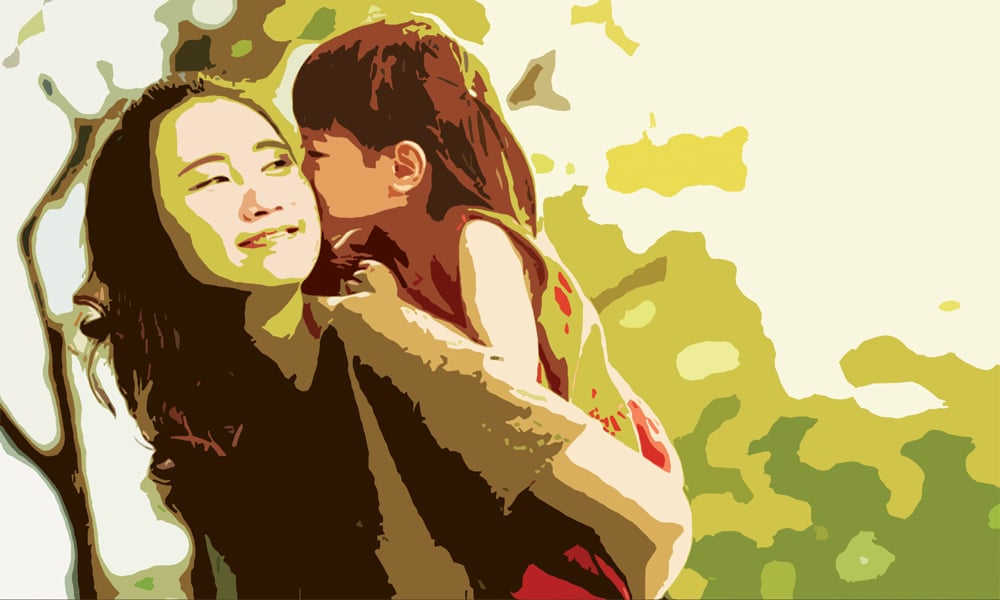
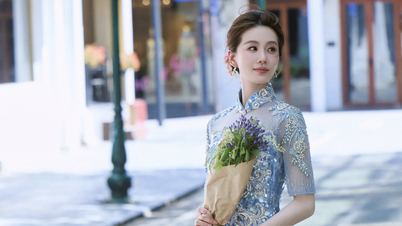
Illustration: China. |
At nineteen, Dung, a second-year literature student at the Teacher Training College, fell in love with Hung, a skinny medical student juggling his internship shifts, packed class schedules, and hurried motorbike taxi rides to earn extra money for rent. Their love was simple, without rings or roses. It was just waiting for each other outside the hospital gate, late dinners in their rented room smelling of fish sauce and the creaking of the fan. Dung felt sorry for his dry, cracked hands, for the dark circles under his eyes after a night shift, and for his restless sleep beside his worn-out textbook. She believed that a hardworking man could build a home, even if it started with just a few crumbling bricks from difficult times.
One night, in the bitterly cold Hanoi winter, Dung had a high fever. Hung, who was on duty at the hospital, asked someone to take over his shift and rushed back, his face a mixture of panic and worry. He wiped her body with a warm towel, awkwardly cooked a bowl of plain rice porridge with an egg, and fed her spoonful by spoonful, blowing on it gently. The small, cramped rented room was damp, the yellow light casting shaky shadows, yet strangely, it felt warm to the heart. Hung sat nodding off at the edge of the bed, holding her hand all night. Dung opened her eyes at dawn and saw that he had fallen asleep, his head resting against the headboard, his hand still tightly gripping hers as if afraid of losing her. In that moment, Dung believed that if she ever had a home in the future, Hung would undoubtedly be the strongest pillar of her life.
And Hung, just as Dung had believed, did not disappoint her. Four years later, he became a doctor in the Outpatient Department of a central hospital, where each shift was a tense series of stressful days, but in return, the income was enough to support their simple dreams. They got married. A small apartment on the third floor of an old apartment building, an old wooden bed, a few potted plants on the balcony, and the cries of baby Mai, a tiny gift arriving in the middle of autumn when the leaves were falling. Happiness seemed within reach, warm and soft like a quilt on the first day of winter.
***
In the early days after their wedding, Dung would often wake up early, cook breakfast, and make her husband his favorite unsweetened black coffee. Hung, despite the dark circles under his eyes from his night shift, would always make sure to take their child to daycare. He would always carefully smooth Mai's hair before leaving the house. One day, he brought home a tiny bouquet of wildflowers, their stems slightly broken, their leaves still damp with dew. He smiled and said, "I thought those cosmos flowers behind the duty room were so beautiful. I picked them and brought them back for you. You can put them in a vase!"
Dung laughed, her smile radiant and warm. The small house, though cramped and lacking in many things, was still a complete and perfect home, where every corner, every clatter of her clogs on the hallway floor, made one long to return.
But then, things gradually became distorted, like a painting being pulled out of alignment, blurring over time, and nobody knew when it started.
At first, it was just unexpected shifts. Then came short business trips, rushed in and out. Not a single commemorative photo. He avoided her gaze when their eyes met. His answers were short and curt, as if any explanation had long since become tiresome. Then, one rainy afternoon, a call came to his phone from an unknown number. Dung answered it for him. On the other end was a woman's voice, soft but unfamiliar. She still smiled, trying to keep her voice natural. "It's probably a colleague calling to ask for something." She told herself not to overthink it. Not just because she loved him, but because she had invested her youth, her trust, in this man who had been everything to her during her impoverished days.
But the veil of trust began to crumble when her mother-in-law, who had been helping with the grandchildren for almost a year and had never interfered in their marital affairs before, unexpectedly asked during a meal: "Do you... have you noticed that Hung has been different lately?" "Different in what way?" Dung was stunned. "I think he's... acting very strangely."
That night, Dung couldn't sleep. Her pillow was soaked with tears, but she didn't dare cry out loud. She lay still, flipping through fragments of memories like turning pages in an old diary. On Mai's fourth birthday, he said he was busy with a conference in Da Nang , only managing to send a hastily bought gift. Once, in the middle of the night, she was writhing in pain from a stomachache, only to receive a curt text message: "Take your medicine yourself, I'm busy."
She tried to piece together all the small, seemingly harmless things into a larger picture, and that picture sent chills down her spine. It was no longer doubt, but fear. Fear that her trust had been misplaced. Fear that the once warm home was now just an empty shell, cold as a winter's night, with no one to return to.
Then, one afternoon in the fading sunlight, Dung saw them coming out of a roadside motel. Nothing could justify that image. Nga, who had once held little Mai in her arms, called her "my darling," given her birthday presents, and laughed and talked with her like a close relative, all of that suddenly became a cruel wound.
Dung stood silently across the street. It wasn't raining, but a silent storm raged within her. No shouting. No running to confront. She just stood there, like a shadow, witnessing a truth she had painfully denied for days.
Her heart ached with every beat, not from jealousy, but from a stab in her trust. It was as if someone had torn apart an old diary, filled with vows and cherished memories of him. Every step Hung took alongside that woman was a knife, cutting deep into the past she had treasured.
When Hung's panicked gaze shifted to the other side of the road, Dung turned away. Her steps were unsteady, her shoulders trembling slightly. The wind lashed across her face as if someone had slapped her. No one witnessed it, but something within her had died, silently, like a lamp running out of oil, no one bothered to relight it.
Perhaps when the pain is too great, all people can do is remain silent.
***
In the days that followed, Dung didn't reproach, didn't cry, didn't ask a single question. Hung didn't explain either, as if they both understood each other implicitly, and also lacked the strength to start over from the ruins. They lived in a house that was still fully furnished, but felt eerily empty. Under the same eaves, they were divided in silence.
Mai, as if sensing something in a sensitive child's mind, suddenly smiled less. One twilight afternoon, as Dung was folding her daughter's tiny clothes, little Mai approached, tugging at her mother's dress. "Mommy... why doesn't Daddy kiss me to sleep anymore?" Dung froze. The pink sweater fell to the floor. "Daddy... he's busy, my dear," she replied softly, her voice fading into the air. Mai looked up, her clear eyes filled with sadness: "Does Daddy not love me anymore, Mommy?"
That question was like a tiny needle, piercing deep into Dung's heart. The child, only four years old, had already sensed what adults tried to hide. Dung felt so sorry for her young daughter. She hugged her tightly, unable to utter a single word. Her throat felt constricted by the unspoken words she wanted to say. Only her ragged sighs and the pounding of her heart against her chest, each beat dry and agonizing. In that moment, Dung realized: It wasn't her betrayal that hurt, but her little daughter, the embodiment of their love, who had to endure the first emptiness in her life, before she even fully understood the meaning of "family."
After arranging her affairs, Dung quietly packed her and her daughter's clothes into an old suitcase. She returned to live with her mother, without a word of complaint, without an argument, and without a divorce paper. She didn't want to become a woman who shed tears trying to hold onto a man who no longer loved her. Letting go, for her, wasn't because of exhaustion, but because of self-respect. And for her child.
Back in her hometown, Dung started from scratch, literally. A dilapidated house, an old desk, and a fan that whirred every night. She taught at a rural elementary school, earning just enough to cover electricity, water, and a few meager meals. At night, while Mai slept, Dung compiled materials for an online learning center. Some nights, she would collapse onto her desk, her eyes stinging from sitting in front of the screen for too long.
Mai's tuition was due soon. In the refrigerator, there were only a few eggs, some water spinach picked from the field behind the house, and a piece of dried fish her mother had saved. Dung sat silently, watching her daughter sleep, her face rosy, her eyelids fluttering with each breath. A feeling of helplessness welled up, overwhelming and heavy, as if the whole world was weighing on her shoulders. The next morning, as the sunlight streamed through the window, Mai pressed a vibrant purple pea flower into her mother's hand, innocently saying, "I'm giving this to you, Mom!" Dung laughed. Her laughter broke, tears welling up in her eyes. It turned out that just a pure gaze, a child's words, could help someone get back on their feet after days that seemed impossible to bear.
From that day on, every morning, Dung would take her child to the garden, teaching her how to plant vegetables, catch insects, and name each type of wildflower growing by the well. At noon, the two of them would sit and eat, chatting happily. In the evening, after teaching and preparing her lessons, she would read fairy tales to her child, her voice still as gentle as before. Dung realized that peace didn't lie in a large house or a high salary, but in when resentment ceased to exist in people's hearts. It was when, in the midst of an ordinary day, a tiny hand still held hers tightly.
A year later, Dung received news that Hung and Nga had broken up. Nga had transferred to a job in the South, and Hung, the man who had once proudly worn a white lab coat, was now suspended from his job for violating internal regulations. He lived quietly in his old apartment.
Once, Hung sent a message: "I miss our daughter. Can I see Mai?" Dung read those words, and the anger in her heart subsided. She understood that revenge would never bring happiness. But forgiveness didn't mean they would get back together.
She simply replied with a short message: "You can see the child whenever the child wants to."
When Mai was six, she participated in her school's poetry reading program. The poem she chose was "Mother," her small but clear voice echoing each line: "Mother is the first light. Guiding me through my first years of life…"
Dung stood silently in the schoolyard, tears streaming down her cheeks. For the first time in so many years, she felt a true sense of peace. Life could never go back to how it was before, but it had turned a new page, one that was more peaceful and fulfilling.
Dung continued teaching, occasionally writing articles for newspapers and magazines. She no longer thought of Hung as someone who had betrayed her, but rather as a distant memory of the past. Thinking about the past, Dung could smile. She realized that good things don't always come immediately after hurt, but they will eventually come, one day when one is strong enough to accept them. On the porch, the raindrops continued to fall softly...
Short stories by Le Ngoc Son
Source: https://baobacgiang.vn/hien-nha-co-tieng-mua-roi-postid419083.bbg











![[Photo] The dazzling Lantern Festival at Ho Van Lake - Van Mieu Temple](https://vphoto.vietnam.vn/thumb/402x226/vietnam/resource/IMAGE/2026/05/05/1777997594674_ndo_br_hoa-dang-9-jpg.webp)












































































Comment (0)