

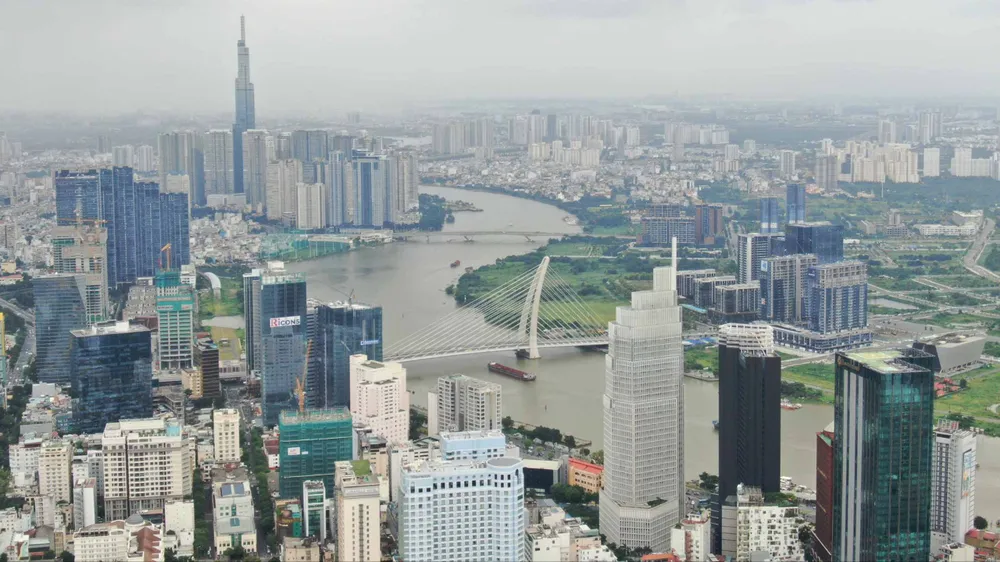
The issue is not just about the numbers, but more importantly, as the head of the Ho Chi Minh City Party Committee has pointed out, increasing revenue cannot rely solely on land. The city is aiming to accumulate other resources, particularly using derivative financial instruments, revenue from new development areas, and international capital flows.
To realize that goal, the "duo" of orientation and legal framework, including Resolution 09-NQ/TW on building and developing Ho Chi Minh City in the new era and the specific mechanisms being designed in the Draft Law on Special Urban Areas of Ho Chi Minh City, is expected to create a new capital mobilization ecosystem, capable of leading and spreading strategic resources to the city.
Notably, policymakers are shaping a relatively complete capital operation chain with three successive stages: seed funding, leverage, and large-scale capital mobilization. Each stage is supported by its own legal mechanisms, linked to specific development programs, thereby forming a relatively closed capital cycle for Ho Chi Minh City.
In the seed funding phase, Resolution 09-NQ/TW outlines the policy of building and operating an efficient, next-generation Vietnam International Finance Center (VIFC) in Ho Chi Minh City, deeply connected to international capital markets. This is not only a new financial institution but also a tool for generating initial capital through international financial activities, financial technology, and emerging markets such as carbon credits. A key feature is that 100% of the revenue generated from seed funding will be retained (for the first 5 years), and the entire carbon credit revenue will also be retained for reinvestment in core infrastructure, digital networks, and as counterpart funding for land clearance. This is the mechanism for accumulating initial capital to create new development resources for the city.
Building on that foundation, the city is moving into a phase of leveraging growth through new economic models. A new legal framework allows for the piloting of digital asset exchanges, cryptocurrency exchanges, and a Sandbox mechanism to attract venture capital from foreign investors. In addition, FDI from VIFC members benefits from more streamlined investment procedures.
For financial corporations and strategic investors in the Fortune Global 500 group, the "fast-track" mechanism is designed to shorten procedures, waive investment licenses in certain cases, and allow advance infrastructure funding to be deducted from land lease fees. The goal is to create sufficient appeal for international capital to choose Ho Chi Minh City as a strategic destination.
These two phases will pave the way for a large-scale fundraising phase through the issuance of debt instruments to the international market such as municipal bonds, green bonds, and project bonds. This will be a crucial resource for strategic projects such as the Can Gio International Transshipment Port, the metro system, flood control projects, and the Transport-Oriented Development (TOD) model.
Among these, TOD (Transit-Oriented Development) is considered a particularly important breakthrough. While Resolution 09-NQ/TW paved the way for the efficient exploitation of land resources to generate investment for development, the mechanism for collecting value-added tax from land around metro stations is a concrete step in implementing that policy. This will also be a significant legal breakthrough implemented in the Draft Law on Special Urban Areas of Ho Chi Minh City. Mechanisms for capital mobilization are also clearly defined. For marine economic and logistics projects such as the Can Gio International Transshipment Port or the Cai Mep Ha Port, the city can issue international project bonds to attract strategic investors in the maritime sector...
If implemented effectively, the new mechanisms will not only generate resources for development investment but also gradually form a new capital channel for Ho Chi Minh City. The city's growth will then no longer depend on land revenue, but will be supported by the capital market, international capital flows, and new economic drivers. This will also be the foundation for Ho Chi Minh City to achieve sustainable and long-term double-digit growth.
Source: https://www.sggp.org.vn/hinh-thanh-kenh-dan-von-moi-cho-tphcm-post855347.html
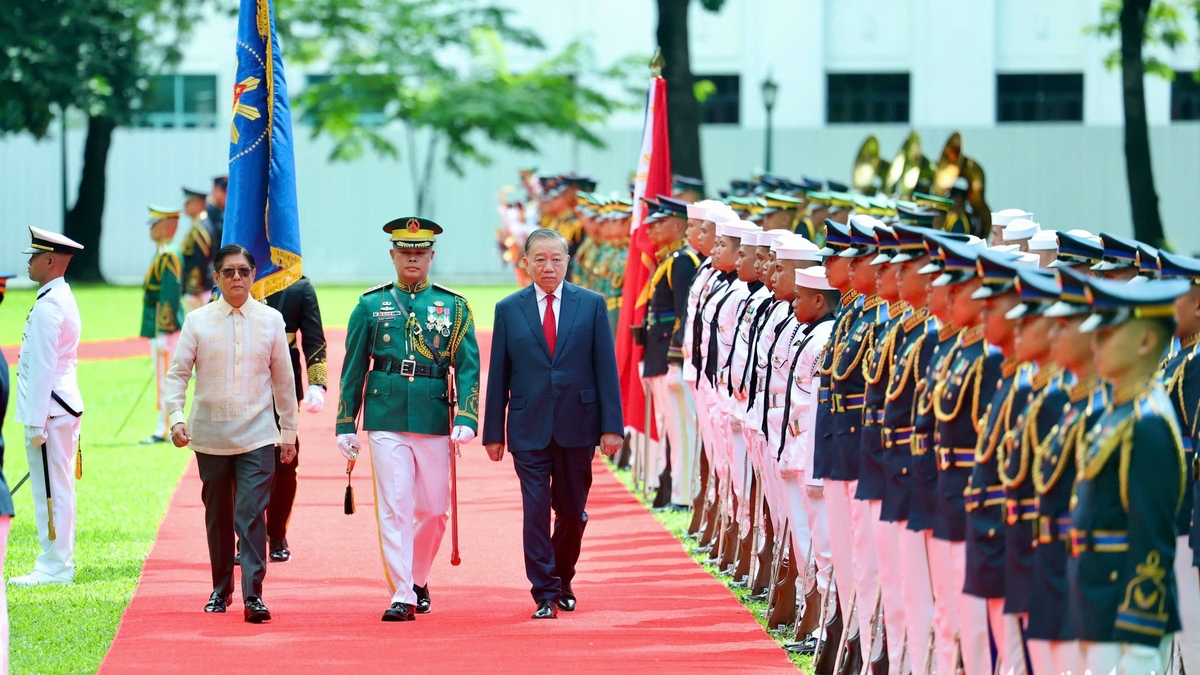
![[Photo] General Secretary and President To Lam and the President of the Philippines hold talks.](https://vphoto.vietnam.vn/thumb/1200x675/vietnam/resource/IMAGE/2026/06/01/1780283481955_vna-potal-tong-bi-thu-chu-tich-nuoc-to-lam-va-tong-thong-philippines-hoi-dam-8797519-1429-jpg.webp)


































































Comment (0)