


Implementation based on the "three-legged stool" model.
Deputy Prime Minister Pham Thi Thanh Tra signed Directive No. 17/CT-TTg on organizing free periodic health check-ups or screenings for people nationwide. This concretizes the objectives of Resolution No. 72-NQ/TW dated September 9, 2025, of the Politburo on some breakthrough solutions to strengthen the protection, care, and improvement of people's health, aiming to enhance the protection, care, and improvement of people's health in the new period.
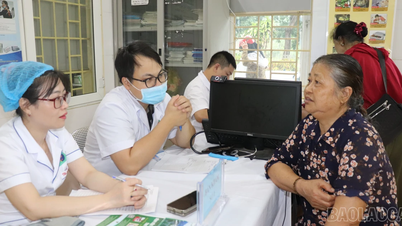
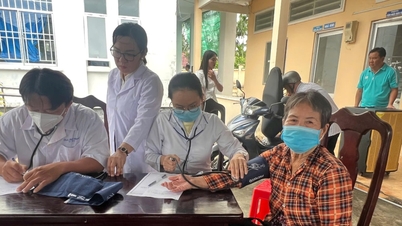
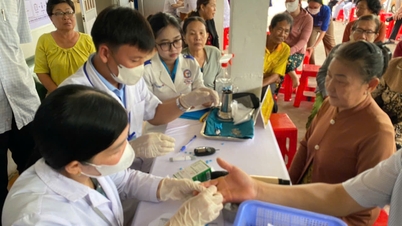
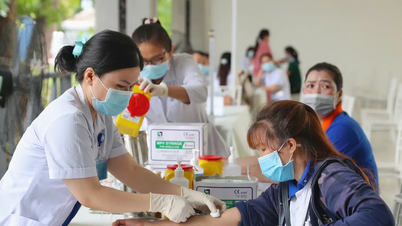
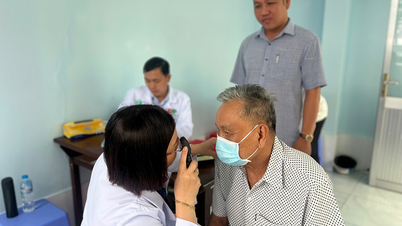
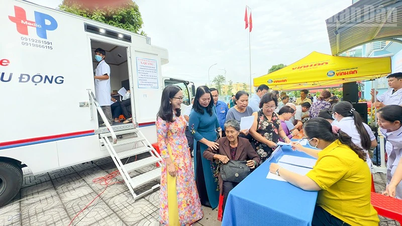
Previously, at the 5th Conference of the Ho Chi Minh City Party Committee for the 2025-2030 term, the Secretary of the Ho Chi Minh City Party Committee, Tran Luu Quang, also assigned the health sector a very clear and urgent task: to organize health check-ups and screenings for 100% of the city's residents in 2026, ensuring that each person receives at least one check-up, without dividing it into phases. In implementing this directive, the Ho Chi Minh City Department of Health has been urgently researching and proposing many feasible solutions, suitable to the characteristics of a large, highly mobile urban area with diverse healthcare needs. The city's health sector is oriented towards implementing a "three-legged stool" model with three complementary solution groups, creating a comprehensive, flexible, and effective coverage system, with the overarching goal of not leaving anyone out, such as: organizing health check-ups across administrative boundaries, organizing health check-ups for high-risk groups right in the community, and collecting existing health data.
The organization of routine health check-ups for the population needs careful study to ensure it aligns with practical requirements and the capacity of the healthcare system. A nationwide health check-up should not simply apply the administrative health check-up model outlined in Circular 32/2023/TT-BYT, which details certain provisions of the Law on Medical Examination and Treatment, such as pre-employment health check-ups, routine health check-ups for workers, health check-ups for school, driving licenses, or overseas employment. Implementing this approach on a nationwide scale would place immense pressure on the healthcare system, consume significant resources, and may not yield commensurate results in early disease detection.
This initiative not only ensures that citizens receive at least one health check-up in 2026, but also lays the foundation for managing each citizen's health throughout their lifetime on a unified data system. This is also an important step in building a modern, flexible, equitable, and humane healthcare system, aiming for comprehensive healthcare for all citizens of the city.
Don't just "examine and then leave it at that."
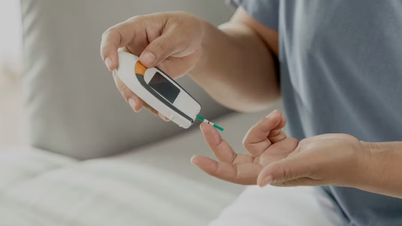
Universal health checkups should be designed to focus on risk screening, early disease detection, and continuous health management, tailored to each population group and the actual capacity of the healthcare system. A more appropriate approach is to shift the focus to screening, risk assessment, and early disease detection. Every citizen needs an initial health assessment, an updated electronic health record, and grouping by age, gender, underlying conditions, risk factors, living environment, and occupation. Based on this, the healthcare system can determine who needs what examinations, what screenings, at what frequency, and where they should be monitored. For healthy individuals, the priority should be on disease prevention counseling, immunization, nutrition, exercise, and screening for common diseases. For the elderly, those with chronic diseases, pregnant women, children, workers in high-risk environments, or vulnerable groups, appropriate care and screening packages should be developed for each target group. More importantly, health check-ups should not be just a formality, but should be linked to continuous health management at the primary healthcare level, with real-time health data updates and mechanisms for monitoring and early intervention when risks are detected.
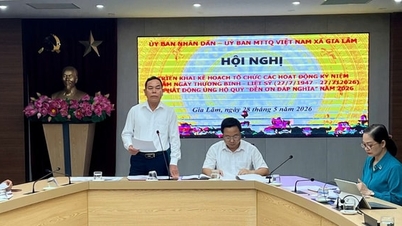
The issue is not just about "examining many people," but about proactively, continuously, and effectively managing people's health based on data. The goal of community health care is to create "health certificates" while simultaneously managing health continuously and intervening promptly to prevent disease, reduce severe illness, and minimize premature death. Above all, to realize the spirit of Resolution 72, Directive 17, and the guidance of the Secretary of the Ho Chi Minh City Party Committee, a coordinated effort from departments, agencies, local authorities, and the health sector is essential. Local authorities play a crucial role in identifying target groups, mobilizing public participation, arranging locations, and coordinating the organization of examination points suitable to the characteristics of each area. Combining state budget with socialized funding, health insurance, and health check-up programs from agencies and businesses will help rapidly expand implementation capacity and ensure long-term sustainability.
Associate Professor, Doctor Tang Chi Thuong
Director of the Ho Chi Minh City Department of Health
Source: https://www.sggp.org.vn/quan-ly-suc-khoe-nguoi-dan-mot-cach-chu-dong-post855346.html




![[Photo] General Secretary and President To Lam and the President of the Philippines hold talks.](https://vphoto.vietnam.vn/thumb/1200x675/vietnam/resource/IMAGE/2026/06/01/1780286997787_anh-man-hinh-2026-06-01-luc-11-09-43.png)

















































































Comment (0)