

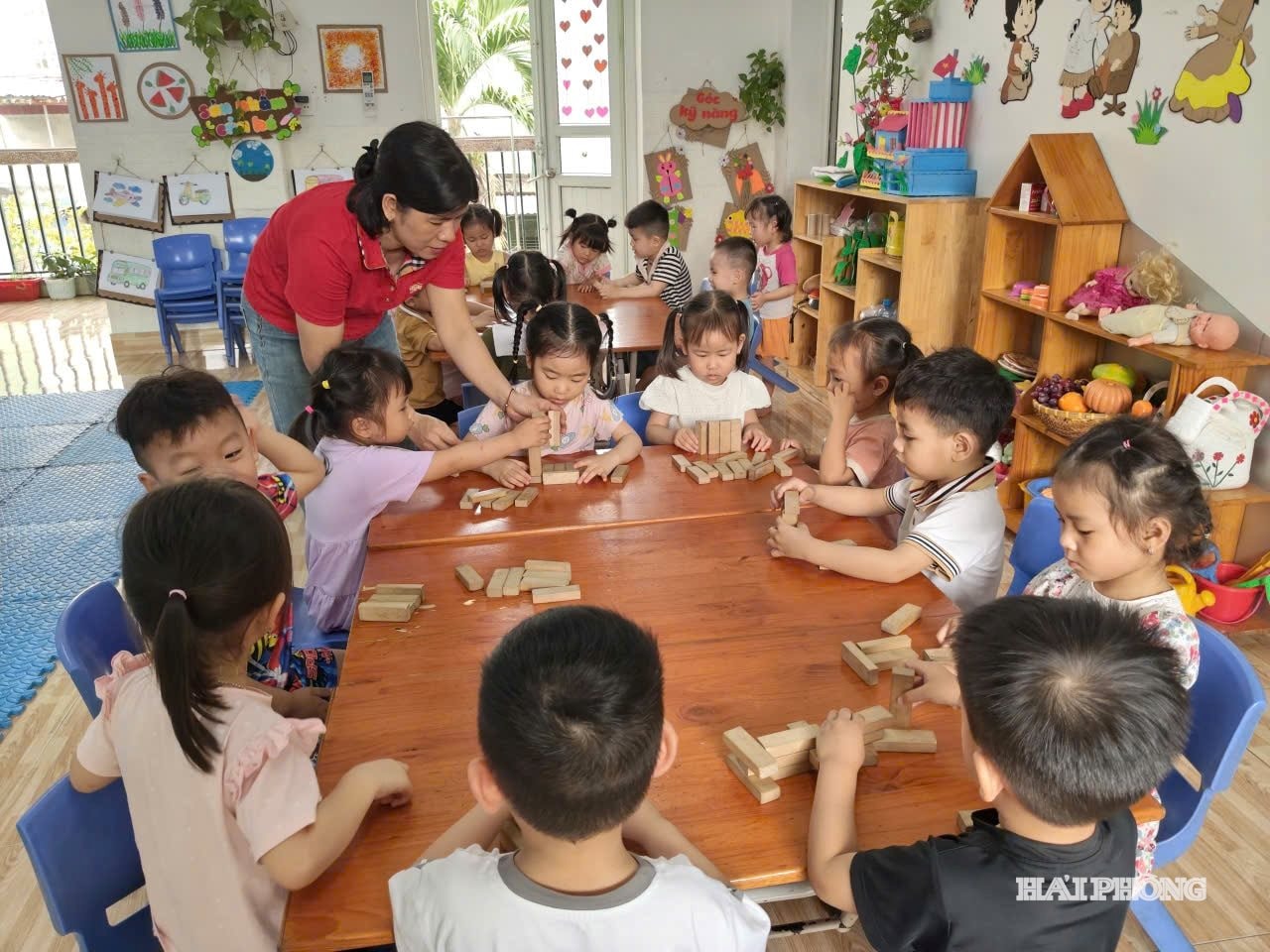
Maintain a daily hygiene routine.
During daily lessons at class 5A2, Kim Dong IV Kindergarten (Le Chan Ward), it has become a routine for the teachers to gently guide the children to line up and wash their hands with soap before eating and after using the toilet.
Seemingly simple actions like rubbing hands together, thoroughly washing between fingers, and drying with a clean towel are performed regularly every day. After their afternoon nap, children are reminded to wash their faces, rinse their mouths, and maintain personal hygiene.
Teacher Pham Thi Phuong Thao, homeroom teacher of class 5A2, said: “As the weather changes to summer, there are many potential risks of disease outbreaks, so the teachers are even more careful in preventing illness among the children. The most important thing is to form daily hygiene habits so that the children can protect themselves.”
According to Ms. Vu Thi Thanh Uyen, Principal of Kim Dong IV Kindergarten, with 360 children in 12 classes, the school has not recorded any cases of hand, foot and mouth disease or dengue fever this school year. This is the result of strictly implementing disease prevention and control measures.
Every day, teachers and staff participate in a thorough cleaning of the entire school, wiping down and disinfecting classrooms, equipment, toys, doorknobs, etc., with Cloramin B solution. Items such as face towels, cups, bowls, and spoons used by children are sterilized according to regulations.
Simultaneously, communication efforts were intensified through websites, Fanpages, and Zalo groups to provide timely updates on the disease and its prevention and control measures to staff, teachers, and parents.
When children show unusual symptoms such as fever, rash, mouth sores, etc., the school will instruct parents to keep their children home from school, take them for a medical examination, and inform them so that appropriate measures can be taken.
Similarly, at Hiep An Kindergarten (Kinh Mon Ward), maintaining classroom hygiene is a daily task. Teacher Nguyen Thi Phuong, the homeroom teacher of class 3C with 21 children, said that the classroom is always cleaned thoroughly from early morning to the end of the day.
Children are reminded to wash their hands before and after meals. After each activity, the teachers clean and disinfect to ensure a safe learning environment for the children. "We always keep the classrooms well-ventilated in the summer and warm in the winter. At the same time, we ensure that children eat cooked food, drink boiled water, have sufficient nutrition, and get appropriate exercise to boost their immunity," Ms. Phuong said.
According to Ms. Nguyen Thi Tuyet, Principal of Hiep An Kindergarten, the school is currently teaching and caring for 490 children. Besides disease prevention measures, the school focuses on improving the quality of school meals, ensuring adequate nutrition to help children improve their physical condition and prevent diseases.
Proactive response during the transitional season
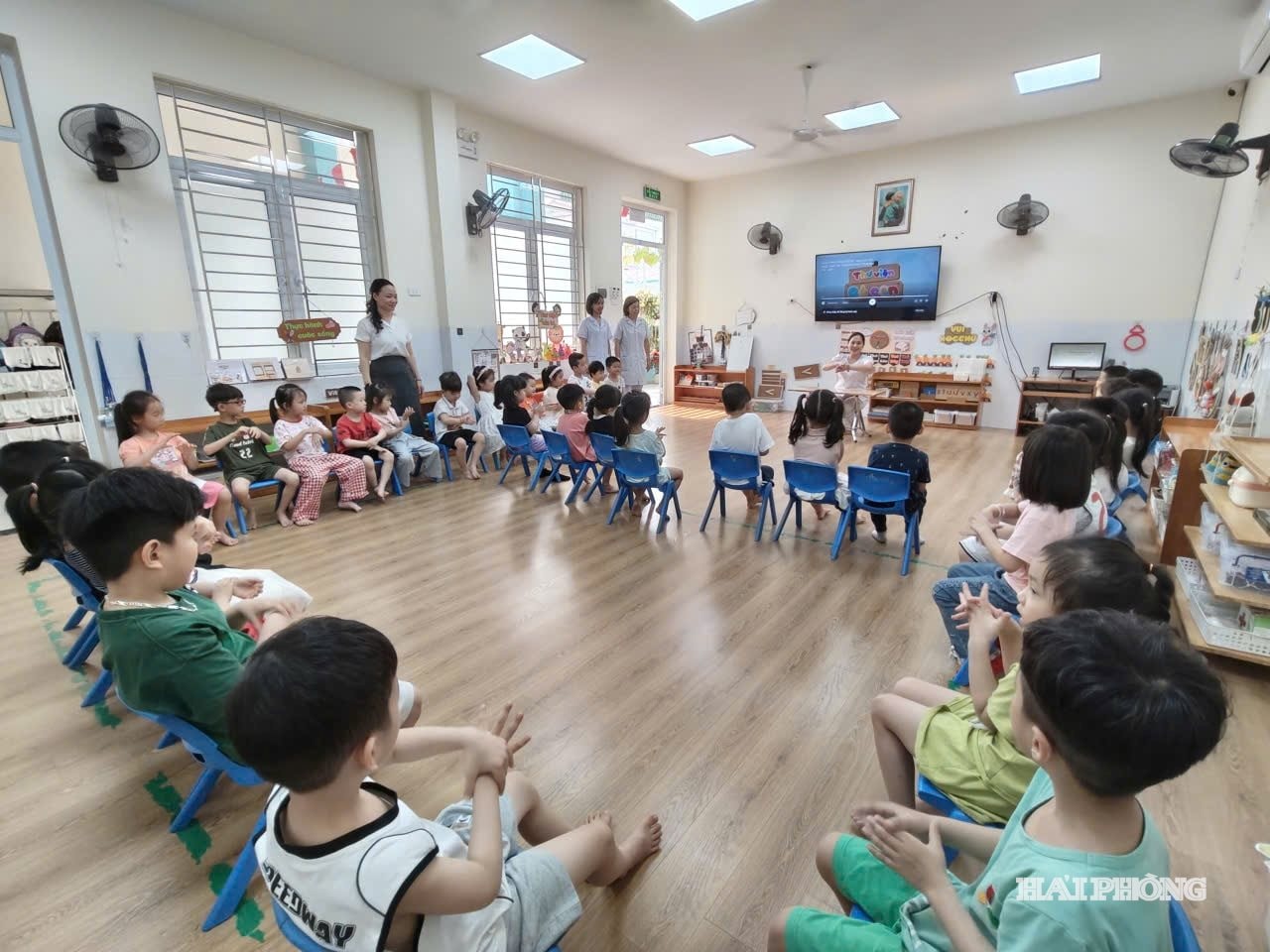
As spring transitions into summer, the weather becomes unpredictable, creating favorable conditions for the growth of various viruses and bacteria. Diseases such as hand, foot, and mouth disease, seasonal influenza, dengue fever, respiratory illnesses, and digestive problems are at risk of increasing, especially in preschools with large numbers of students.
According to Mr. Uong Minh Long, Deputy Director of the Department of Education and Training, right from the beginning of the school year, the Department issued many documents directing educational institutions to regularly spray for insect control and strengthen prevention and control of diseases such as dengue fever, polio, hand, foot and mouth disease, and other emerging infectious diseases.
Whenever an epidemic occurs nationwide or within the city, the Department promptly issues directives to schools to strengthen disease prevention and control measures for students. The Department also instructs and requires schools to strictly maintain environmental hygiene measures, monitor students' health daily, detect and promptly handle suspected cases, and prevent the spread of disease within schools.
At the grassroots level, guidance and supervision are also being closely monitored. According to Nguyen Thi Van, Deputy Head of the Culture and Social Affairs Department of Le Chan Ward People's Committee, the Ward People's Committee regularly issues documents requiring schools to strengthen disease prevention and control measures. Statistics show that in February 2026, 22 children in the ward contracted hand, foot, and mouth disease, and this number rose to 38 in March 2026.
From the beginning of the year to April 2026, more than 40 cases of other diseases such as dengue fever, whooping cough, tuberculosis, and measles have also emerged. This shows that the risk of epidemics still exists and could erupt if we are complacent. To effectively prevent and control epidemics, it is crucial that each school develops a specific, practical plan and maintains it regularly and continuously. This should not only focus on classroom hygiene but also require close coordination with the health sector in disinfection and disease control.
According to Tran Thi Van, Head of the Culture and Social Affairs Department of Kinh Mon Ward People's Committee, in addition to the above measures, forming good personal hygiene habits for students, especially preschool children, is considered a long-term solution. At the same time, the ward also directs schools to strengthen coordination with parents in monitoring children's health and ensuring full vaccination, contributing to the holistic development of students both physically and mentally.
BUI HUONGSource: https://baohaiphong.vn/hoc-duong-binh-an-540604.html


![[Photo] General Secretary and President To Lam presides over a meeting with the Central Organizing Committee.](https://vphoto.vietnam.vn/thumb/1200x675/vietnam/resource/IMAGE/2026/06/03/1780482764658_a1-bnd-4741-3342-jpg.webp)
![[Photo] Secretary of the National Assembly Party Committee, Chairman of the National Assembly presides over the meeting of the Standing Committee and Executive Committee of the National Assembly Party Committee.](https://vphoto.vietnam.vn/thumb/1200x675/vietnam/resource/IMAGE/2026/06/03/1780480353201_ndo_br_bnd-2585-jpg.webp)
![[Image] Shipbuilders exposed to steel and record-breaking heat.](https://vphoto.vietnam.vn/thumb/1200x675/vietnam/resource/IMAGE/2026/06/04/1780545781745_ndo_br_img-5402-4683-jpg.webp)









































![[Video] Sunset at Lap An Lagoon – Where the sun sets over the fishing nets](https://vphoto.vietnam.vn/thumb/1200x675/vietnam/resource/IMAGE/2026/05/31/1780192137701_beach-landscape-sea-water-nature-grass-745871-pxhere-com.jpeg)








![[Photo] General Secretary and President To Lam attends the 14th Congress of the Vietnam Trade Union](https://vphoto.vietnam.vn/thumb/402x226/vietnam/resource/IMAGE/2026/06/04/1780543339765_anh-man-hinh-2026-06-04-luc-10-22-07.png)

















Comment (0)