

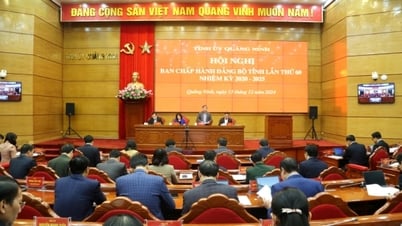
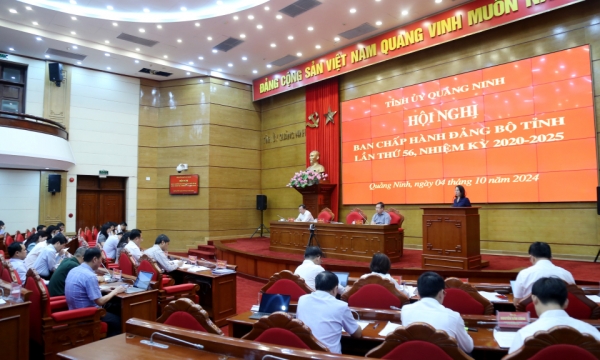
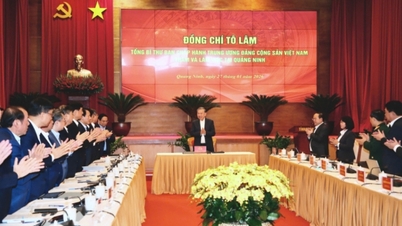
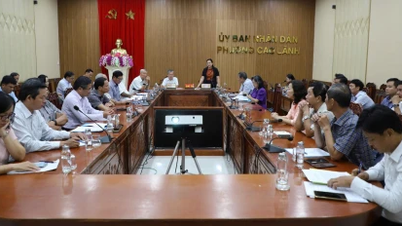
On April 24th, the Provincial Party Committee held its 69th meeting to discuss and provide feedback on the plan for reorganizing commune-level administrative units in Quang Ninh province and several other issues to be presented at the 26th session of the 14th Provincial People's Council. Comrade Vu Dai Thang, Member of the Central Committee of the Party, Secretary of the Provincial Party Committee, and Head of the Provincial Delegation of National Assembly Deputies, presided over the meeting.
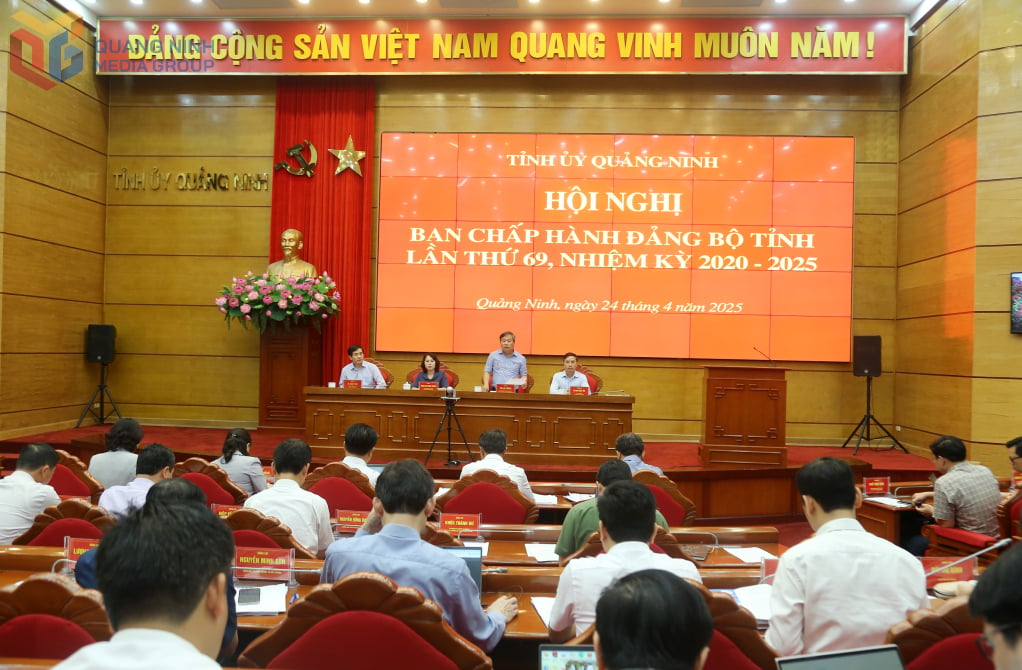
According to the draft plan for the reorganization of commune-level administrative units in Quang Ninh province, after the reorganization, the entire province will have 51 commune-level administrative units. If the Mong Cai special zone is not established, the province will have 54 commune-level administrative units. In addition, the draft also outlines the plan for reorganizing the administrative apparatus, assigning cadres, civil servants, public employees, and workers, and addressing benefits and policies when implementing the reorganization of commune-level administrative units. It also includes a plan and roadmap for the arrangement and handling of offices and public assets after the reorganization.
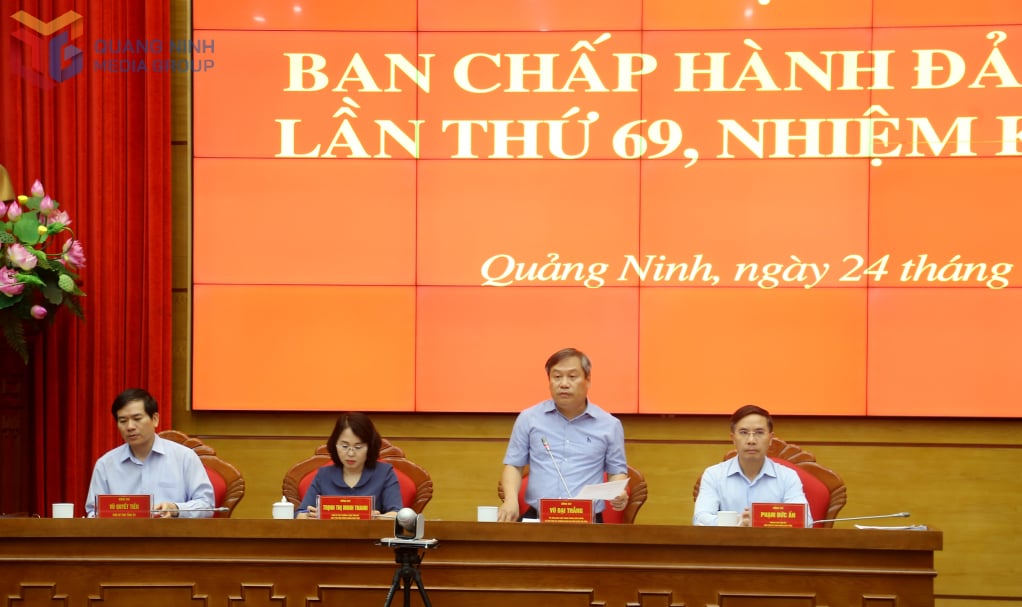
During the conference, members of the Provincial Party Committee analyzed and proposed plans for reorganizing the organizational structure and operating methods of several public service units currently under the district level. This included, in particular, units performing tasks in the fields of broadcasting, education , healthcare, public services, and public investment project management.
Also at the conference, the Provincial Party Committee heard and gave opinions on the adjustment and supplementation of the medium-term public investment plan for the period 2021-2025 using provincial budget funds; the adjustment and supplementation of the allocation of the public investment plan using provincial budget funds for 2025; and the addition of some contents in the mechanism and measures for managing the local budget in 2025 to be submitted to the 26th session of the Provincial People's Council.
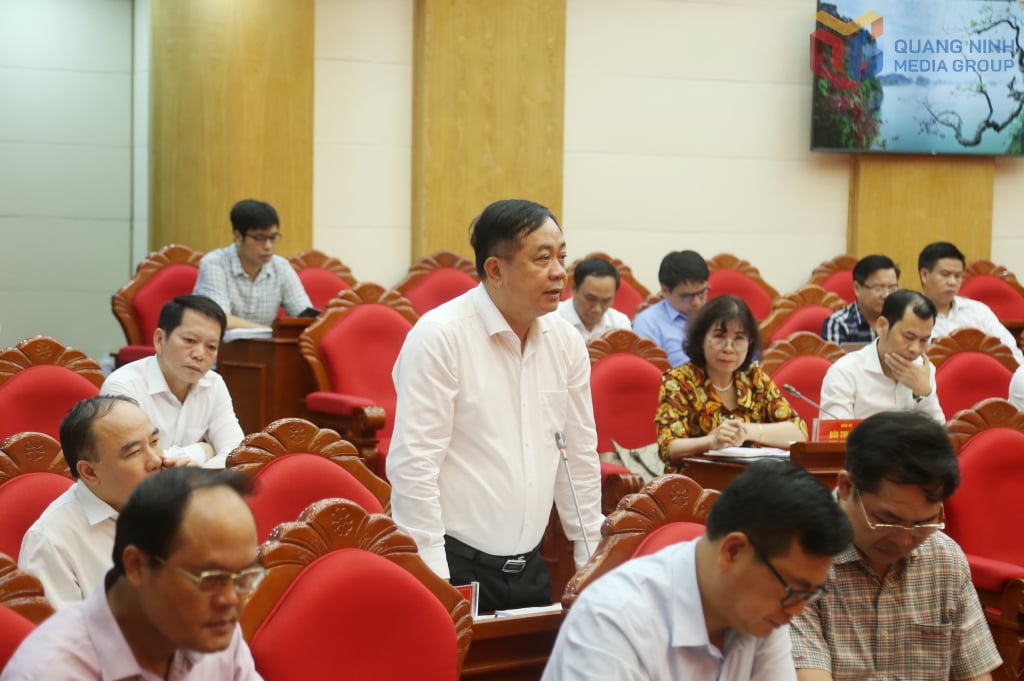
Concluding the conference, Comrade Vu Dai Thang, Member of the Central Committee of the Party, Secretary of the Provincial Party Committee, and Head of the Provincial National Assembly Delegation, acknowledged and highly appreciated the decisive leadership of the sector; and the efforts and determination of the district-level localities in developing plans for the rearrangement of commune-level administrative units. The district-level units have implemented the plan systematically, closely following the plan of the Provincial Steering Committee and preparing the necessary conditions for implementation, especially organizing the collection of opinions from voters.
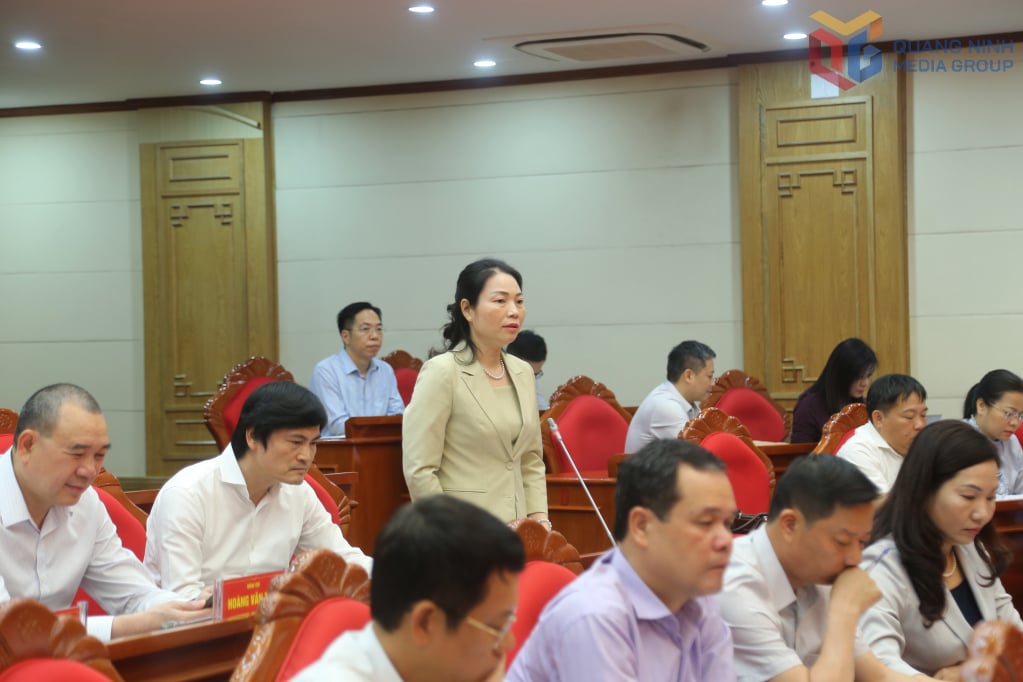
Agreeing with the proposed plan for rearranging commune-level administrative units in the province, including their names, office locations, organizational structure, and the placement of officials and employees in the new commune-level administrative units, the Provincial Party Secretary instructed the relevant agencies to incorporate feedback to further refine the plan, ensuring its content and timeline are met for submission to the Provincial People's Council for approval at the upcoming special session. This will serve as the basis for finalizing the dossier to be sent to the Ministry of Interior for submission to the Government before May 1, 2025.
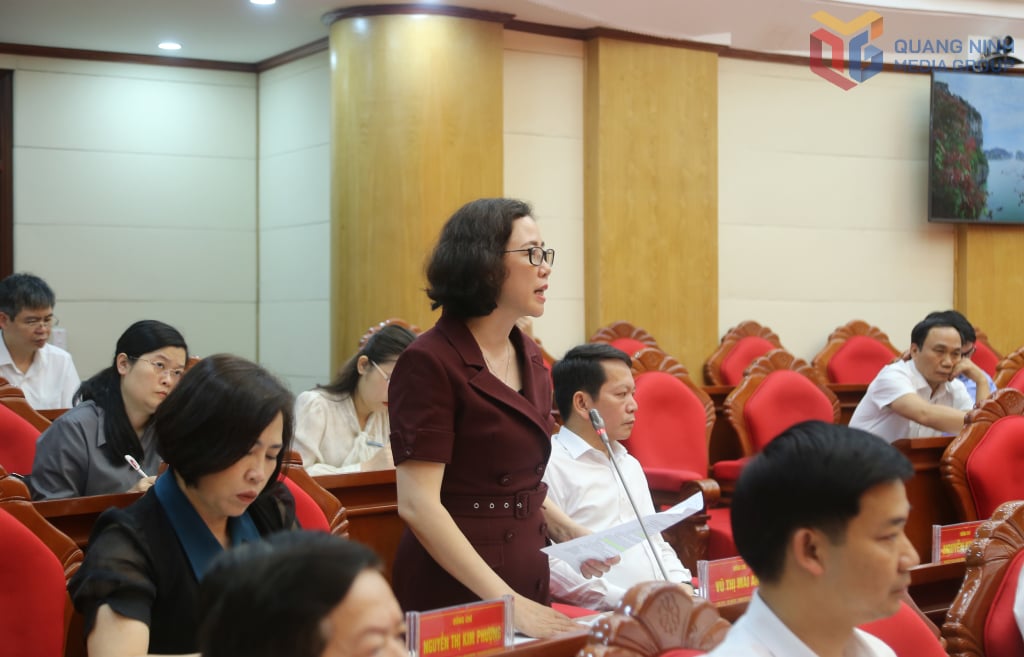
Regarding adjustments to public investment capital, the Provincial Party Secretary requested the Standing Committee of the Provincial People's Committee to incorporate the feedback received at the meeting to finalize the submissions and drafts in accordance with the prescribed legal authority and procedures, and within the specified timeframe. The Standing Committee of the Provincial People's Council directed its committees to thoroughly review the contents of the submissions and draft resolutions. The general principle is that the submitted contents must be within the Provincial People's Council's authority to consider and decide according to the law, while maximizing the proactive role of the Provincial People's Committee and investors in directing and managing the projects. This will shorten the time required for administrative procedures for public investment projects, contributing to the acceleration of project implementation.
Thu Chung
Source

![[Image] Pleasant weather helps students enter the 10th grade entrance exam with confidence.](https://vphoto.vietnam.vn/thumb/1200x675/vietnam/resource/IMAGE/2026/05/29/1780034401612_ngay-1-thi-lop-10-minh-duy-8-5009-jpg.webp)
![[Photo] Ba Lang An Lighthouse - the "eye of the sea" amidst the "rock museum" of Quang Ngai province.](https://vphoto.vietnam.vn/thumb/1200x675/vietnam/resource/IMAGE/2026/05/29/1780038698840_anh-man-hinh-2026-05-29-luc-14-10-42.png)
























































Comment (0)