

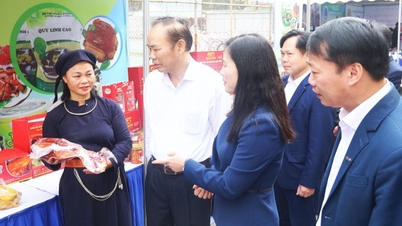
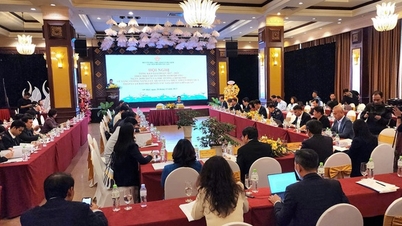
"What solutions can effectively control animal slaughtering?" was the main topic and the question posed at the Animal Slaughtering Control Conference organized by the Ministry of Agriculture and Rural Development on the morning of June 26th. This was the first national-level conference on animal slaughtering control held in Long An province . Attending the conference were the Deputy Minister of Agriculture and Rural Development, Phung Duc Tien, and the Vice Chairman of the Long An Provincial People's Committee, Nguyen Minh Lam.

Reports presented at the conference showed that by April 2024, the country had over 430 centralized animal slaughter facilities, a decrease of 5.5% compared to the same period, and over 24,000 small-scale animal slaughter facilities. Of these, 62 out of 63 provinces and cities had Provincial People's Committee Decisions approving the Planning for centralized livestock and poultry slaughter facilities or related Decisions; however, 14 provinces did not conduct slaughter control at any small-scale slaughter facilities.
The scattered nature of slaughtering activities makes inspection and control difficult due to insufficient resources; in fact, up to 83% of small-scale slaughterhouses lack veterinary staff for supervision. In 2023, inspections and monitoring revealed 45 violations of veterinary and food safety regulations, and the rate of fresh meat samples contaminated with microorganisms exceeding permissible limits remained high at over 26%.
In Long An province, the management of animal quarantine activities, slaughter control, and the development of a slaughterhouse network are considered good, basically meeting the requirements.
Currently, in the province, 33 out of 45 slaughterhouses are small-scale operations, accounting for over 73%, and the primary slaughtering method remains manual or improved manual. Therefore, Long An is orienting towards developing centralized slaughterhouses. This is not only a solution to control animal slaughter in Long An itself, but also something that localities nationwide should consider.
The conference serves as a forum for management agencies and businesses to exchange, share, and learn from each other's experiences, finding the best and most effective solutions for state management in the slaughtering sector, aiming towards building a centralized, modern, industrial-scale slaughtering system; contributing to ensuring food safety, animal disease safety, protecting human health, and protecting the environment.
Thu Nhat - Vinh Hung
[embed]https://www.youtube.com/watch?v=h85QRjXZO2M[/embed]
Source: https://la34.com.vn/hoi-nghi-kiem-soat-giet-mo-dong-vat-122941.html


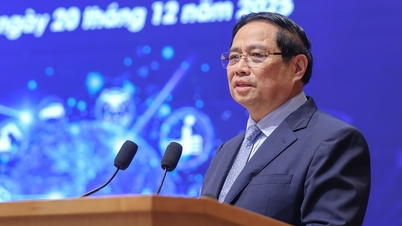
![[Photo] Prime Minister Pham Minh Chinh presides over a meeting on private sector economic development.](/_next/image?url=https%3A%2F%2Fvphoto.vietnam.vn%2Fthumb%2F1200x675%2Fvietnam%2Fresource%2FIMAGE%2F2025%2F12%2F20%2F1766237501876_thiet-ke-chua-co-ten-40-png.webp&w=3840&q=75)











































































Comment (0)