

"Narrowing the gray seas" aims to make the marine space more transparent and peaceful , while "Expanding the blue seas" seeks to identify the potential of the sea and its future.
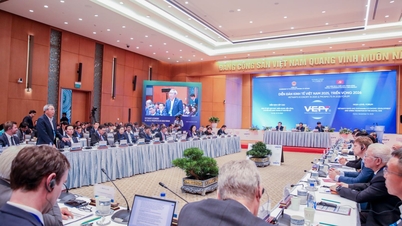
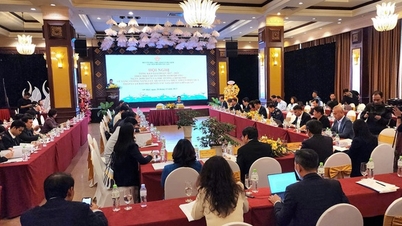
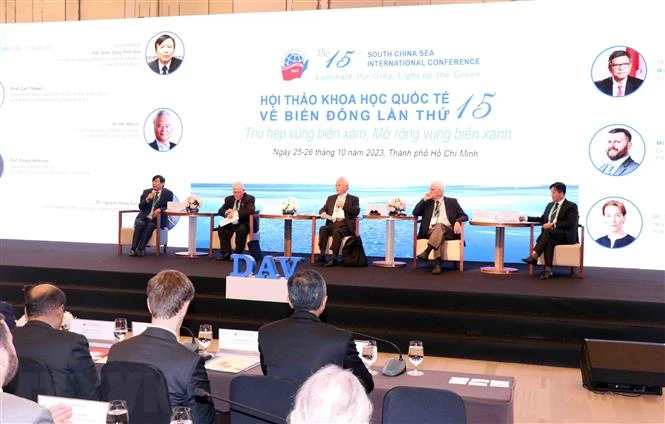 The first working session of the Workshop. (Photo: Xuan Khu/VNA)
On the morning of October 25th, the 15th International Scientific Conference on the South China Sea, jointly organized by the Diplomatic Academy of Vietnam and its partner agencies, opened in Ho Chi Minh City with the theme "Narrowing the gray sea zone, expanding the blue sea zone."
The workshop was attended by over 200 delegates in person and nearly 250 delegates who registered online.
The conference brought together nearly 50 speakers, including reputable experts from nearly 20 countries across different continents; and nearly 70 delegates from foreign representative offices in Vietnam (including nearly 20 Ambassadors and Consuls General).
The seminar was also attended by Associate Professor, Dr. Le Hai Binh, Alternate Member of the Central Committee of the Party, and Deputy Head of the Central Propaganda Department.
Create a forum to promote dialogue.
In her opening remarks at the conference, Acting Director of the Diplomatic Academy Pham Lan Dung stated that, with the aspiration to become one of the leading research institutions in the region, the Diplomatic Academy has been increasingly demonstrating an active and proactive role in promoting open, frank, and comprehensive academic discussions on diverse topics and emerging issues with regional and global impacts.
Along with numerous initiatives, the Diplomatic Academy has been contributing to connecting leaders, experts, scholars, and policymakers from various regions around the world ; creating constructive forums that promote dialogue, trust, and cooperation in many fields.
[International Conference on the South China Sea: A Sea of Peace - Sustainable Recovery]
Sharing the reasons for choosing this year's conference theme, Acting Director of the Diplomatic Academy Pham Lan Dung said that the Organizing Committee hopes that experts will together analyze the current situation in the South China Sea and the region, clarify common governing rules, identify policies to promote trust and cooperation, and shed light on behaviors that negatively impact the rules-based order and increase tensions.
"Narrowing the gray seas" aims to make the marine space more transparent and peaceful. "Expanding the blue seas" seeks to identify the potential of the sea and its future, by promoting best practices in key areas such as green transition, technologies, research and investment related to wind power, marine energy conversion, etc.
The workshop will also focus on exchanging and discussing how maritime forces and regional mechanisms can contribute constructively towards a "greener," "more peaceful" South China Sea.
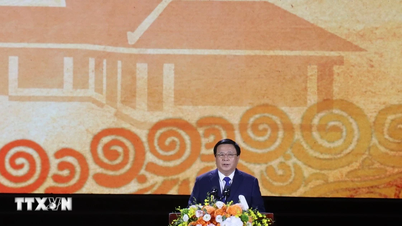
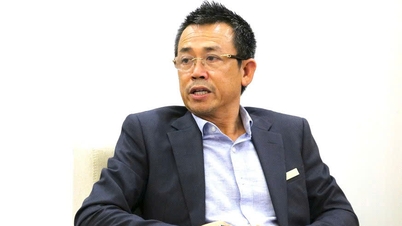
Deputy Minister of Foreign Affairs Do Hung Viet delivered the keynote address at the Opening Session.
Over the past 15 years, the South China Sea Conference series has created an open, frank, and friendly environment for regional and international experts to converge to enhance mutual understanding and narrow differences.
Deputy Minister Do Hung Viet expressed his hope that over the next 15 years, this dialogue will continue to be an important, open, inclusive, and innovative regional maritime security forum; a meeting place and a point of intersection between interests from the Indian Ocean to the Pacific and beyond.
Deputy Minister Do Hung Viet stated that the global focus is continuing to shift towards the Indo-Pacific region, which has become the "center" of global growth and a crucial engine for global recovery and future prosperity.
But that future cannot be guaranteed without lasting peace and stability in general, and in the regional maritime space in particular.
Currently, strategic competition is creating "major divisions" and "large rifts," as noted by UN Secretary-General Guterres. Conflicts are occurring in many regions of the world, and in the maritime space of the Indo-Pacific, the risk of confrontation and conflict is inevitable.
This situation compels us to continuously identify potential threats at sea, review existing cooperation mechanisms to address emerging challenges, and act together to prevent those threats.
Towards peace and development
Compared to 15 years ago, the situation in the South China Sea has become increasingly complex, with many new "grey areas" emerging that need to be clarified. However, the South China Sea remains a region offering many potential opportunities for cooperation.
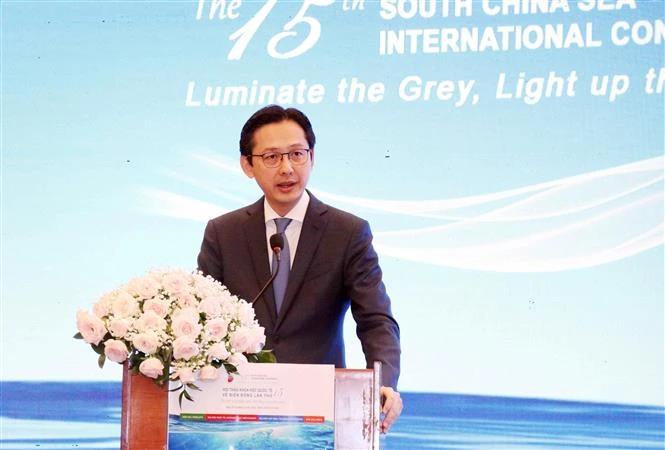 Mr. Do Hung Viet, Deputy Minister of Foreign Affairs, speaks at the opening session. (Photo: Xuan Khu/VNA)
Notably, the new Agreement on the Conservation and Sustainable Use of Biodiversity in Areas Beyond National Jurisdiction demonstrates the shared concern among countries for the sea. Vietnam is proud to be one of the first signatories.
In that context, Deputy Minister Do Hung Viet highly appreciated the choice of the conference's theme, while emphasizing that only through cooperation can we help the East Sea transform from "gray" to "green," moving towards peace and sustainable development.
To achieve this, it is crucial to respect and abide by international maritime law, as enshrined in the 1982 United Nations Convention on the Law of the Sea (UNCLOS 1982).
Over the past period, Vietnam and other ASEAN countries have consistently strived towards a stable, rules-based regional order, including maritime space.
Vietnam strongly supports the realization and effective implementation of the ASEAN Vision on the Indo-Pacific and the recently adopted ASEAN Vision on Maritime Cooperation.
At the same time, Vietnam consistently supports new initiatives aimed at common goals, through bilateral, multilateral, and new mechanisms.
The 15th International Conference on the South China Sea took place over two days, October 25-26, with eight sessions covering the following topics: The South China Sea: The Past 15 Years; Major Powers and Their Great Responsibilities: Cooperation and Coexistence in an Increasingly Competitive Environment?; A Multilateral Approach to the South China Sea: A New Trend?; The Need for a Legal Framework for Legal Struggle?; The Role of Coast Guards in Enhancing Cooperation in the South China Sea; The Decisive Moment: Traditional or Renewable Energy?; Essential Infrastructure: The New Strategic Significance of Technology; The Voice of the Next Generation.
In addition, this year's conference also featured special keynote sessions from several high-ranking leaders such as Rt. Hon. Anne-Marie Trevelyan, UK Minister of State for the Indo-Pacific; and Paola Pampaloni, Acting Managing Director for Asia and the Pacific at the EEAS...
This year's conference marked several new features in terms of ideas and organization. For the first time, the conference dedicated a session to discussions between representatives from the Coast Guard forces of several countries bordering the South China Sea.
In addition, the Conference upgraded a separate session for Young Leaders in the region to a plenary session on the agenda.
In previous years, the Youth Leadership Program in the region was designed as a side discussion session of the South China Sea Conference. This year, the youth leadership session has been upgraded to the main agenda to raise awareness among the next generation about the importance of peace, cooperation, the rule of law, and to seek new perspectives on peaceful solutions to the South China Sea dispute.
Source


![[Photo] Prime Minister Pham Minh Chinh presides over a meeting on private sector economic development.](/_next/image?url=https%3A%2F%2Fvphoto.vietnam.vn%2Fthumb%2F1200x675%2Fvietnam%2Fresource%2FIMAGE%2F2025%2F12%2F20%2F1766237501876_thiet-ke-chua-co-ten-40-png.webp&w=3840&q=75)


























































Comment (0)