

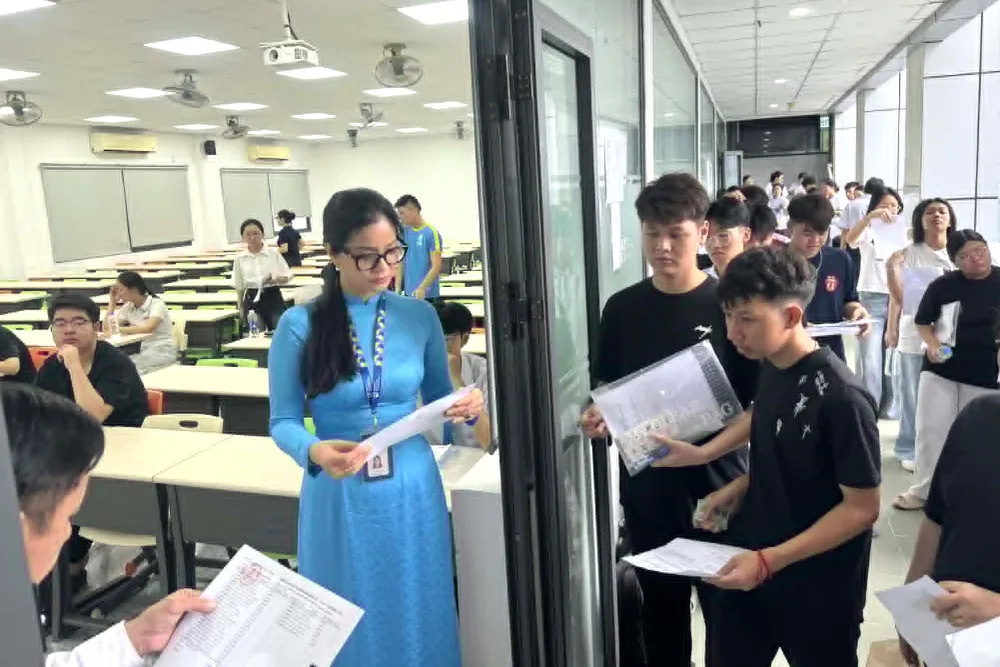
Many exceptional candidates
According to Dr. Nguyen Quoc Chinh, Director of the Center for Educational Quality Accreditation and Evaluation (Vietnam National University Ho Chi Minh City), yesterday, the Vietnam National University Ho Chi Minh City Examination Council issued urgent instructions to examination centers regarding support plans for candidates with special needs participating in the exams at these centers.
At the exam center of Ho Chi Minh City University of Industry, there were three candidates with special needs taking the exam in buildings B and V. One candidate had a broken leg and needed crutches to take the exam, another had a broken left arm seven days before the exam, and the third had a severe disability.

Candidate Nguyen Tran Khiem (Tay Thanh High School) has a severe disability in both legs since childhood and was brought to the exam by his father. The father and son arrived at the exam site at 6:30 AM and waited for the volunteer youth to assist them in getting to the exam room on the 13th floor of building V at the Ho Chi Minh City University of Industry exam site.
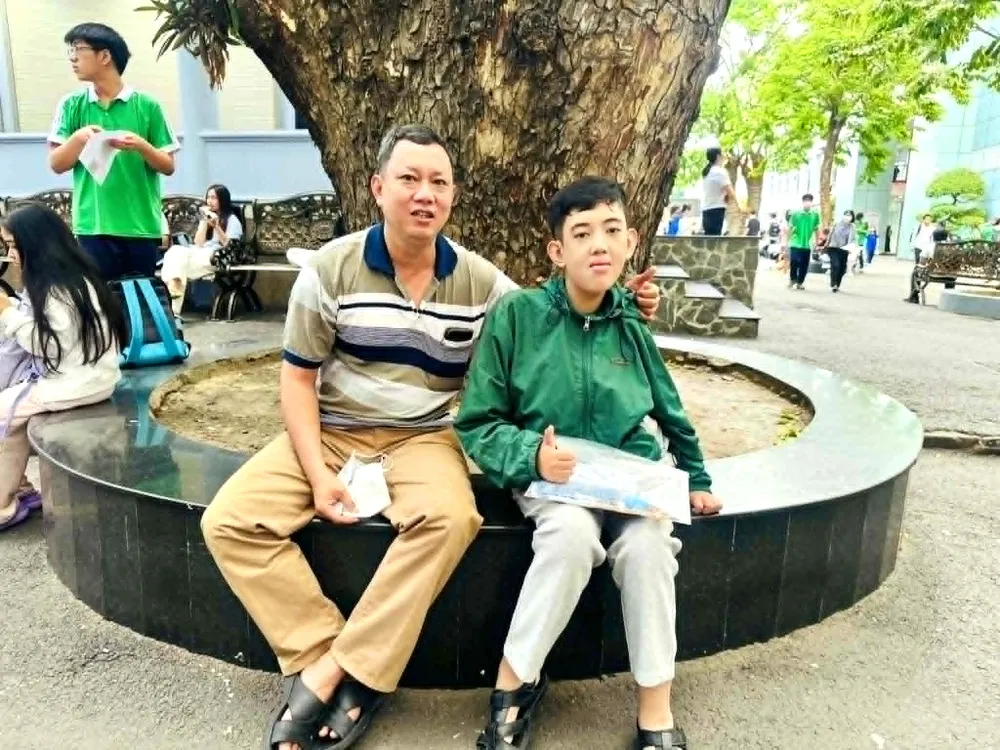
Khiem said that he didn't participate in the first round, but this time he was encouraged by his parents and teachers to take the exam. He registered to take the high school graduation exam in four subjects: Mathematics, Literature, Physics, and English. He plans to apply to two majors: Artificial Intelligence (AI) and Information Technology. With his above-average high school grades, he hopes to achieve high scores in both exams to have a chance of being admitted to his two favorite majors.
According to Dr. Nguyen Trung Nhan, Deputy Head of the Training Department at Ho Chi Minh City University of Industry, to support candidate Khiem in taking the exam, on the afternoon of May 23, the Ho Chi Minh City National University Examination Council issued urgent directives on support measures for this candidate. Specifically, according to Article 20 of the examination regulations, candidates using medical devices to monitor their health or assist with functional impairments are subject to these regulations. In cases where a candidate uses medical devices to monitor their health or assist with functional impairments, the head of the examination center needs to consider the specifics of the medical device to develop an appropriate handling plan. The examination center will create a report on the handling of unusual situations for each candidate; fully recording the incident, candidate information, the status of medical device use, and the proposed solution. In addition, the university will also arrange support personnel and medical staff to monitor and be on duty throughout the exam to assist candidate Khiem when needed.
Strengthening support staff for the exam.
According to Dr. Nguyen Quoc Chinh, compared to the second phase in 2025 (97,387 candidates), the number of registrations for this year's second phase increased by 77.25%. This figure shows that the exam continues to receive great attention from candidates and higher education institutions. According to the plan, the second phase of the exam was to be held in 9 provinces and cities. However, with the sudden increase in the number of registered candidates, the Vietnam National University Ho Chi Minh City (VNU-HCM) has coordinated with higher education institutions to add more exam locations in all localities that held the first phase. Therefore, the total number of localities holding the second phase of the 2026 exam has increased to 15 provinces and cities. Expanding the network of exam locations not only facilitates candidates but also demonstrates proactiveness and flexibility in organizing a large-scale exam, aiming to better serve students.
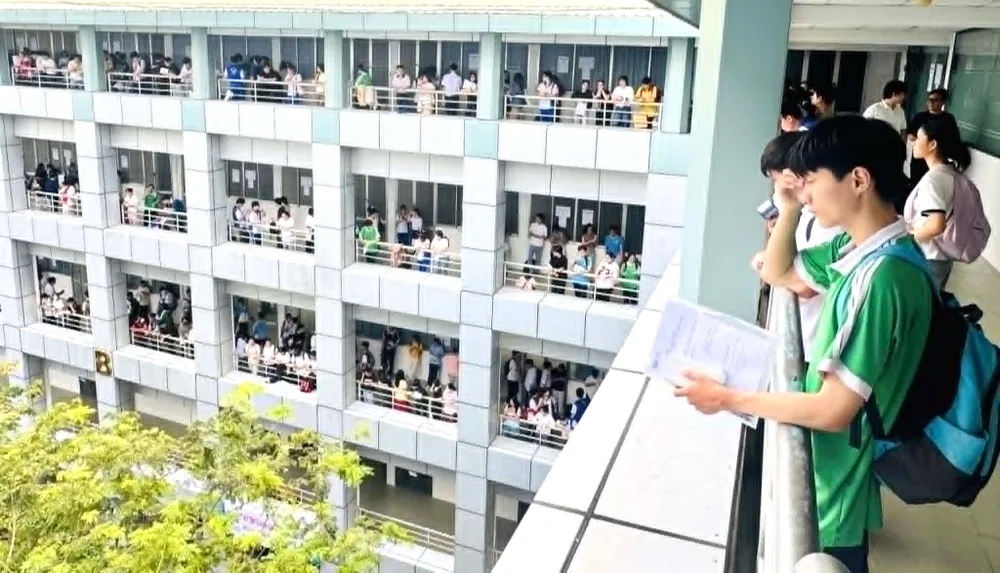
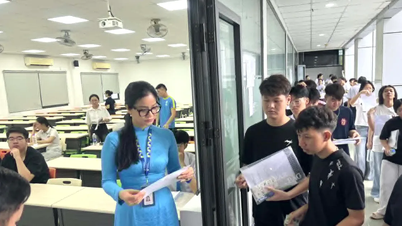
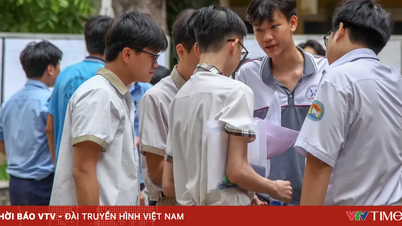
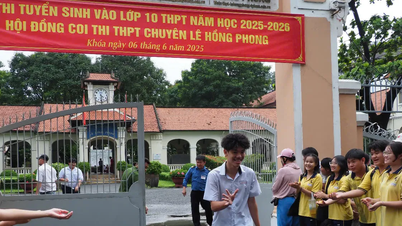
At the Ho Chi Minh City University of Industry examination center, the highest number of candidates in the exam, with over 7,000, the university arranged 221 examination rooms and nearly 1,000 staff members to serve the exam. Of these, over 6,000 were directly involved in supervising the exam. In addition, the university coordinated with the police and militia of Hanh Thong ward to ensure security and order and regulate traffic at the examination center. Due to the large number of candidates, many cars transporting candidates to the exam started entering Nguyen Van Bao street from 6:00 AM, leading to traffic congestion. However, around 6:30 AM, the authorities arrived and regulated traffic, preventing cars from entering Nguyen Van Bao street, thus resolving the congestion.
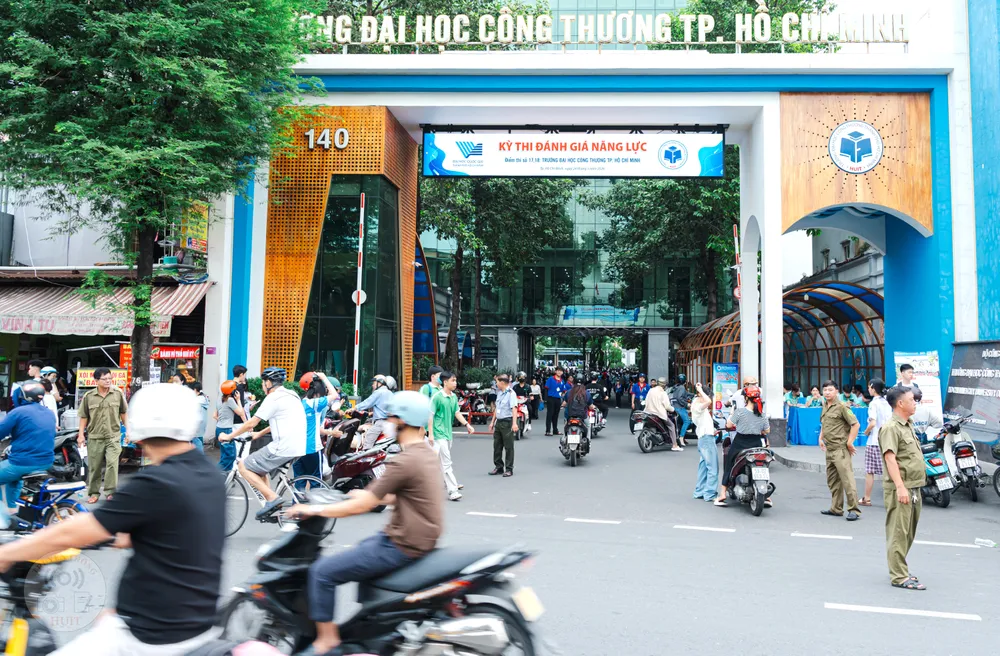
At the exam center at Ho Chi Minh City University of Industry and Trade (140 Le Trong Tan Street, Tay Thanh Ward), more than 2,000 candidates took the exam in 70 examination rooms. Due to the increased number of registered candidates compared to the first phase, this exam center deployed volunteer youth and security personnel to regulate traffic, ensuring smooth traffic flow and preventing congestion.
At Nguyen Tat Thanh University (with two examination locations at 331 and 1165 Do Muoi Street, An Phu Dong Ward), both the ward police and security personnel participated in supporting candidates to ensure their safety. Due to the two examination locations, many candidates confused each other, but they were promptly assisted and guided by the examination staff.
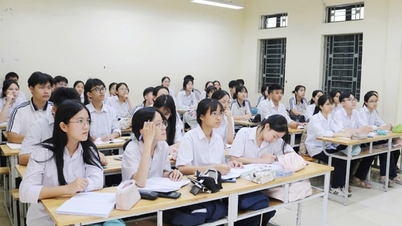
The second round of the National Competency Assessment Exam consists of 120 multiple-choice questions covering Scientific Thinking (30 questions), Mathematics (30 questions), and Language Use (60 questions in Vietnamese and English). Candidates complete the exam on paper within 150 minutes. Each question has a different weighting depending on its difficulty, with a total score of 1,200.
Source: https://www.sggp.org.vn/hon-172000-buoc-vao-ky-thi-danh-gia-nang-luc-dot-2-post854152.html

![[Image] Hanoi's urban life under the challenge of a "scorching hot" environment](https://vphoto.vietnam.vn/thumb/1200x675/vietnam/resource/IMAGE/2026/05/25/1779706979265_nang-nong-t5-2026-minh-duy-7-4636-jpg.webp)
![[Image] Close-up view of the interchange connecting the two expressways and Long Thanh Airport.](https://vphoto.vietnam.vn/thumb/1200x675/vietnam/resource/IMAGE/2026/05/25/1779703378210_ndo_br_z7863716673926-224453a31600126cce10622af6290afd-4549-jpg.webp)















































































Comment (0)