

Since being blacklisted by the US and restricted from accessing American industries, Huawei has prioritized developing its own operating system to replace Google's Android. On the AI front, China is also striving to develop generative AI technology similar to OpenAI's, as well as hardware solutions to compete with Nvidia.
The new HarmonyOS Next operating system will be used across all Huawei products, including smartphones, PCs, tablets, cars, wearables, and enterprise devices. The company says its operating system has been installed on more than 900 million devices since its launch 10 years ago.
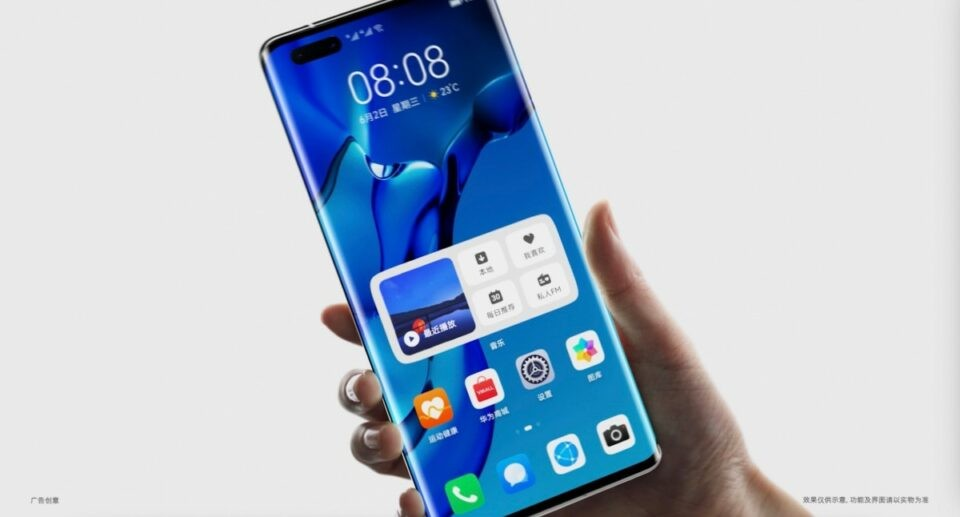
Speaking at a developer conference on June 21, Richard Yu, President of Huawei's Consumer Business Unit, shared that the company had seized the opportunity to surpass others by building a secure and controlled operating system. " In just a decade, we have achieved some milestones that Western countries took three to four decades to accomplish," he stated.
Meanwhile, the Pangu 5.0 large language model has four different sizes: the smallest, which can be embedded in smartphones; a medium-sized model with up to 90 billion parameters; an "ultra" model with up to 230 billion parameters for handling complex tasks for enterprises; and a "super" model with trillions of parameters, according to Huawei. The larger the parameters, the more powerful the model and the greater its ability to handle complex training tasks. Open AI's latest GPT-4 has 1.76 trillion parameters.
Huawei also showcased humanoid robots, weather forecasting, and smart manufacturing solutions, similar to what its rival Nvidia did at the recent Computex exhibition. According to Mr. Yu, Huawei is the most important alternative besides Nvidia's AI computing solutions.
Huawei launched Harmony OS Next on Friday, stating that the operating system can be seamlessly implemented across all of its devices.
When introducing HarmonyOS Next, Mr. Yu asserted that it is “different from other operating systems out there, where each type of device needs its own platform. HarmonyOS Next is one for all.” He revealed that the upcoming high-end smartphone, the Mate 70, will use this operating system later this year, with more models supporting it by 2025.
For comparison, Android and Apple iOS are used for smartphones and tablets, while Microsoft Windows and Apple's macOS are more suitable for computers.
The Chinese tech giant also launched its Harmony Intelligence infrastructure to integrate AI capabilities into devices, including the Celia AI voice assistant. Harmony Intelligence and Harmony OS Next were announced just weeks after Apple unveiled Apple Intelligence, its new suite of intelligent AI tools.
Harmony OS has become the second-largest mobile operating system in China, surpassing Apple's iOS. According to data from research firm Canalys, Harmony OS's market share reached 17.95% in the first quarter of 2024, up from 6.5% in 2022. Android held 67.2% of the market, while iOS held 14.8% during the same period. According to Mr. Yu, more than 1,500 of the top 5,000 apps have migrated from Android to Harmony.
(According to Nikkei)
Source: https://vietnamnet.vn/huawei-thach-thuc-apple-nvidia-with-the-new-operating-system-and-AI-model-2294190.html




![[Image] Hanoi Police officially crowned champions of V-League 2025/2026](https://vphoto.vietnam.vn/thumb/1200x675/vietnam/resource/IMAGE/2026/05/31/1780244769054_ndo_br_039d561b692be875b13a-jpg.webp)
























![[Photo] The General Secretary, President and his wife begin their state visit to the Philippines.](https://vphoto.vietnam.vn/thumb/1200x675/vietnam/resource/IMAGE/2026/05/31/1780230559452_anh-man-hinh-2026-05-31-luc-19-28-11.png)
































































Comment (0)