

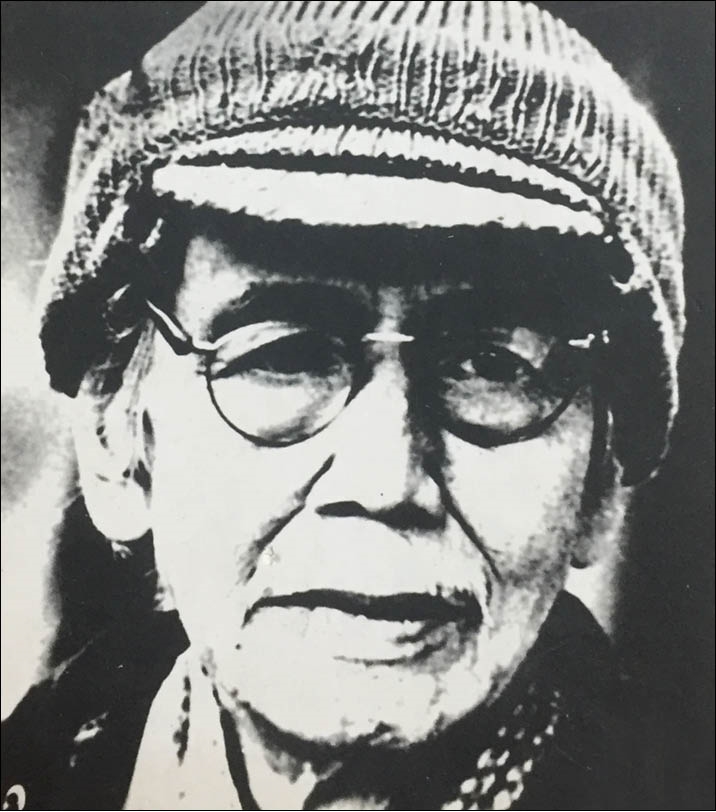
 |
| Portrait of the poet Thanh Tinh. Photo: Archival material. |
A life of integrity
Thanh Tịnh's real name was Trần Văn Ninh, later changed to Trần Thanh Tịnh. He was born in 1911 in Dương Nỗ village, Huế .
At the age of 22, he passed his diploma exam and began living independently, working as a librarian at the Providang school while simultaneously studying for his high school diploma. Later, he worked at the Department of Land Administration, traveling extensively to rural areas, interacting with farmers, and hearing many stories about villages and communities. From this, most of his short stories were formed, closely linked to many folk songs and tales from Hue. "Searching for Agarwood in the Mouth" is a story he heard from woodcutters in Truoi Mountain (Phu Loc). Following this, he moved on to journalism, working as an editorial secretary for the journal "Friends of the Ancient Capital of Hue" (Les amis du vieux Hue) for nearly six years. During his time as an editorial secretary, he also worked as a tour guide.
During the August Revolution of 1945, Thanh Tinh participated in seizing power in Hue; he was a member of the Executive Committee of the Thua Thien National Salvation Cultural Federation (the predecessor of the Union of Arts and Culture Associations of Hue City). In 1946, during the nationwide resistance war, he, then the General Secretary of the Central Vietnam National Salvation Cultural Association, left everything behind and went to the resistance zone to fight against the French. In December 1946, he went to Hanoi to attend the National Cultural Congress, but the resistance war broke out, preventing him from returning to Hue. From then on, the war separated him from his homeland and family.
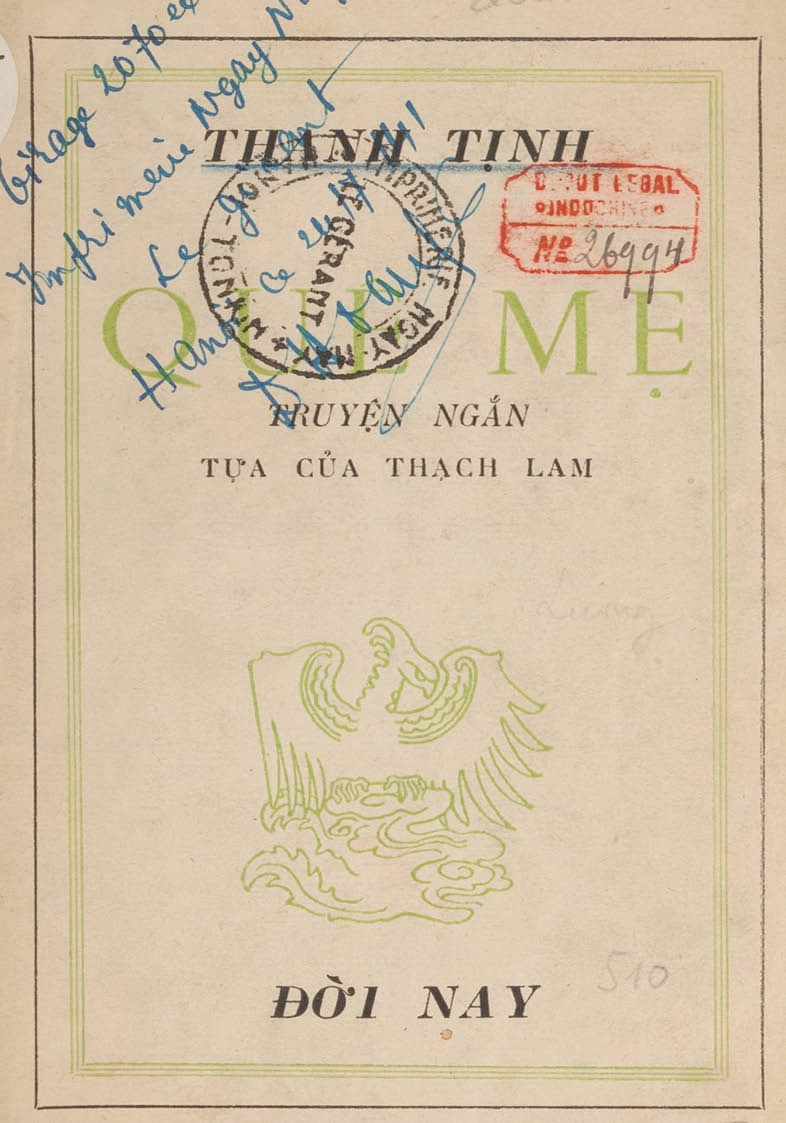 |
| The cover of the book "Homeland," first printed in 1941, features a preface by Thạch Lam. |
In 1954, with peace restored in the North, Thanh Tinh was a colonel, editor-in-chief of the Army Literature and Arts magazine, a founding member of the Vietnam Writers Association, and a member of the Executive Committee of the Vietnam Writers Association in its first and second terms. His literary contemporaries understood his circumstances; his hometown was Hue, but he had spent almost his entire life in the North. For him, Hue was associated with sad, poignant, and lingering memories...
Endless longing
Mr. Thanh Tinh's house was near the Dinh Market ferry terminal, next to the houses of three "big shots": the "Ho Dac" family, the "Nguyen Khoa" family, and the "Dinh Vien" mansion (son of Emperor Minh Mang)... Born into a poor working-class family, living near the wealthy and prestigious families of Hue, he felt inferior and therefore aspired to excel in his studies. Before learning the Vietnamese language and French, he studied Chinese for three years with a monk from Ba La Mat Pagoda, a few hundred meters from his house, through which he acquired much knowledge and etiquette.
As a child, during his free time, his mother would take him to her tea stall at the Dinh Market ferry terminal, right next to his house. The ferry terminal was bustling with people crossing the Perfume River to trade at the Dinh, Bao Vinh, and Dong Ba markets. Customers would come to his mother's stall to drink green tea, eat snacks while waiting for the ferry, and chat. He would sit there, captivated by the conversation. Some of his stories in the collections "Homeland" and "Sister and Brother" draw their plot, framework, and characters from that ferry terminal tea stall. Many of his short stories are structured like the content of Hue folk songs. The story "Homeland" echoes the line: "Every evening I stand at the back gate / Looking towards my mother's homeland, my heart aches nine times over." The story "Love in a Song" is structured around several familiar folk songs: "Love goes to Dai Luoc / Fate goes against Kim Long / This is where the heart turns / Meeting again, we will know which river bank to use."
His short stories are imbued with the flavor of Hue and give him a unique prose style. "I Go to School" is now over 100 years old. It's not just a story about the first day of school, but also a rich portrayal of Hue, from its natural setting to its linguistic style, from the human soul to its cultural values. The Hue essence in the story is gentle and serene; it's nostalgia and longing; it's cherishing every moment of life. Thanh Tinh not only recounts a childhood memory but also imbues it with a gentle, profound, and poetic Hue soul. Therefore, "I Go to School" not only touches the hearts of those from Hue but also moves all readers with its pure and delicate beauty.
During his years in Hanoi, he experienced communal meals and individual sleeping arrangements, yet the image of his hometown, Hue, remained etched in his heart. In his poem "Remembering My Hometown Hue," he wrote:
"Rivers and mountains stretch endlessly, one after another."
Cranes fly straight across the fields.
Some people say Hue is far, very far away!
But my hometown, Hue, is right in the heart of the city."
The emotions in the poem overflow, expressing a deep longing for home and profound pride in the beloved land of Hue. The poem not only paints a dreamy picture of Hue but also portrays the indomitable spirit of the ancient capital during the difficult years of struggle...
On July 17, 1988, the poet Thanh Tinh passed away. On August 31, 1991, his family and friends reburied him in Hue, laying him at the foot of Thien Thai Mountain. The pine canopy above his grave still whispers in the wind the immortal poem, "But Hue, my homeland, is in my heart..."
Source: https://huengaynay.vn/van-hoa-nghe-thuat/hue-que-toi-o-giua-long-151585.html
![[Photo] Prime Minister Pham Minh Chinh attends the Conference on the Implementation of Tasks for 2026 of the Industry and Trade Sector](/_next/image?url=https%3A%2F%2Fvphoto.vietnam.vn%2Fthumb%2F1200x675%2Fvietnam%2Fresource%2FIMAGE%2F2025%2F12%2F19%2F1766159500458_ndo_br_shared31-jpg.webp&w=3840&q=75)


















































































Comment (0)