

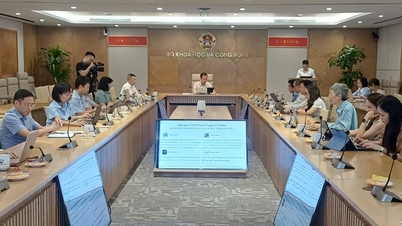
Also attending the seminar were former Politburo member, former Secretary of the Central Committee of the Party, former Head of the Central Ideology and Culture Department Nguyen Khoa Diem, along with former leaders of Thua Thien Hue province (now Hue City) from various periods.
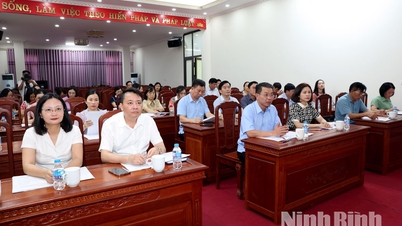
Comrade Nguyen Khac Toan, Member of the Central Committee of the Party, Deputy Secretary of the City Party Committee, and Chairman of the People's Committee of Hue City, attended and delivered a keynote speech at the workshop.
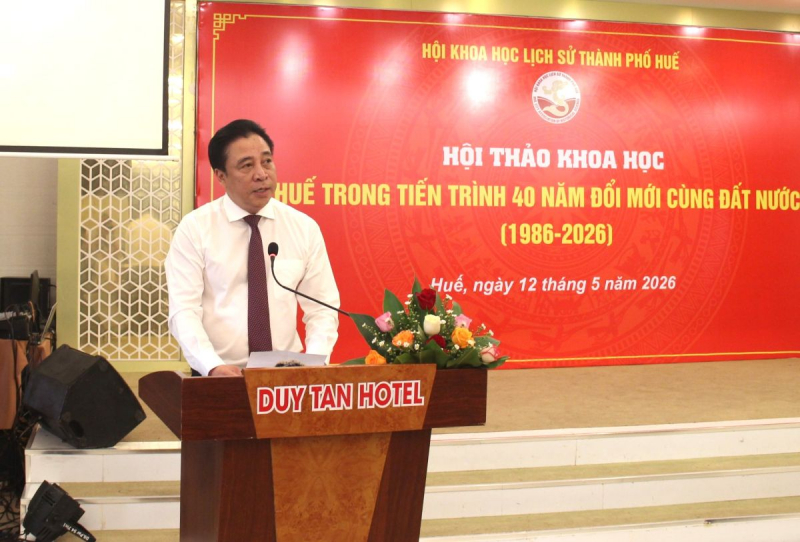
Speaking at the conference, Chairman of the Hue City People's Committee Nguyen Khac Toan emphasized that the past 40 years have been a period of profound and comprehensive national renewal. Within this general trend, Hue City has continuously transformed, innovated its thinking, and leveraged its unique potential and advantages to build a foundation for sustainable development. From a city that suffered heavy losses after the war, with the concerted efforts of the entire political system and the people, Hue has gradually recovered and developed, and today has become the 6th centrally-governed city in the country.
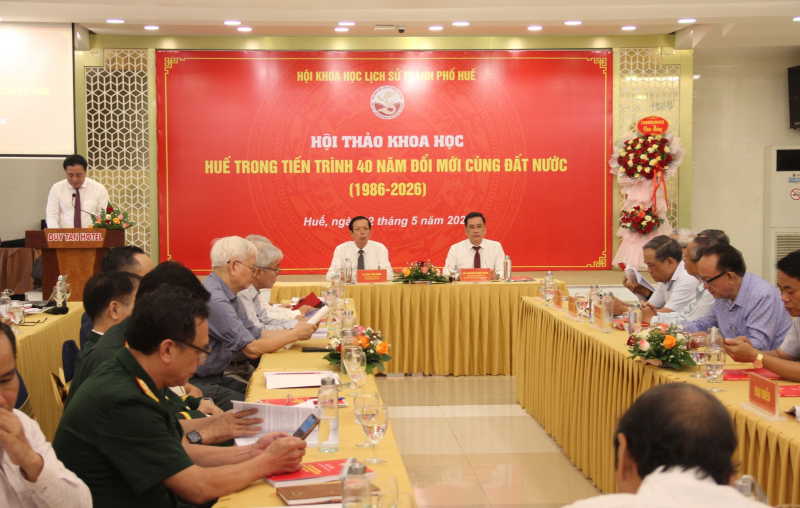
The achievements are comprehensive and evident in many areas: stable economic growth; continuous improvement in the material and spiritual lives of the people; a sharp reduction in the poverty rate; and the maintenance of political security and social order. In particular, Hue has affirmed its own unique path: harmonious development between heritage preservation and socio-economic development.
The unique cultural values of the ancient capital region are not only preserved but also gradually being effectively exploited, becoming an important endogenous resource for development. Hue is gradually establishing itself as a distinctive cultural and tourism center of the country, aiming towards becoming a typical heritage city model of Vietnam and the region.
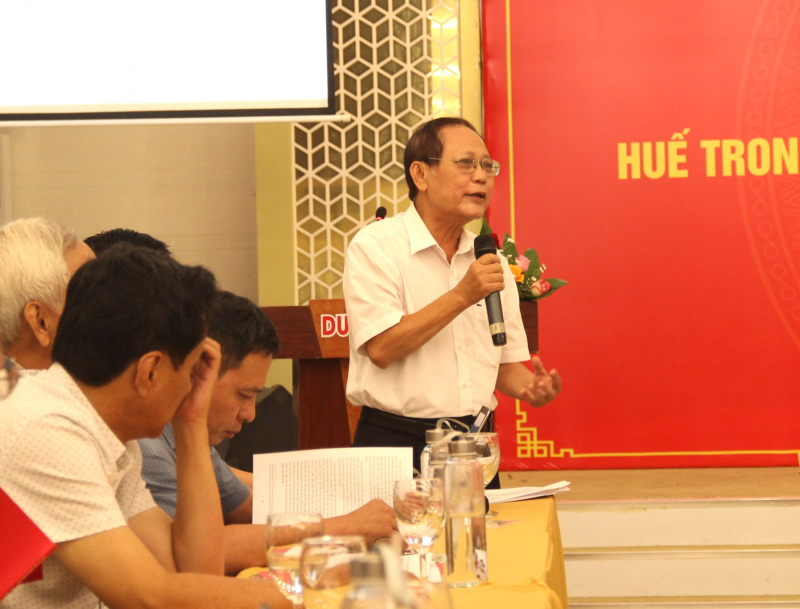
“Today’s workshop is extremely practical and timely. It’s not only an opportunity to look back on the city’s 40-year journey of reform, but also an important scientific forum to exchange, discuss, and propose development directions and solutions for the new phase. At the same time, it provides sound arguments to support policy planning, especially the effective implementation of Resolution No. 54-NQ/TW of the Politburo on building and developing Thua Thien Hue until 2030, with a vision to 2045,” affirmed Chairman of the Hue City People’s Committee Nguyen Khac Toan.
At the conference, researchers and experts from departments, agencies, universities, and research institutes presented papers on three main themes: Leadership in political, economic, and social issues during the reform process; Hue cultural heritage - preservation and promotion of its value; and Culture, tourism, and heritage economy in the urban development of Hue.
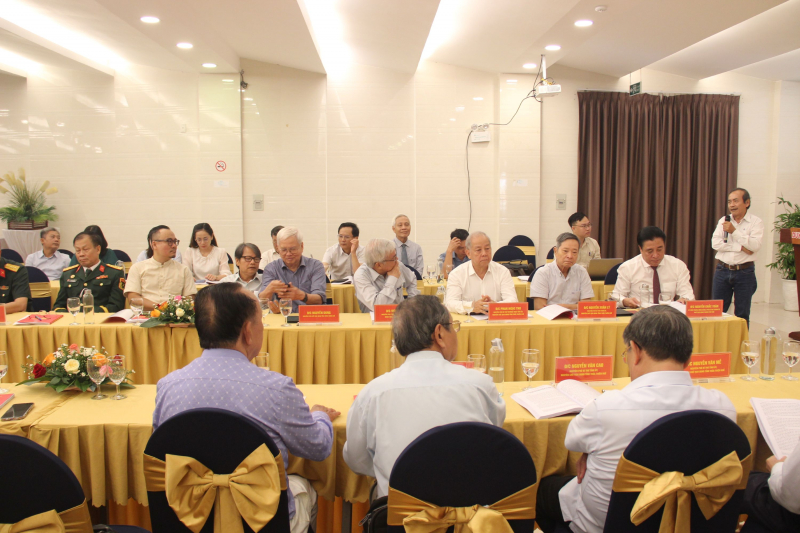
According to Dr. Phan Tien Dung, Chairman of the Hue City Historical Science Association, in 1986, the Sixth National Congress of the Communist Party of Vietnam initiated a comprehensive national reform policy, opening a new period of development with profound changes in the fields of economics, politics, culture, society, and international integration. Over the past 40 years (1986-2026), the reform process has created historically significant achievements, contributing to enhancing Vietnam's position and prestige in the international arena.
In that overall process, Thua Thien Hue province, now Hue City under the central government, a land rich in historical and cultural traditions, has made significant strides. From a locality facing many difficulties after the war, Hue has gradually developed its potential and advantages, especially its cultural heritage, to promote socio-economic development and affirm its role as a unique cultural and tourism center of the country. Today, Hue has formed and developed four centers: a unique cultural and tourism center of the country; a high-quality multi-disciplinary education center; a specialized medical center; and a national science and technology center. “Besides the achievements, Hue's development process over the past 40 years of reform has also raised many issues that need to be further researched and evaluated comprehensively and scientifically, from growth models and heritage preservation linked to development, to the requirements for building a unique heritage city in the new context,” Dr. Phan Tien Dung observed.
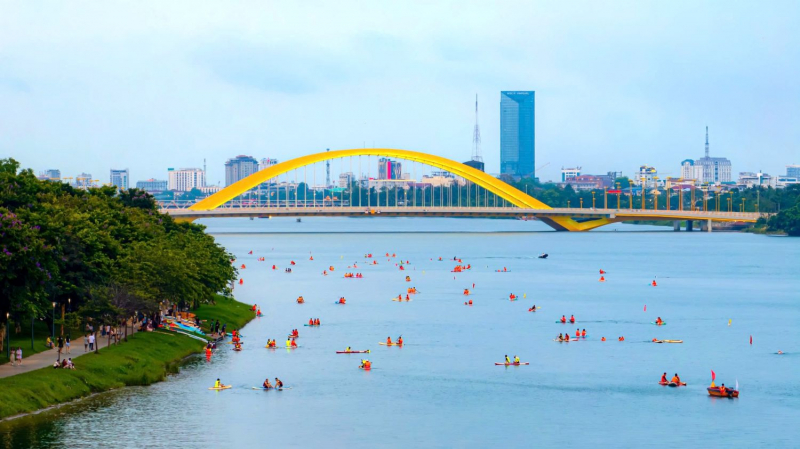
At the seminar, Associate Professor Dr. Nguyen Van Manh, from the Department of History, University of Science, Hue University, stated that cultural heritage encompasses the entire treasure trove of traditional cultural values of the nation. These values are not only a foundation and guide but also a resource for sustainable social development. Hue – a land where various cultural streams intersect and containing many historical imprints – has produced and preserved a rich and diverse array of tangible and intangible cultural heritage. These cultural heritages have been and continue to contribute to the nation's historical progress.
“Cultural heritage is considered the goal, foundation, intrinsic strength, and driving force for national development. The question here is how to bring that goal and intrinsic strength into life? I think that to achieve that, we need specific solutions to build a spatial structure based on three constants: preserving and promoting Hue's cultural heritage in the family - preserving and promoting Hue's cultural heritage in schools - preserving and promoting Hue's cultural heritage in the socio-cultural environment,” said Associate Professor Dr. Nguyen Van Manh.
At the workshop, delegates frankly exchanged and discussed to clarify the position, role, and contributions of Hue City in the overall development process of the country; issues that need further research and comprehensive and scientific evaluation, from growth models, heritage preservation associated with development, to building a unique heritage city in the new context.
In his presentation on "Ensuring security and order in Hue City to serve the cause of national renewal," Major General Nguyen Thanh Tuan, Director of Hue City Police, clearly stated: After more than a year of becoming a centrally-governed city and nearly a year of operating a two-tiered local government model, Hue is entering a pivotal phase, shifting from "establishing a foundation" to "accelerating development"; strongly moving from consolidating the organizational structure to creating real, effective, and sustainable growth drivers.
In response to the city's development needs and the demands of the new era, the City Police Department must undergo a strong and comprehensive transformation in its thinking regarding police work. Simultaneously, it must accelerate the shift from traditional to modern working methods, from manual to the application of science and technology, and embrace digital transformation to consistently implement the viewpoint that "ensuring security and order is not only for development but must also create a foundation for the success of development."
Source: https://cand.com.vn/Xa-hoi/hue-trong-tien-trinh-40-nam-doi-moi-cung-dat-nuoc-i804956/


![[Image] Hanoi's urban life under the challenge of a "scorching hot" environment](https://vphoto.vietnam.vn/thumb/1200x675/vietnam/resource/IMAGE/2026/05/25/1779706979265_nang-nong-t5-2026-minh-duy-7-4636-jpg.webp)


![[Image] Close-up view of the interchange connecting the two expressways and Long Thanh Airport.](https://vphoto.vietnam.vn/thumb/1200x675/vietnam/resource/IMAGE/2026/05/25/1779703378210_ndo_br_z7863716673926-224453a31600126cce10622af6290afd-4549-jpg.webp)


































































Comment (0)