

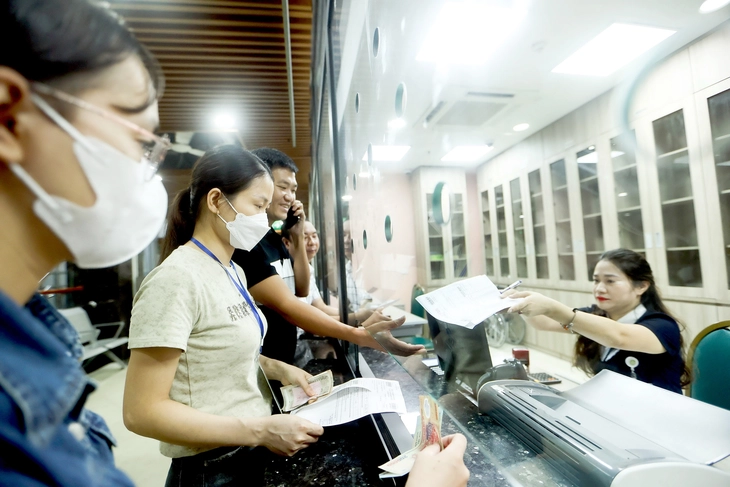
People pay for health check-ups at Bach Mai Hospital, Hanoi - Photo: NGUYEN KHANH
At a meeting with police officers who had provided support to the Southern battlefield during the resistance war against the US, General Secretary To Lam affirmed that he would focus on developing healthcare, strengthening people's health care, and aiming for the goal of providing free medical treatment to all citizens.
Earlier, at the meeting of the Subcommittee on Documents for the 14th Party Congress on March 15, the General Secretary raised the question: "Is it possible to strive to make medical treatment free for the people by 2030?" He suggested that, if possible, the relevant agencies should immediately add this goal to the draft political report of the congress.
In discussions with Tuoi Tre newspaper, National Assembly representatives, health experts, and citizens all agreed that, along with the upcoming tuition fee waiver policy, the direction of waiving hospital fees for all citizens would be a major step towards equity, with positive long-term implications for society.
The patient was very happy to hear that.
Mr. Dao Xuan Co, director of Bach Mai Hospital, said he has witnessed many patients having to sell all their possessions to treat incurable diseases. There are also patients who have to stop treatment because they lack the financial means. Therefore, if all people – equally – receive good healthcare and have their economic burdens eased, they will all be very happy.
Ms. Ngo Thi Loan (55 years old, a breast cancer patient in Da Nang) said that families with a cancer patient are almost bankrupt. If the government could cover the hospital fees, it would not only save the patients but also their relatives.
"I heard that the government is planning to waive 100% of hospital fees, and I'm both happy and emotional. I hope this policy will be implemented soon, so that people like us can worry less and have more hope," Ms. Loan shared.
According to a World Bank report, medical and tuition fees account for 30 to 35% of the total expenditure of poor households in Vietnam. This figure is shocking to many, highlighting the financial barriers that still prevent many people from fully accessing essential healthcare services.
In Ho Chi Minh City – home to some of the country's leading tertiary hospitals – it's not uncommon to see patients traveling hundreds of kilometers for treatment. In their quest for survival, some patients don't succumb to their illness but are instead devastated by the exorbitant cost of treatment.
This situation is happening every day at major hospitals like Cho Ray and Ho Chi Minh City Oncology Hospital – places with no shortage of advanced technology and skilled doctors, yet too many patients have to leave the hospital midway because… they run out of money.
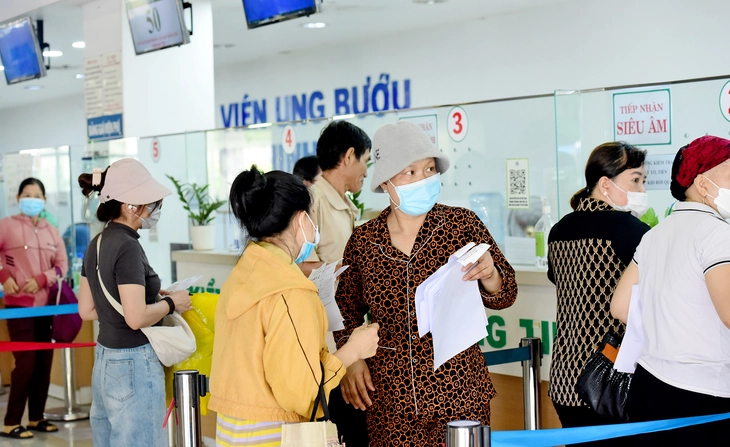
People undergoing procedures at the Ho Chi Minh City Oncology Hospital - Photo: DUYEN PHAN
Challenges and many difficulties
In this context, the goal of providing free medical care to all citizens is a "lifeline" for many patients, especially those from disadvantaged families. However, according to Dr. Dang Huy Quoc Thinh, deputy director of the Ho Chi Minh City Oncology Hospital, realizing this idea in Vietnam at the present stage is extremely challenging and difficult, requiring abundant economic resources and a significant amount of time.
Currently, not many countries in the world provide free healthcare to their citizens. Those that have implemented this policy are mainly countries with high per capita income and small populations.
Several countries currently provide completely free healthcare to their citizens, including Finland (5.5 million people, current per capita income around $64,400), Sweden (10.2 million people, per capita income $71,700), Canada (40 million people, per capita income $60,800), and New Zealand (5.2 million people, per capita income $52,000).
Meanwhile, many countries with high per capita income like the US (US$70,000) but large populations of up to 350 million people still cannot provide free healthcare for all citizens. In our country, the current GDP per capita is only about US$5,000/year, with a population of over 100 million.
According to Mr. Nguyen Thanh Hung, director of Da Nang Oncology Hospital, waiving 100% of hospital fees is not as simple as waiving tuition fees because the treatment costs vary for each patient. Some may only need a few hundred thousand dong for a single visit, while others may have to pay billions of dong, especially cancer patients.
In addition to the portion covered by health insurance, there are many new, expensive medications that are not yet covered by insurance, requiring additional financial contribution from patients.
"In the context of hospitals becoming autonomous, medical staff receive salaries similar to ordinary workers. If a policy of waiving hospital fees is implemented, it needs to be accompanied by mechanisms to ensure resources, retain high-quality personnel, and invest in modern equipment to improve the quality of treatment. This is a problem that the central government needs to carefully consider," Dr. Hung stated.
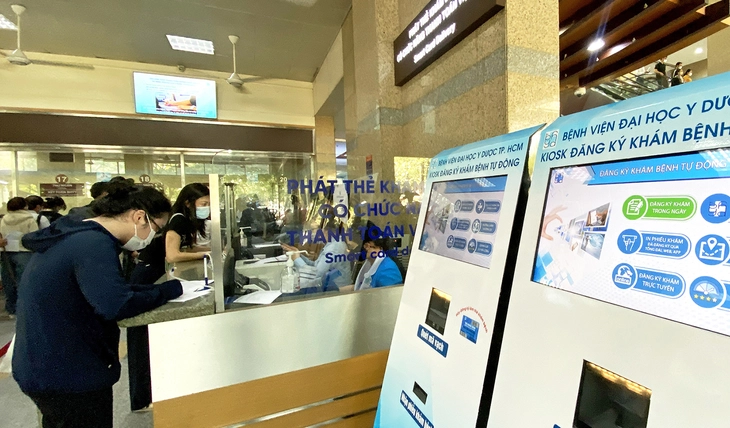
People register for medical examination cards that also function as payment cards for hospital fees at the University of Medicine and Pharmacy Hospital in Ho Chi Minh City - Photo: TU TRUNG
Start with health insurance.
Achieving free healthcare requires a massive budget allocation for the healthcare sector and takes time. Based on the experience of many countries such as Singapore, Japan, and South Korea, which are moving towards universal free healthcare, this must be done step by step.
This means that not all patients admitted to the hospital for any illness will be completely exempt from hospital fees. Initially, only special groups such as the elderly, disabled, and those who have made significant contributions to society will be exempt, as well as those with low-cost treatment or typical chronic diseases such as cardiovascular disease and diabetes.
In addition to preparing financial resources and implementing measures step by step, targeting specific groups, according to Dr. Dang Huy Quoc Thinh, focusing on universal health insurance, ensuring full insurance benefits, further improving medical services, and creating equal opportunities for all citizens to access necessary treatment techniques… will bring about significant changes in healthcare services for the people of our country.
According to National Assembly representative and Professor Nguyen Anh Tri, a clear roadmap is needed, and the beneficiaries should be divided into groups to gradually implement free hospital services from now until 2030. Priority should be given to groups such as war veterans, wounded soldiers, families of martyrs, children under 6 years old, people with serious or chronic illnesses requiring long-term treatment, and the elderly.
For these priority groups, research can be conducted starting in 2026, and then continued with the remaining groups, potentially moving towards nationwide implementation by 2030.
Sharing this view, Dr. Bui Duc Nguyen (Hanoi) believes that implementing this policy will require a clear roadmap, consensus from ministries and agencies, and especially preparation in terms of infrastructure, human resources, and most importantly, financial resources.
Most importantly, there needs to be a strong connection with health insurance to gradually increase the coverage rate and the services covered by health insurance. Simultaneously, policies should be implemented to support the cost of purchasing and issuing health insurance cards to the poor, low-income groups, and the elderly, thereby reducing the financial burden of medical treatment.
"At the same time, there should be specific regulations to determine the maximum level of support or clearly define the list of medicines and medical services that are free of charge. This should be accompanied by mechanisms to manage and prevent potential negative practices, corruption, and profiteering."
"In addition, the voluntary healthcare system should be maintained and improved so that people can afford to pay for services alongside the free ones," Dr. Nguyen suggested.
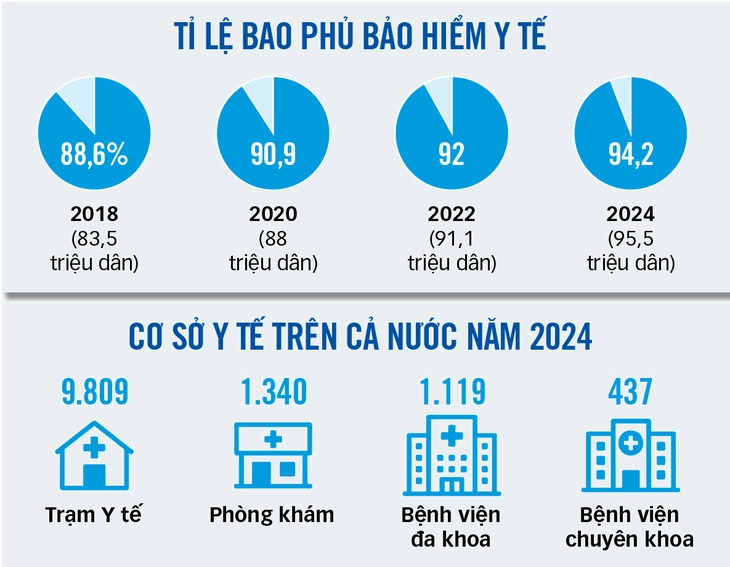
Data: D. Lieu - Graphics: T. Dat
Research on waiving hospital fees through health insurance.
According to Professor Nguyen Anh Tri, in order to provide financial support to waive hospital fees for all citizens, it is necessary to coordinate closely with health insurance. In other words, support to waive hospital fees can be implemented through universal health insurance.
"If every citizen had a health insurance card, they could access healthcare services without worrying about the cost. Therefore, it is necessary to study increasing the value of health insurance cards for vulnerable groups, those who have contributed to the revolution, war invalids, families of martyrs, and those suffering from serious illnesses," Mr. Tri proposed.
Preparation must be done with utmost care and thoroughness.
National Assembly representative and Doctor Tran Khanh Thu (from Thai Binh province) argued that waiving hospital fees would be far more complicated than waiving tuition fees. This is because with tuition fees, the number of students depends on the population and varies by region and locality, and is usually predictable with little chance of significant change...
Furthermore, healthcare costs in Vietnam are currently increasing rapidly year by year. In addition, many healthcare facilities are now financially autonomous public institutions, with their primary revenue coming from medical examination and treatment services.
"Therefore, if we implement free medical services, we need to be very careful and thorough in our preparation, especially regarding the financial resources to ensure its implementation. We must avoid creating pressure and hindering the improvement of professional capacity and the development of science, technology, and techniques at medical facilities," Dr. Thu emphasized.
Deputy Minister of Health Nguyen Tri Thuc affirmed that the General Secretary's suggestion to waive hospital fees by 2030 is a great aspiration not only of the people but also of the medical staff. However, to achieve this goal, much work remains to be done.
"The health sector is under a lot of pressure, but we will coordinate closely with other ministries and agencies to strive to achieve the goals set by the General Secretary, because that is the wish of the entire nation," Mr. Thuc said.
Filling the health insurance gap
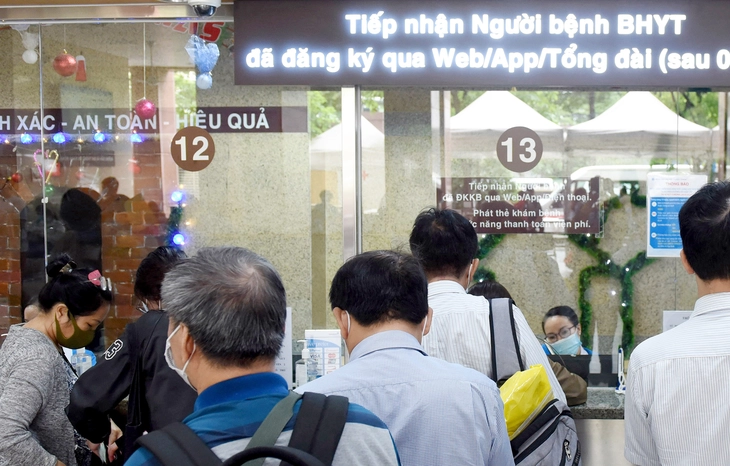
People go through procedures related to health insurance at a hospital in Ho Chi Minh City - Photo: DUYEN PHAN
Many argue that achieving universal free healthcare begins with health insurance. The question is, what is the current state of health insurance in our country?
According to Ms. Tran Thi Trang, head of the Health Insurance Department (Ministry of Health), health insurance benefits for medical examination and treatment are relatively comprehensive and are being increasingly expanded.
Following the enactment of the Health Insurance Law in 2008, the number of people participating in health insurance has increased rapidly, from 46.1% of the population (in 2008) to 94.2% of the population (in 2024). The health insurance benefits for participants have been increasingly expanded. Many expensive medications, including those for treating cancer, have been included in the list of covered drugs.
A child born in 2019 in Hai Duong province, suffering from hypertension, diabetes, and kidney failure, received over 4.4 billion VND in medical expenses covered by the health insurance fund after treatment. Similarly, a child born in 2018 in Hoa Binh province also received over 4.3 billion VND in treatment for hereditary factor VIII deficiency. These figures, reaching billions of VND, would likely be unaffordable for poor people without the support of the health insurance fund.
Currently, there are 9 groups of beneficiaries whose health insurance premiums are subsidized by the state budget, ranging from 70% to 100%. Recently, the Ministry of Health also proposed increasing the minimum subsidy from 30% to 50% of the health insurance premium for primary and secondary school students from grades 1 to 12. For some other groups, the subsidy would increase from 50% to 70%.
Ms. Tran Thi Trang stated that the revised Health Insurance Law is perfecting policies to ensure the rights of health insurance participants. Specifically, the law stipulates the level of health insurance benefits when implementing the integrated health insurance system for medical examination and treatment, without differentiating based on administrative boundaries by province.
Particularly in some cases of rare or serious illnesses, patients can go directly to specialized medical facilities for examination and treatment. Participation in health insurance has contributed to reducing out-of-pocket expenses for households on healthcare.
However, according to the Ministry of Health, the proportion of out-of-pocket expenses in Vietnam remains relatively high, accounting for approximately 45% of healthcare costs. On average, the health insurance fund covers 87-89% of the total health insurance medical examination and treatment costs annually, with health insurance participants responsible for co-paying 11-13%.
Currently, nearly 6% of the population is not covered by health insurance, and experts believe that additional support policies are needed to fill this gap.
Universal health insurance coverage
According to Dr. Tran Thanh Tung from Hanoi Medical University, health insurance helps patients, especially poor patients and those with difficult circumstances, reduce their financial burden when they are sick or ill.
"We need to aim for universal health insurance coverage so that patients receive equal support. For poor people and those in difficult circumstances, the budget can cover 100% of health insurance costs; this is a practical solution to improve healthcare for the people," Mr. Tung shared.
Free and universal healthcare systems in various countries.
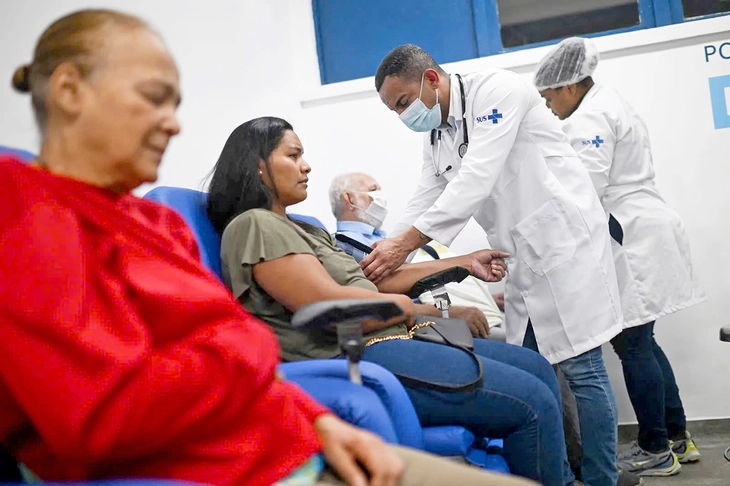
Patients are examined at the Raphael de Paula Souza City Hospital in Rio de Janeiro, Brazil, in February 2024 - Photo: AFP
According to Citizens International, countries with free or universal healthcare systems typically have modern medical infrastructure, ensuring that all patients have access to high-quality care and advanced medical treatments.
In Brazil: The country provides free and universal access to healthcare for anyone legally residing in the country, as stipulated by its constitution. The South American nation's Single Health System (SUS), established in 1989, is the world's largest government-run public healthcare system.
Patients in this country will have access to free healthcare services including: outpatient care, preventative care, vaccinations, hospital care, and surgery.
In the UK: This was the first Western country to provide free healthcare to its citizens. The National Health Service (NHS), established in 1948, is a tax-funded healthcare system.
All legal residents have access to free public healthcare services including: vaccinations, screening and prevention, doctor services, mental health, ambulance services for emergencies, inpatient and outpatient care, prescription and over-the-counter medications, maternity care, and assistive devices such as wheelchairs and hearing aids.
In Canada: The country's healthcare system, called Medicare, is a state-funded, single-payer healthcare system that has been in place since 1966. It provides free basic care services such as doctor visits, emergency care, mental health, prevention and treatment of common illnesses, and maternity care; as well as secondary services such as long-term, chronic treatment and palliative care. This system is considered to be a key factor in Canada's high average life expectancy.
In Australia: Established in 1984, the Australian Medicare system is a universal health insurance program. It provides free or low-cost medical care to Australian and New Zealand citizens, permanent residents, and certain eligible foreign nationals.
Services include: family doctors and specialists, physiotherapy, mental health care, and basic pediatric dental services. In addition, Australian Medicare also offers a program to help cover the cost of prescription medications.
There are still weaknesses.
However, these Medicare systems still have some weaknesses. For example, in Brazil, public healthcare facilities can become overloaded, lack modern medical equipment, patients have long wait times, people in rural areas have difficulty accessing quality healthcare, there are limitations in the number of medications, and the quality of service is inconsistent, according to International Insurance.
Source: https://tuoitre.vn/huong-toi-mien-vien-phi-toan-dan-bai-toan-can-tinh-ky-20250412092037283.htm


![[Photo] Prime Minister Pham Minh Chinh presides over a meeting on private sector economic development.](/_next/image?url=https%3A%2F%2Fvphoto.vietnam.vn%2Fthumb%2F1200x675%2Fvietnam%2Fresource%2FIMAGE%2F2025%2F12%2F20%2F1766237501876_thiet-ke-chua-co-ten-40-png.webp&w=3840&q=75)


















































































Comment (0)