

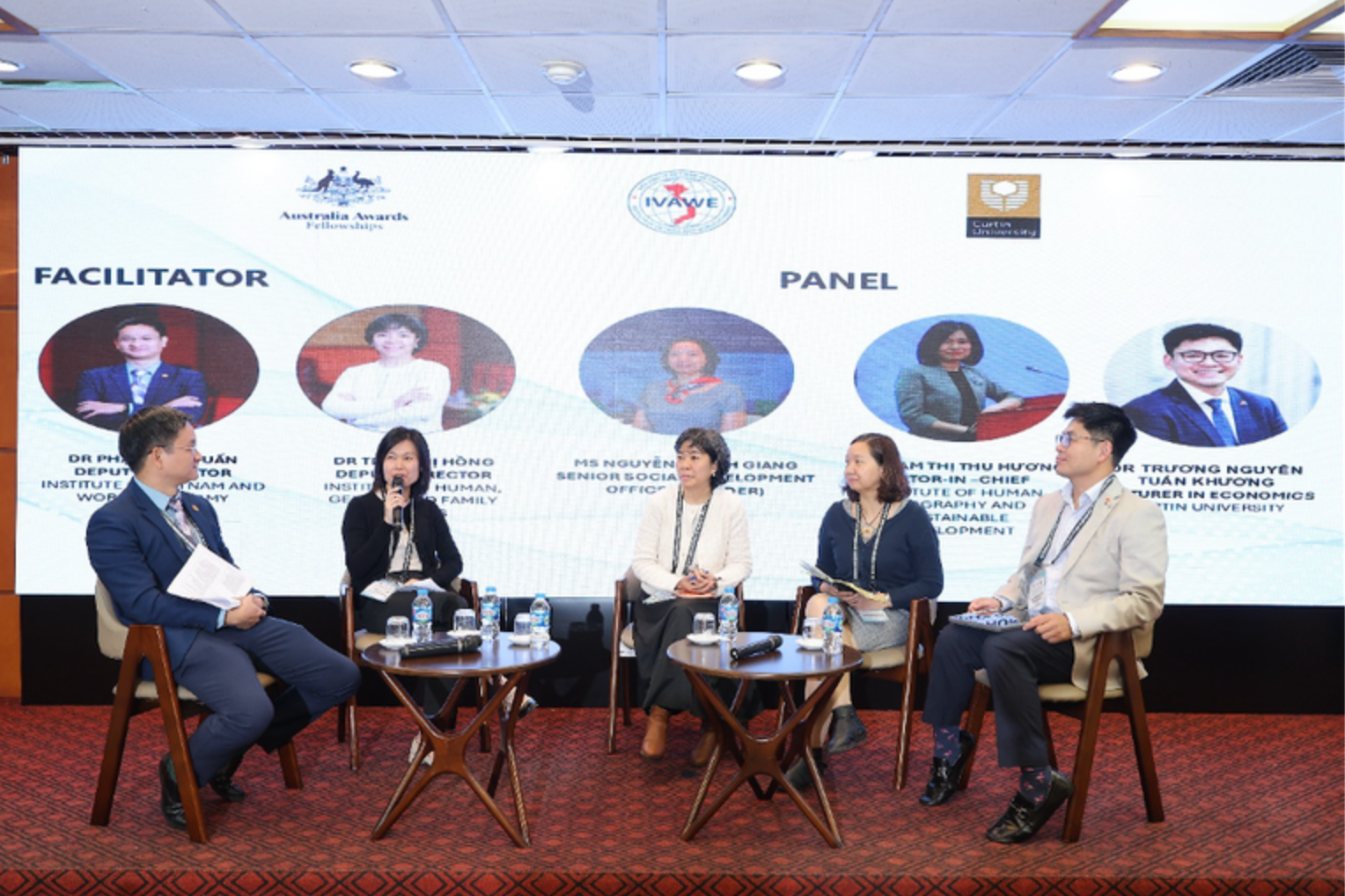
Against this backdrop, an international scientific conference on the theme "Gender and Socio -Economic Issues in Vietnam: Gender Equality and Women's Empowerment," recently held in Hanoi, contributed to clarifying key theoretical, practical, and policy issues, and offered suggestions for action to promote the role of Vietnamese women in the new development phase.
Progress and challenges of gender equality in Vietnam
The workshop, organized by the Vietnam Institute of Economics and the World (under the Vietnam Academy of Social Sciences) in collaboration with Curtin University (Australia), was attended by over 100 experts, researchers, university lecturers, and policymakers from Vietnam and abroad, affirming Vietnam's increasingly prominent position in the network of research and policy dialogue on gender.
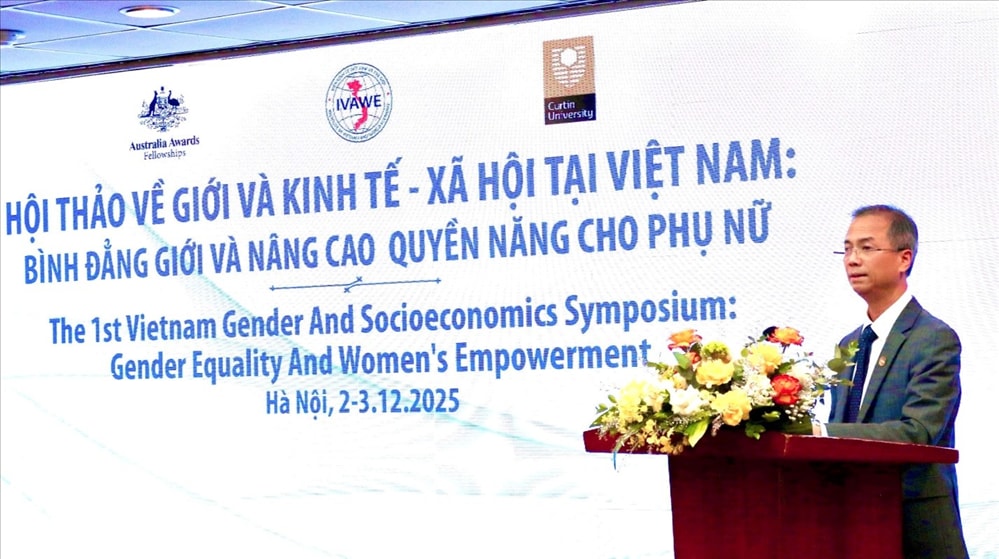
At the seminar, Dr. Dang Xuan Thanh, Vice President of the Vietnam Academy of Social Sciences, affirmed that gender equality is not just an isolated social issue but a prerequisite for achieving sustainable development goals.
Vietnam has made significant progress in narrowing the gender gap in education, health, labor, and politics, but the rapidly changing landscape of globalization, digital transformation, and the green energy transition are posing new demands on gender policy.
According to the Vice President of the Academy, digital transformation opens up great opportunities for women through access to knowledge, online education, and digital business platforms, but it also poses the risk of creating a "digital divide," especially for women in rural and remote areas.
Similarly, the green energy transition creates millions of new jobs, but opportunities are not evenly distributed between men and women due to barriers in vocational training, access to information, and gender stereotypes. The overarching question is how to empower women to move beyond mere observers and become active participants, leaders, and equal beneficiaries.
Over the years, Vietnam has been recognized by the international community as one of the countries making rapid progress in gender equality. Vietnamese women are increasingly asserting their roles in political, social, economic, and family life.
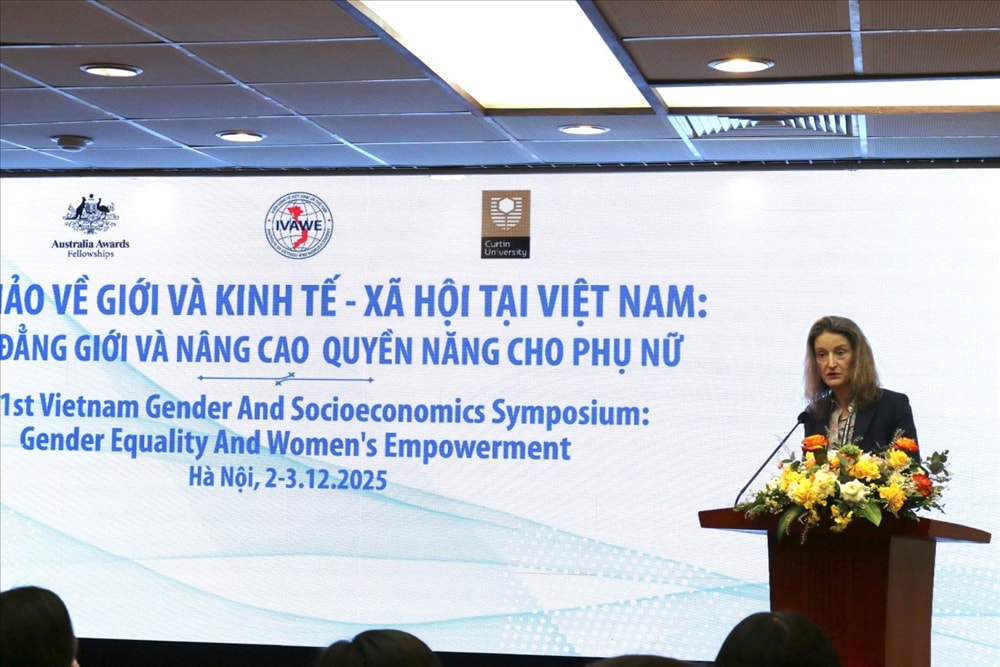
The rate of female labor force participation remains high compared to many countries in the region; the proportion of female parliamentary representatives is among the highest in the Asia-Pacific; the gender gap in basic education has narrowed. Women-owned businesses are increasing, making a positive contribution to growth and job creation.
In Hanoi, in 2025, the City Women's Union will place special emphasis on improving the capacity to implement gender equality work. Specifically, the Hanoi Women's Union will organize awareness campaigns on girls' rights for over 1,000 students at Van Ha Secondary School in Thu Lam commune; and conduct 18 legal awareness sessions on fire prevention and control, the Capital City Law, the Law on Prevention and Control of Domestic Violence, and the Law on Prevention and Control of Human Trafficking, among others.
According to Pham Thi Thanh Huong, Vice President of the Ho Chi Minh City Women's Union, the Women's Union at all levels has proactively developed a system of indicators to support the comprehensive development of women in the Resolutions of the Women's Congress at all levels for the 2025-2030 term. This includes proposing several projects for the term to support women's development in areas such as enhancing digital skills, livelihoods, and building a safe living environment for women and children.
Reports and studies also highlight persistent challenges. Women remain low in senior leadership positions in both the public and private sectors; the income gap between men and women has not been completely eliminated; and the burden of unpaid care work still falls primarily on women. In the context of a rapidly changing economy, these inequalities risk escalating if policies are not adjusted accordingly.
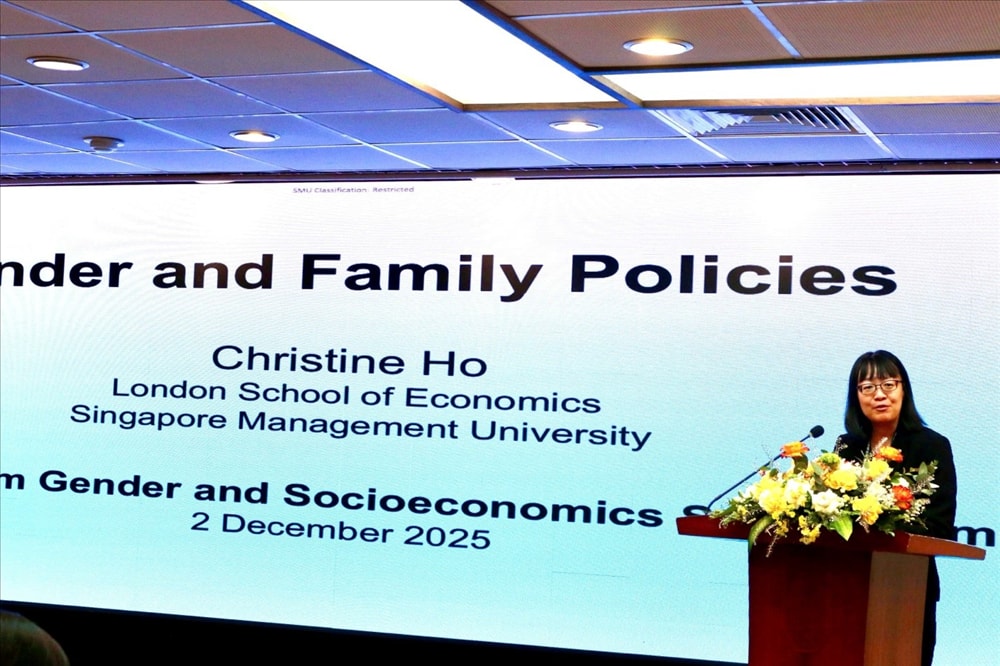
The workshop provided a comprehensive overview of these issues through two key plenary sessions. In Plenary Session 1, themed “Gender Issues and Family Policy,” Associate Professor Christine Ho (Singapore Management University) analyzed the changing family structure and the impact of family policy on women’s career opportunities.
New family models, the pressures of caring for the elderly and children in the context of an aging population, create an urgent need to improve the social care service system, in order to reduce the burden on women and create conditions for their sustainable participation in the labor market.
The second plenary session, themed “Climate Finance and Gender Equality,” presented by Assoc. Prof. Dr. Pham Thu Phuong (Curtin University), opened up a new approach. Accordingly, climate finance is not only a tool for responding to climate change but can also become a lever to promote women's economic empowerment, if policies and resources are designed with gender mainstreaming.
From academic research to policy dialogue
A highlight of the Conference was the close integration of academic research and policy dialogue.
Topics discussed included: gender equality and women's empowerment; women and digital transformation and the digital economy; sustainable development; social security and support programs; gender-based violence; and gender mainstreaming in policy planning.
The conference focused on policy dialogue sessions, marking a significant shift from academic exchange to practical application. In Policy Dialogue Session 1, themed “Measuring and Evaluating Gender Equality: International Experiences and Vietnamese Practice,” scientists emphasized the crucial role of gender-disaggregated data.
According to experts, without reliable data and appropriate indicator systems, policymakers will find it difficult to accurately assess the current situation and measure the effectiveness of gender-related policy interventions.
Policy Dialogue Session 2, themed “Promoting Gender Equality and Inclusive Development Policies in Vietnam,” focused on five major priorities: integrating gender perspectives into socio-economic development strategies from the design stage; improving the system of services for children, the elderly, and people with disabilities; training and retraining female workers, especially in digital and green skills; supporting women's entrepreneurship and access to resources; and protecting vulnerable women groups through appropriate intervention policies.
Discussions revealed that gender equality cannot be achieved through slogans or general commitments alone, but requires concrete, feasible solutions that are consistently implemented. Close collaboration between researchers, policymakers, and development organizations is seen as key to translating knowledge into action.
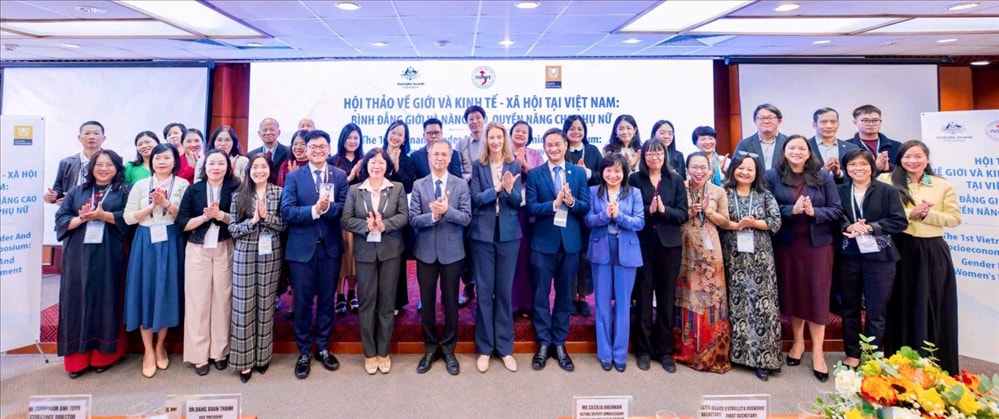
The workshop successfully created a multi-faceted dialogue space, bringing together scientific knowledge, international experience, and political will. The arguments and recommendations put forward not only contributed to clarifying the nature of gender issues in the new context but also provided an important basis for improving gender equality policies in Vietnam.
In the coming development phase, as digital transformation, energy transition, and climate change continue to shape the socio-economic landscape, ensuring women's participation, leadership, and equal access to benefits will determine the inclusiveness and sustainability of growth.
The results of the Workshop demonstrate the strong commitment of the Vietnam Academy of Social Sciences and its international partners to promoting gender studies, supporting evidence-based policymaking, and working towards an equitable society where all women and men have the opportunity to fully realize their potential and contribute to the overall development of the country.
Source: https://hanoimoi.vn/nang-cao-quyen-nang-cho-phu-nu-viet-nam-727615.html




![[Photo] Admire the coral "masterpiece" amidst the million-year-old heritage of Dak Lak province.](https://vphoto.vietnam.vn/thumb/1200x675/vietnam/resource/IMAGE/2026/05/30/1780107638639_y25-jpg.webp)





















































































Comment (0)