

As rumors about the iPhone 18 Pro Max began to surface, much of the attention focused on the 2nm processor, under-display Face ID, and the completely new foldable design. However, a less-discussed change could be the most valuable upgrade for privacy-conscious users: Apple's own C2 modem.
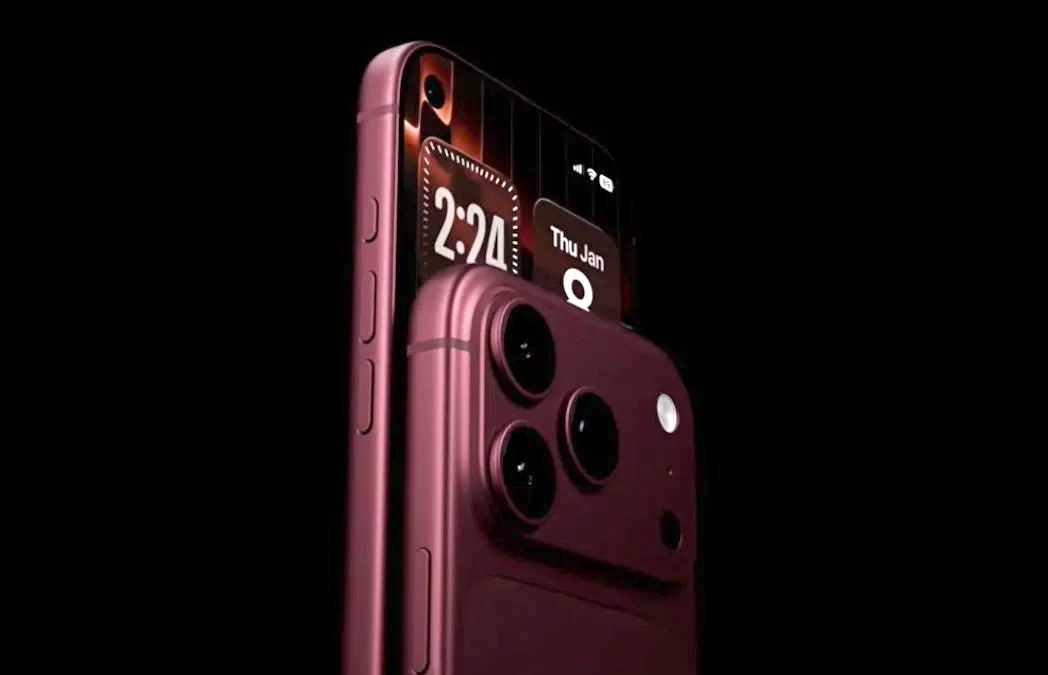
Initially, the C2 modem was expected to deliver faster 5G speeds, better mmWave support, and improved battery life thanks to deep optimization between hardware and software. But according to newly emerged information, this chip also unlocks a privacy feature that even iPhone 17 Pro Max users cannot access.
This could be a quiet but strategic move by Apple in the battle to control personal data, an area that is increasingly becoming a decisive factor for high-end smartphones.
Precise location limiting feature: small but extremely important.
According to a new report, Apple's switch to its own modem allows the company to enable an option called "Limit Precise Location," a setting that was quietly added in iOS 26.3 earlier this year.
This feature allows users to limit the amount of location data that carriers can collect from their phones. Instead of pinpointing the exact address or specific street, the system only provides a relative location at the neighborhood or residential area level.
It may not sound like a big difference, but in reality, this is a huge shift in privacy. Location data is now one of the most valuable types of information in the technology and digital advertising industries. It can reveal where users live, work, their commuting habits, frequently visited places, and even their consumer behavior.
For years, telecommunications carriers have been criticized for collecting or sharing users' location data with third parties. Therefore, Apple's addition of the ability to "blur" actual location is seen as a valuable extra layer of protection.
Interestingly, not all iPhones support this feature.
Currently, “Limit Precise Location” only works on devices using Apple-designed modems, including the C1 and C1X modems. The supported list is therefore quite short, mainly consisting of less common products such as the iPhone Air, iPhone 16e, iPhone 17e, and iPad Pro M5.
Meanwhile, those who spent more money on the iPhone 17 Pro Max were completely unable to use this feature, because the device still uses a Qualcomm modem.
This is a rather significant paradox in Apple's product strategy: the highest-end models lack a privacy-protecting feature that the cheaper models already have.
And that's precisely why the iPhone 18 Pro Max is so noteworthy.
The C2 modem can completely transform the iPhone Pro experience.
When the C2 modem appears on the iPhone 18 Pro Max and Apple's first foldable iPhone model this fall, the privacy gap between the two models will be eliminated.
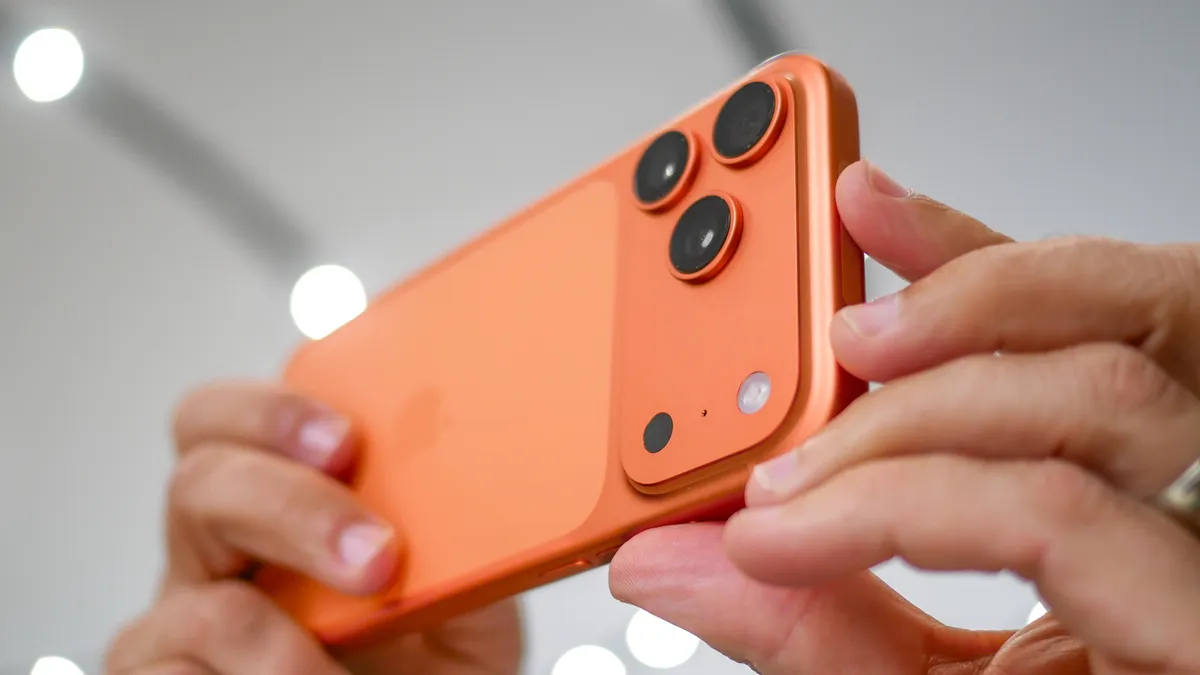
iPhone Pro users will finally have access to a feature previously only found on less-noticed devices.
However, privacy is only part of the bigger picture. The C2 modem is also expected to bring a host of other important upgrades such as full mmWave 5G support, improved signal aggregation for faster network speeds, and optimized power consumption.
More importantly, this is a major step forward in Apple's ambition to reduce its dependence on Qualcomm. For years, Apple has tried to gain increasing control over the core components inside the iPhone, from the A-series processors, GPUs, Neural Engines to the network modems.
If C2 performs as expected, Apple will have a huge advantage in optimizing the overall performance of the iPhone in a way that Android manufacturers will find difficult to replicate.
The biggest problem lies with the network operators.
However, the story isn't entirely rosy. The precise location-limiting feature depends not only on the iPhone but also on the carrier's support. And this is where things get complicated.
According to Apple's current list, only Boost Mobile in the US supports this feature. Major carriers like Verizon, AT&T, and T-Mobile have not yet joined.
Meanwhile, many other countries have begun providing support, including the UK, Germany, Denmark, Ireland, Austria, and Thailand.
This means that many iPhone 18 Pro Max users in the US may theoretically have this feature but are unable to activate it in practice.
This is also why many experts believe that the privacy battle is no longer between Apple and its smartphone rivals, but is now shifting to a confrontation between Apple and telecommunications carriers.
In the modern smartphone world , upgrades often revolve around better cameras, more powerful chips, or thinner designs. But it's the changes related to personal data that can make a lasting difference.
The “Limit Precise Location” feature may not be as flashy as in-display Face ID or a 2nm chip, but it clearly reflects Apple's direction: making privacy a core value for the premium iPhone line.
If Apple does indeed bring the C2 modem to the entire Pro lineup this year, the iPhone 18 Pro and iPhone 18 Pro Max could be more than just a performance upgrade. It could also mark the point where Apple begins to exert deeper control over how users' personal data is shared with carriers.
(According to PhoneArena, AppleInsider)
Source: https://vietnamnet.vn/iphone-18-pro-max-se-duoc-apple-am-tham-mo-khoa-vu-khi-moi-2517658.html




































































































Comment (0)