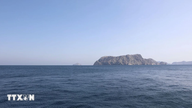
Iran has agreed to establish a “hotline” with the US and other relevant countries to prevent and quickly address incidents involving ships transiting the Strait of Hormuz – a strategic shipping lane that carries most of the world’s oil.
 |
The Strait of Hormuz. |
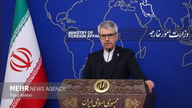
This information was released by the Speaker of the Iranian Parliament and chief negotiator, Mohammad Bagher Ghalibaf, after the first round of talks between Tehran and Washington in Switzerland. According to him, the Strait of Hormuz will henceforth be "managed according to Iranian mechanisms" and "will never return to its pre-war state."
Mr. Ghalibaf stated that both sides have agreed to establish a coordination center and a direct communication channel to quickly resolve misunderstandings or incidents occurring on this sea route within 30 days. However, the hotline will not be used to apply for transit permits through Hormuz; the permit procedures will remain separate.
According to Iranian negotiators, the new mechanism aims to ensure that disputes or clashes at sea can be handled promptly, avoiding escalation of tensions. Tehran also pledged to strictly abide by international regulations related to maritime affairs.

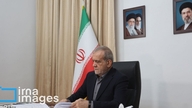
The agreement was reached after negotiations mediated by Qatar and Pakistan at the Buergenstock resort in Switzerland. The parties agreed on a 60-day roadmap toward a final agreement and established a high-level committee to oversee its implementation.
Iranian officials said the discussions focused heavily on economic issues, including the release of $12 billion in frozen Iranian assets and the lifting of restrictions on the country's port operations and maritime transport.
According to Iranian chief negotiator Mohammad Bagher Ghalibaf, one of the key topics of the discussions was ensuring maritime security in the Strait of Hormuz after the route is reopened for trade. In addition, the two sides also discussed the release of approximately $12 billion in frozen Iranian assets, easing restrictions on the country's ports and shipping, and further steps regarding Iran's nuclear program.
Currently, although shipping through the Strait of Hormuz has resumed, shipowners still face conflicting guidance from various sources. Iran requires ships to obtain prior permission and follow routes close to its coast, while the US and some Western insurance companies recommend using the Omani shipping lane under the protection of the US Air Force.
This difference has left many shipping companies confused about choosing routes, despite the fact that the Strait of Hormuz remains open to international trade.
With shipowners still confused by conflicting guidance from Iran, the US, and Western insurance companies regarding transit through Hormuz, the new hotline is expected to become an emergency response mechanism for maritime incidents, helping to reduce the risk of misunderstandings or collisions that could escalate tensions in the region.


Source: https://baobacninhtv.vn/iran-my-lap-duong-day-nong-quan-ly-eo-bien-hormuz-postid448542.bbg




![[Photo] Prime Minister Le Minh Hung presides over the thematic session on promoting science and technology development and innovation.](https://vphoto.vietnam.vn/thumb/1200x675/vietnam/resource/IMAGE/2026/06/23/1782207872934_ndo_br_dsc-1724-jpg.webp)