


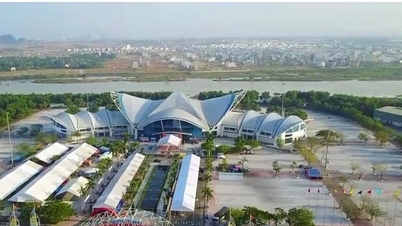
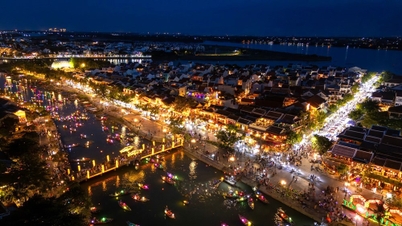
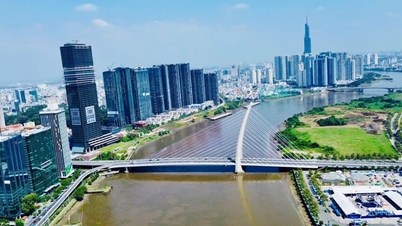
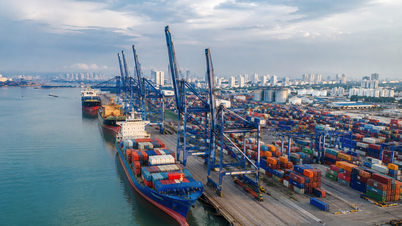
A view of Can Tho city. Photo: NAM HUONG
Mr. Nguyen Minh Hoang, Deputy Director of the Department of Construction of Can Tho City: Cities in the region need to strengthen regular, substantive, and focused cooperation.

- Can Tho City has outlined key areas of cooperation to focus on: Building a regular cooperation network among cities in the Mekong River corridor to share data, management experience, and green, smart, and climate-resilient development models. Establishing a mechanism for sharing urban data, climate data, water resources, flood, landslide, and environmental data among cities in the basin as a basis for integrated planning, early warning of natural disasters, and coordination of adaptation solutions at the inter-regional scale. Simultaneously promoting joint cooperation programs on climate change adaptation, water resource management, and climate-resilient urban infrastructure development, prioritizing areas vulnerable to flooding, saltwater intrusion, and landslides. Alongside this, it is necessary to strengthen green transportation and logistics connectivity, especially leveraging the role of inland waterway transport to reduce emissions, alleviate pressure on road infrastructure, and improve the efficiency of the regional supply chain. Coordinate the mobilization of international resources for green urban projects, smart cities, and comprehensive development. Simultaneously, strengthen the participation of citizens, businesses, and social organizations. Sustainable development is only successful when the entire society is involved.
Mr. Sayasone Phokham, Member of the Standing Committee of the City Party Committee, Vice Chairman of the Vientiane Capital Government Committee, Laos: By 2030, Vientiane will be a green, connected, and inclusive city.

By 2030, Vientiane's population is projected to reach 1.3 million. The city aims to connect its nine districts/cities through integrated transportation infrastructure, reduce carbon emissions by 30%, and increase green space to 45% of the urban area. However, Vientiane faces numerous challenges such as rapid urbanization, inadequate transportation infrastructure, flooding risks, the proliferation of spontaneous residential areas, and a decline in green space. To address these issues, the city is developing a strategy based on five pillars: green connectivity, inclusive transportation, climate change resilience, equitable public services, and smart urban governance.
Between 2026 and 2030, Vientiane will implement a BRT (Bus Rapid Transit) network, build green overpasses, expand public transport, and develop an electric vehicle ecosystem. Simultaneously, the city will focus on expanding green spaces, restoring wetlands, planting 50,000 trees, and developing nature-based flood control solutions. The strategy also emphasizes social equality, ensuring accessibility for people with disabilities, developing affordable green housing, and promoting community participation in urban planning and environmental monitoring. The total budget for implementation is estimated at US$450 million, with support from various international organizations such as the World Bank, ADB, UNDP, JICA, and the EU.
Dr. Bernadia Irawati Tjandrandewi, Secretary-General of the Union of Cities and Local Governments of Asia-Pacific (UCLG ASPAC): Only through collective effort can we ensure a livable future.

- Rapid urbanization is causing difficulties for many cities. Nearly 1.7 million people have left the Mekong Delta in the past decade, partly due to climate pressures affecting their livelihoods. These are not conceptual challenges but realities that local authorities face every day.
At UCLG ASPAC, the Urban-Act Project connects cities with international funding sources, implements capacity-building programs, and builds peer-to-peer learning platforms for cities in the region. This also contributes to enhancing the resilience of cities to the impacts of climate change. Furthermore, through the Urban-Act Project under UCLG ASPAC, we connect cities with international funding opportunities, implement focused capacity-building training programs, and promote systematic peer-to-peer learning platforms. This approach not only strengthens urban governance capacity but also enhances the adaptability of cities to the increasing impacts of climate change.
Whether we call it "great solidarity," or simply the saying "a bundle of chopsticks is harder to break than a single chopstick," the message remains clear: each of our cities is strong, but it is our collective effort that can ensure a livable and "dignified" future for future generations of the Mekong region.
KHANH NAM (summary)
Source: https://baocantho.com.vn/ket-noi-do-thi-thuc-day-phat-trien-xanh-toan-dien-a205309.html




![[Image] Hanoi's urban life under the challenge of a "scorching hot" environment](https://vphoto.vietnam.vn/thumb/1200x675/vietnam/resource/IMAGE/2026/05/25/1779706979265_nang-nong-t5-2026-minh-duy-7-4636-jpg.webp)

















































Comment (0)