The ancient village of Oshino Hakkai was recognized as a UNESCO World Heritage Site in 2013. Having been established for hundreds of years, the village still preserves the traditional Japanese culture from ancient times, associated with mystical stories about eight sacred lakes dating back thousands of years. Along with its beautiful natural scenery and tranquil atmosphere, it leaves a deep impression on visitors to Japan.
Traditional Japanese cultural space
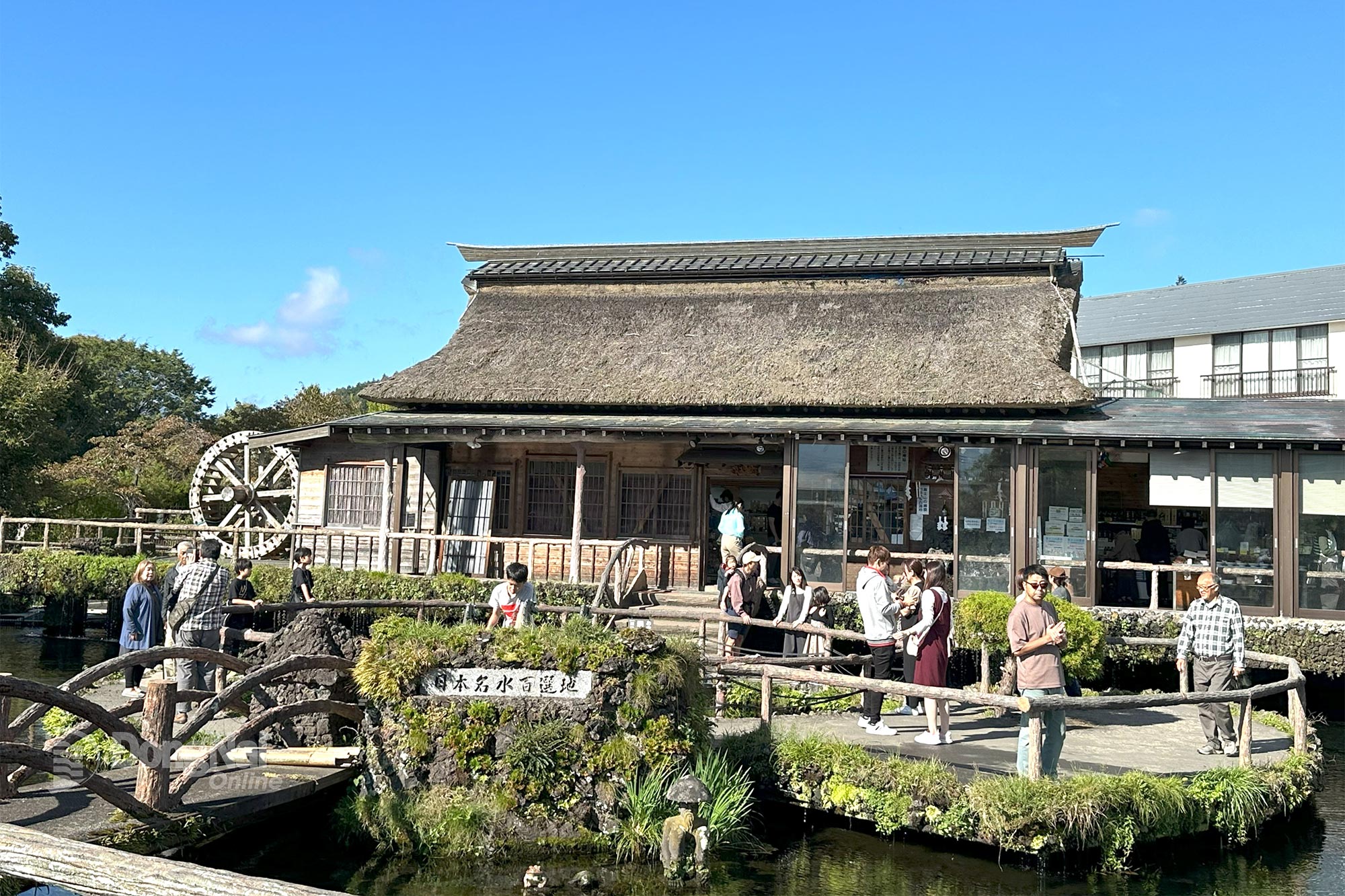
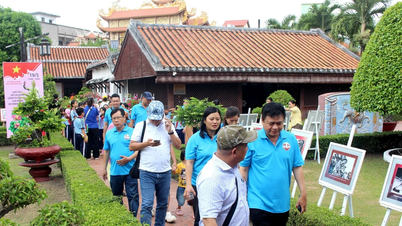
During a 6-day tour of Japan for a group of Vietnamese tourists, the ancient village of Oshino Hakkai was their fourth stop in the Land of the Rising Sun. Unlike the hustle and bustle of Tokyo, which the group had just passed through, Oshino Hakkai welcomed the visitors with a clear blue sky and warm sunlight illuminating the traditional thatched-roof houses, creating a serene, ancient yet vibrant scene.
|
Houses in the ancient village of Oshino Hakkai. Photo: Ngoc Lien |
In the ancient village of Oshino Hakkai, every house, every tree branch, and especially the sacred ponds within the village, hold stories of culture and nature formed thousands of years ago.
The first highlight that cannot be missed when visiting the ancient village is the sacred ponds. Explaining the name of the ancient village, tour guide Bui Hong Hanh (Ho Chi Minh City), one of the long-time tour guides specializing in tours in Japan, said: The name of the ancient village is "Oshino Hakkai," meaning "Eight spring ponds in Oshino." According to legend, the eight ponds were formed from melting snow on Mount Fuji, seeping through the rock layers over decades, becoming underground springs and forming small ponds on the surface. Each pond is named: Deguchi-ike, Okama-ike, Sokonashi-ike, Choshi-ike, Waku-ike, Nigori-ike, Kagami-ike, Shobu-ike. Each pond carries its own mysterious meaning and story, arousing curiosity and a desire to explore for any visitor to the ancient village.
For the Japanese, during the Edo period (1603-1868), the ancient village of Oshino Hakkai was a "sacred place" where people would "purify" themselves (soaking their hands, washing their faces, etc.) before embarking on their pilgrimage and conquering Mount Fuji. Today, the purification ritual is no longer common, but locals and tourists who visit the ancient village still stand on the shore of the sacred lake to pray for favorable weather and good fortune in life.
Tourist attractions
Visiting the ancient village of Oshino Hakkai, one can still feel the strong imprint of Japanese culture through its traditional lifestyle and production activities. This is also a sacred land deeply rooted in Japanese history and traditional beliefs, cherished by the Japanese people through their efforts to preserve the natural environment and protect the pristine beauty of the village.
Ms. Nguyen Tran Huyen Anh, a tourist from Ho Chi Minh City, shared: "This is my second time visiting Oshino Hakkai Ancient Village. Each time I come here, I stand by the sacred pond and wish for good things to come to my family and friends. Many tourists from all over the world, when standing before the pond, wish for peace. The sacred pond is very clear and beautiful. I am very impressed with Oshino Hakkai Ancient Village, so every time I come to Japan, I seek out this ancient village to visit and worship."
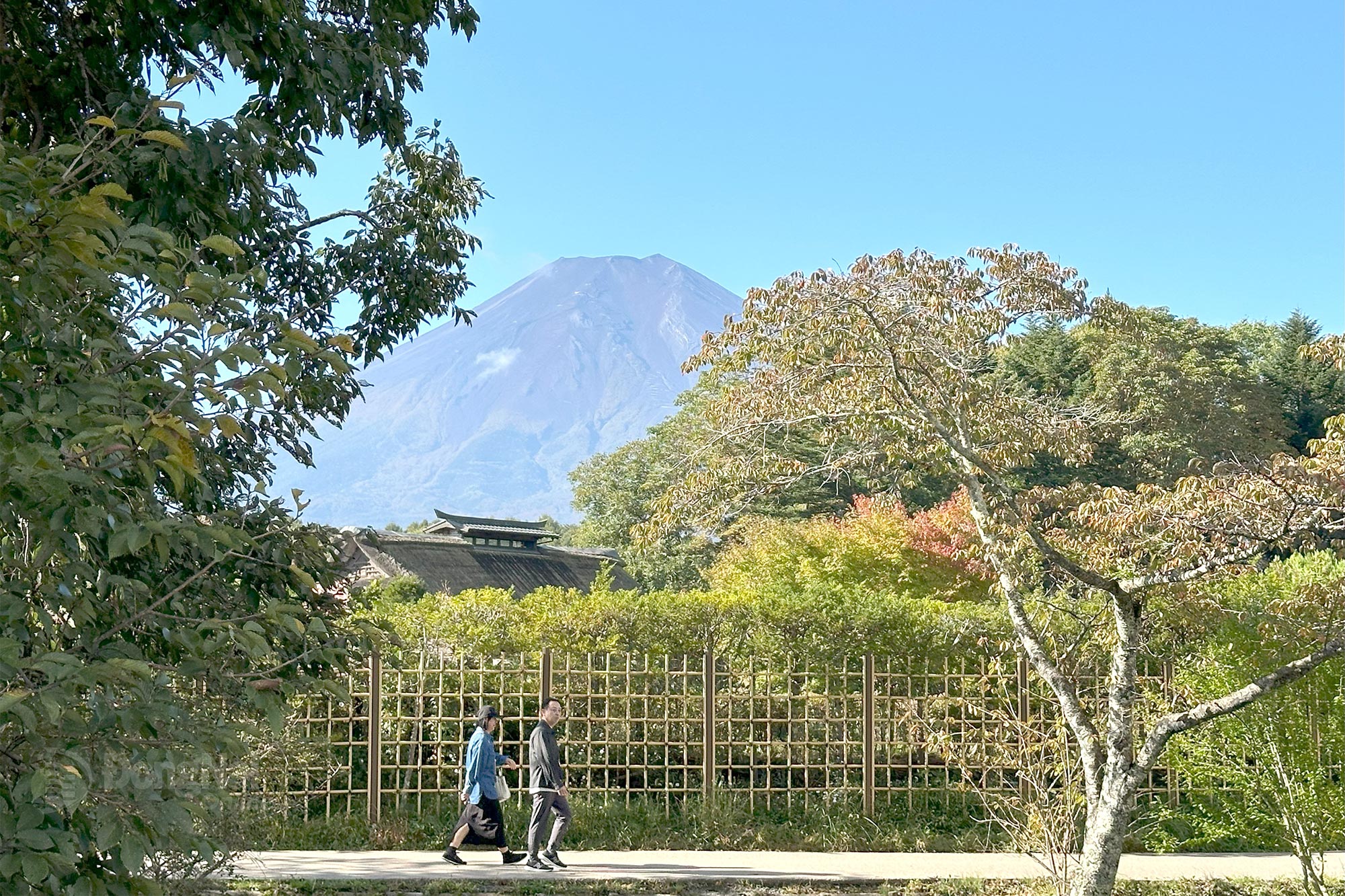
In addition to experiencing the atmosphere of the ancient village, tourists can also see Mount Fuji in the distance from here.
|
Viewing Mount Fuji from the ancient village of Oshino Hakkai. |
Sharing his thoughts on this fascinating experience, Mr. Tran Van Quang (from Ho Chi Minh City) said: "This was my first time exploring Japan, so every place left a deep impression on me. The most enjoyable part was seeing Mount Fuji from the ancient village." To avoid missing out on the picturesque natural landscapes, Mr. Quang visited all the sacred lakes as well as the large lakes surrounding Mount Fuji to fully appreciate the natural and environmental values of Japan.
The ancient village of Oshino Hakkai boasts not only beautiful natural scenery, but also offers visitors the opportunity to enjoy the pure waters from Mount Fuji and fresh fruits grown by locals in their gardens. In particular, visitors can explore and sample local specialties made from vegetables, corn, and rapeseed grown in the village's own gardens.
Some tourists who have visited Japan say that the ancient village of Oshino Hakkai has its own unique beauty in each season. However, according to their experience, autumn and winter are the most beautiful seasons. In autumn, the village becomes vibrant with the stunning colors of the leaves.
As someone who has traveled extensively to many countries, Ms. Tran Thanh Huyen shared: "In autumn, the ancient village has a romantic and breathtakingly beautiful scenery. It's also one of the most famous autumn tourist destinations in Japan. The location is also very convenient; visitors can easily stroll through this village when visiting Mount Fuji. If visitors want to see cherry blossoms, they can visit Japan in spring, the season of Japan's national flower. During this season, cherry blossoms cover the entire ancient village, creating a unique winter landscape. This is also one of the most beautiful cherry blossom viewing spots in Japan."
Ngoc Lien
Source: https://baodongnai.com.vn/dong-nai-cuoi-tuan/202510/kham-pha-lang-co-duoi-chan-nui-phu-si-9ad291e/



![[Photo] General Secretary and President To Lam presides over a working session with the Central Policy and Strategy Committee on the development of the materials industry.](https://vphoto.vietnam.vn/thumb/1200x675/vietnam/resource/IMAGE/2026/05/21/1779359935432_a3-bnd-3129-1412-jpg.webp)
![[Photo] National Assembly Chairman Tran Thanh Man working with the Standing Committee of the Law and Justice Committee](https://vphoto.vietnam.vn/thumb/1200x675/vietnam/resource/IMAGE/2026/05/21/1779378929214_ndo_br_1-4610-jpg.webp)















































































Comment (0)