

Honor through policy, not just words.
It is no coincidence that teachers are placed at the forefront of this salary reform policy. They are the ones directly involved in training knowledgeable citizens and nurturing the character of future generations – a mission that any nation considers core.
In Vinh Phuc, achievements such as consistently winning Gold, Silver, and Bronze medals at world, regional, and national intellectual competitions; maintaining high rankings in student excellence competitions; an almost perfect annual high school graduation rate; and leading the country in the reform of the general education curriculum are clear evidence of the silent dedication of the teaching staff.
Therefore, establishing the highest-paid position should not be seen merely as a "priority," but as a commitment from the State to those who are silently shouldering the responsibility of educational reform. However, for that commitment to become a reality, it requires a roadmap, specific decrees, and transparency in implementation.
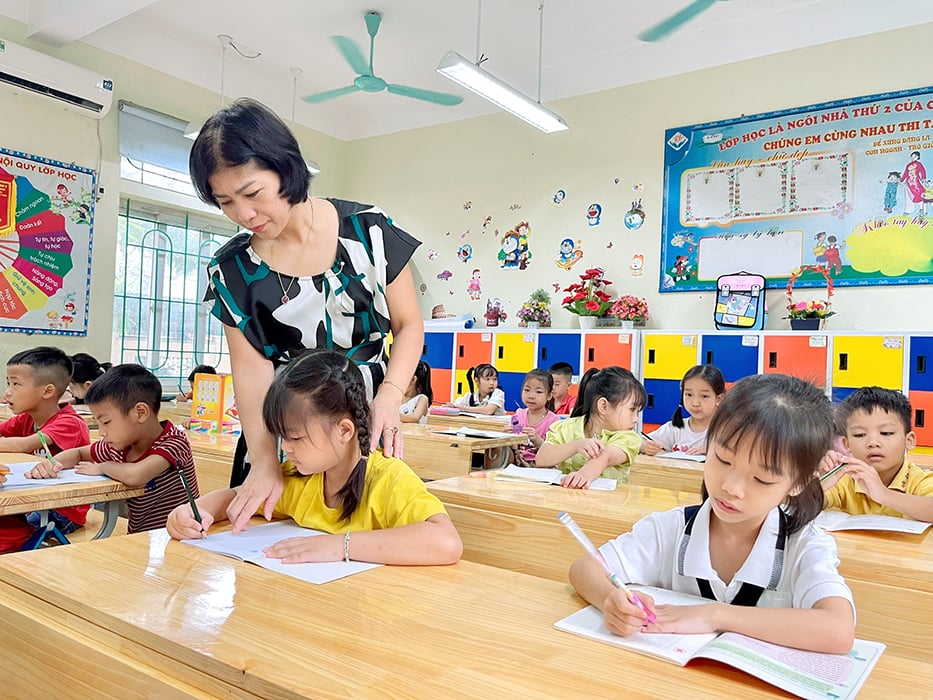
Fortunately, the Law on Teachers has clearly defined the principle: teachers' salaries will be ranked at the highest level, based on job position, competence, and work performance. This is a step forward in line with the spirit of reform. However, what worries teachers is when their actual salaries will change? And will that change be enough for them to live comfortably in their profession?
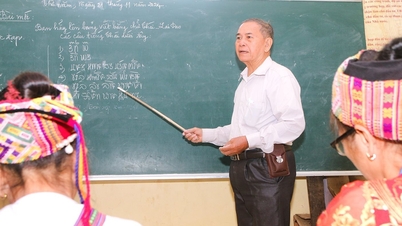
For many years, teachers, especially preschool and primary school teachers, have struggled to make ends meet with salaries of only around 4-5 million VND per month. In many localities, including numerous schools in mountainous and remote areas, teachers have to take on multiple roles, facing immense pressure from paperwork, competitions, and curriculum reforms... but without adequate allowances.
If the new regulations only focus on "high salaries" on paper without any real-world income changes or mechanisms for monitoring and supervising the implementation of the guiding decree, then all expectations will fall into a vicious cycle of disappointment.
Let's not let expectations be dashed in the parliamentary arena.
Lessons from many previous "half-hearted" policies show that there is no shortage of correct policies, only a lack of decisiveness and coordination in implementation. With the Law on Teachers, if it is not accompanied by a clear budget strategy, a transparent monitoring mechanism, and a truly innovative mindset in educational personnel management, it is very easy to create another "debt" of trust with teachers.
It's not uncommon to find dedicated teachers who have spent 20 years teaching, producing national-level award-winning students, and receiving provincial-level awards for excellence, yet still live in rented rooms and send their children back to their hometowns due to the high cost of living. Such examples shouldn't remain merely touching stories on Vietnamese Teachers' Day. They deserve recognition through policies and concrete changes in their daily lives.
The Law on Teachers has come a long way, but true success will only come when specific guiding decrees are issued on time (before January 1, 2026) and applied uniformly from the central to local levels.
Teachers' salaries cannot be increased if the "egalitarian" mindset persists, failing to properly evaluate work performance. Nor can they be increased if education budgets are cut or allocated unfairly across regions.
Therefore, salary increases must be accompanied by new governance mechanisms in schools, including transparent and objective teacher evaluations, with the participation and feedback of professional organizations and parents.
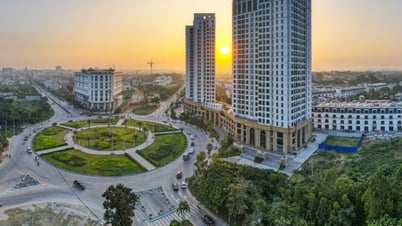
At the same time, consideration must be given to the allowance system based on region, teaching conditions, and specific work characteristics to ensure fairness among localities, from the city centers of Vinh Yen and Phuc Yen to mountainous and remote areas such as Lap Thach, Song Lo, and Tam Dao...
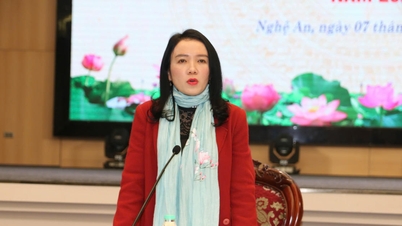
During a meeting with the Department of Education and Training in March, Provincial Party Secretary Dang Xuan Phong affirmed that the province would prioritize resources for education, from planning the school network to improving teacher remuneration.
The province currently has over 387,500 students in 540 educational institutions, with nearly 80.5% of public schools meeting national standards – a clear testament to the effectiveness of well-directed investment. In its directives, the province requires ensuring teachers' salaries are at the highest level, prioritizing the recruitment of over 1,000 specialized teachers under contract, and allocating at least 20% of the provincial budget to education. These policies demonstrate a concrete commitment to caring for teachers' well-being while maintaining the province's top-ranked educational quality nationwide.
When teachers' salaries are ranked highest, it's not just a number, but a change in society's perception of the teaching profession. It's also a policy acknowledging that teachers deserve investment. From the parliament to the classroom, a "silent revolution" is beginning. But for this revolution to reach its goal, each locality, each school, and especially the Education sector in Vinh Phuc, must be ready for change.
Text and photos: Hoang Cuc
Source: http://baovinhphuc.com.vn/Multimedia/Images/Id/129803/Khi-nha-giao-duoc-xep-luong-cao-nhat





































































Comment (0)