

Food safety management today faces many significant difficulties and challenges, directly impacting public health and the sustainable development of the economy .
Food safety management today faces many significant difficulties and challenges, directly impacting public health and the sustainable development of the economy.
Overlapping roles between different levels of management.
Despite efforts to develop and promulgate legal documents on food safety, the reality shows that the legal system remains inconsistent, not updated in a timely manner, and has many loopholes in management.
 |
| Due to limitations in scale and technology, many production facilities remain small-scale and unable to meet food safety and quality requirements. |
One of the biggest challenges in food safety management today is the lack of consistency in the system of legal regulations.
Legal documents have not been updated in a timely manner to reflect the evolving realities of the industry, leading to gaps in management. Laws and decrees related to food safety sometimes contradict or overlap between sectors, such as between the Food Safety Law and other laws, further complicating the implementation and enforcement of regulations.
Another problem hindering food safety management is the overlapping of responsibilities and hierarchical structures among government agencies.
Currently, many ministries, departments, and People's Committees at all levels are involved in managing food production and business establishments, leading to overlapping inspection, examination, and supervision processes. This not only increases management costs but also reduces the effectiveness of food safety control activities.
Food safety inspection and monitoring still face many difficulties due to a lack of modern and comprehensive technical tools. Specifically, the national system of standards and regulations on food product classification and testing criteria is still incomplete.
This makes it difficult for manufacturers and regulatory agencies to determine testing criteria and monitor product quality.
Current regulations mainly only specify limits for indicators such as heavy metals, mycotoxins, and microorganisms, but do not cover all other food safety risks. The product quality control system lacks indicators for many new types of food, leading to difficulties for businesses in selecting indicators for self-declaration of product quality.
Although policies to support production development and ensure food safety have been issued, in reality, the procedures for receiving these support policies are still complicated and not truly effective.
Some agencies lack coordinated efforts in implementing these programs, making it difficult for businesses, especially small businesses, to access these policies. This hinders the promotion of safe food production.
Current food safety management still lacks coordination and consistency among regulatory agencies. Planning, certification, inspection, and supervision processes lack close cooperation, resulting in the implementation of food safety management activities being time-consuming and labor-intensive.
The number of dedicated personnel is still modest.
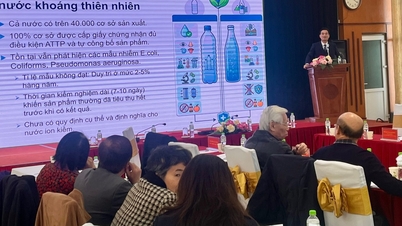
Regarding personnel for food safety management, according to Mr. Nguyen Hung Long, Deputy Director of the Food Safety Department, Ministry of Health , there is a shortage of specialized food safety officers, especially at the commune and ward levels, making management at the grassroots level very difficult.
Furthermore, a large proportion of the staff hold other positions, and their expertise in food safety is limited, directly impacting the effectiveness of management.
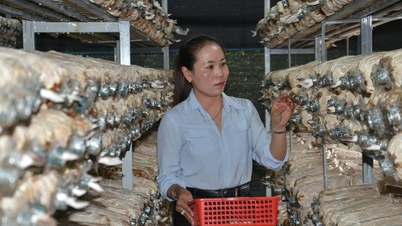
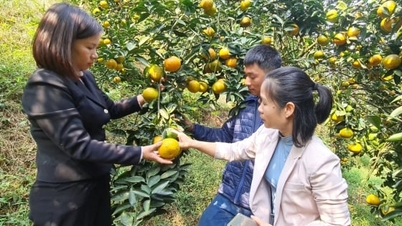
Despite efforts to establish safe food production zones and food production-consumption chains, the development of these zones remains slow.
Due to limitations in scale and technology, many production facilities remain small-scale and unable to meet food safety and quality requirements.
Building a safe food supply chain between farmers, processing facilities, and consumer businesses still faces many challenges, particularly the lack of sustainability in the linkages between the parties.
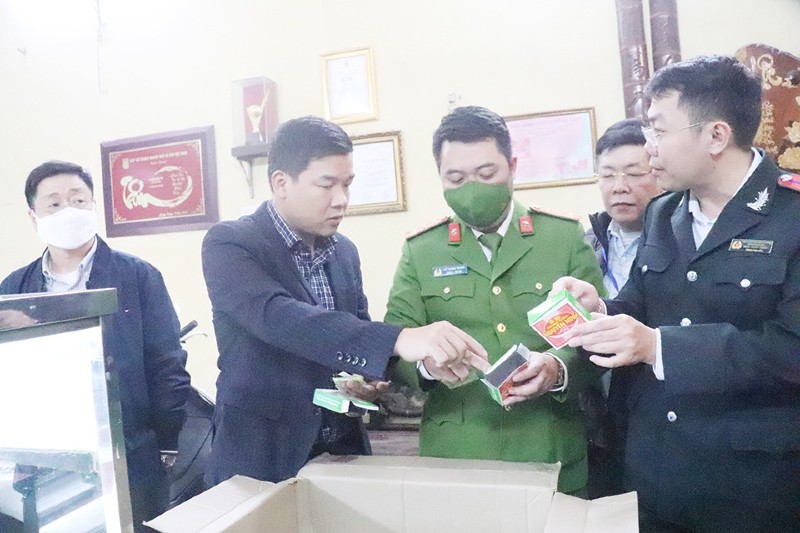
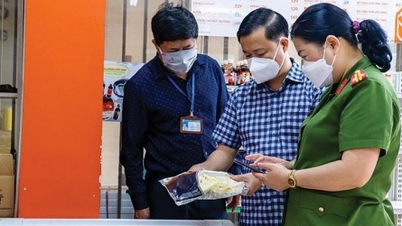
The system for monitoring and handling food safety violations at food production, processing, and trading establishments still has many limitations. Some establishments producing counterfeit food, substandard food, and food of unknown origin still exist in the market.
Inspection and handling of violations at the district and commune levels are still weak, mainly involving warnings without serious penalties, thus losing their deterrent effect on violators.
Controlling food of unknown origin and questionable safety remains a significant challenge. Imported food products and products from small-scale producers lacking certification and quality control pose numerous obstacles to management.
Furthermore, food poisoning incidents at communal kitchens, ready-made meal providers in industrial zones, and street food vendors remain a major threat to public health.
Current food safety management faces numerous challenges, ranging from an incomplete legal framework and overlapping responsibilities among sectors to inadequacies in control and enforcement of violations. These difficulties not only affect the effectiveness of state management but also directly threaten consumer health.
To address this issue, I believe we need a comprehensive and regularly updated legal system, along with enhanced technical tools to support inspection and supervision.
At the same time, the organization and coordination among functional agencies must be improved, especially at the grassroots level. The development of safe food supply chains and the application of technology in production and quality control need to be promoted to ensure not only the quality but also the clear origin of food.
A comprehensive, cohesive, and systematic strategy will help build an effective food safety management system, protect public health, and meet the requirements of sustainable social development.
Source: https://baodautu.vn/kho-chong-kho-trong-quan-ly-an-toan-thuc-pham-d238480.html



















































































Comment (0)