

This agency proposes adding a deduction of up to 23 million VND per year for medical examination and treatment expenses at domestic medical facilities covered by health insurance. For education and training, the proposed maximum deduction is 24 million VND per year for tuition fees at domestic educational institutions. The total maximum deduction for medical and education expenses is proposed to be 47 million VND per year.
This tax reform initiative aligns with feedback from many people. Currently, the deduction mechanism for individuals and dependents is applied almost uniformly across different groups without considering specific circumstances.
Previously, I suggested that deductions should be made for tuition, healthcare, and certain essential expenses related to education and training. Therefore, the fact that the Ministry of Finance has included this deduction in the draft this time shows a willingness to listen to and incorporate public feedback, which is a very positive sign.
Currently, the crucial question is how to design the tax policy to implement the deduction. The drafting committee's view on the deduction is positive, but setting a fixed maximum deduction limit is also unreasonable. In reality, many families have 2-3 children attending school, from primary to university. In the current context, tuition fees at many universities, and the cost of education at primary and secondary schools, especially in large cities like Ho Chi Minh City or Hanoi , are very high. Therefore, the 24 million VND/year limit is not truly appropriate.
The solution should be based on actual invoices and receipts. A fixed ceiling of 24 million VND per year should not be imposed. The cost for a family with one student is completely different from that of a family with multiple students.
We are encouraging childbirth to maintain a declining birth rate, but many people worry about not being able to afford their children's education. Therefore, the tax authorities could rely on invoices and documents related to the education of dependents to deduct taxes. Similar to the current income declaration system, where all income requires documentation, eligible expenses could also be included. This encourages people to use invoices and documents, and more importantly, reduces the financial burden of education and healthcare for citizens.
In addition, special cases such as those raising young children and pregnant women should also be considered. Many countries, such as Thailand, China, and Singapore, allow deductions for expenses related to maternity care, childbirth, and child-rearing. These are expenses that should be included in the tax deduction scheme.
Tax policies must ensure three very important criteria: effectiveness, fairness, and feasibility. The goal is to increase budget revenue without negatively impacting the people's ability to work or undermining their motivation to work.
Appropriate tax policies will reduce the tax burden on citizens, thereby boosting consumption and improving social confidence, especially in the current context where domestic consumer demand is growing rather weakly. This period requires easing the burden on the people, and this tax reduction policy, if implemented effectively, will be a concrete way to realize that vision.
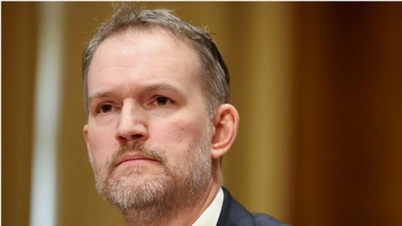
Dr. Do Thien Anh Tuan, lecturer
Fulbright School of Public Policy & Management
(Source: NLDO)
Source: https://baogialai.com.vn/khoan-suc-dan-post587997.html
![[Photo] The courage of new recruits of Brigade 144 on the training ground.](https://vphoto.vietnam.vn/thumb/1200x675/vietnam/resource/IMAGE/2026/05/27/1779881651341_anh-man-hinh-2026-05-27-luc-18-32-52.png)

![[Photo] The heat at the fireworks display site on the opening night of the Da Nang International Fireworks Festival 2026](https://vphoto.vietnam.vn/thumb/1200x675/vietnam/resource/IMAGE/2026/05/27/1779889741485_ndo_br_z7872039145157-fecaba5112f39e8352544099d7ef4738-5140-jpg.webp)





















































![[Photo] The courage of new recruits of Brigade 144 on the training ground.](https://vphoto.vietnam.vn/thumb/402x226/vietnam/resource/IMAGE/2026/05/27/1779881651341_anh-man-hinh-2026-05-27-luc-18-32-52.png)




























Comment (0)