

With many areas of winter-spring crops left fallow due to water shortages, the pressure on local authorities and irrigation units to ensure water supply for production and preparation for the new season is increasing, requiring comprehensive and timely solutions.
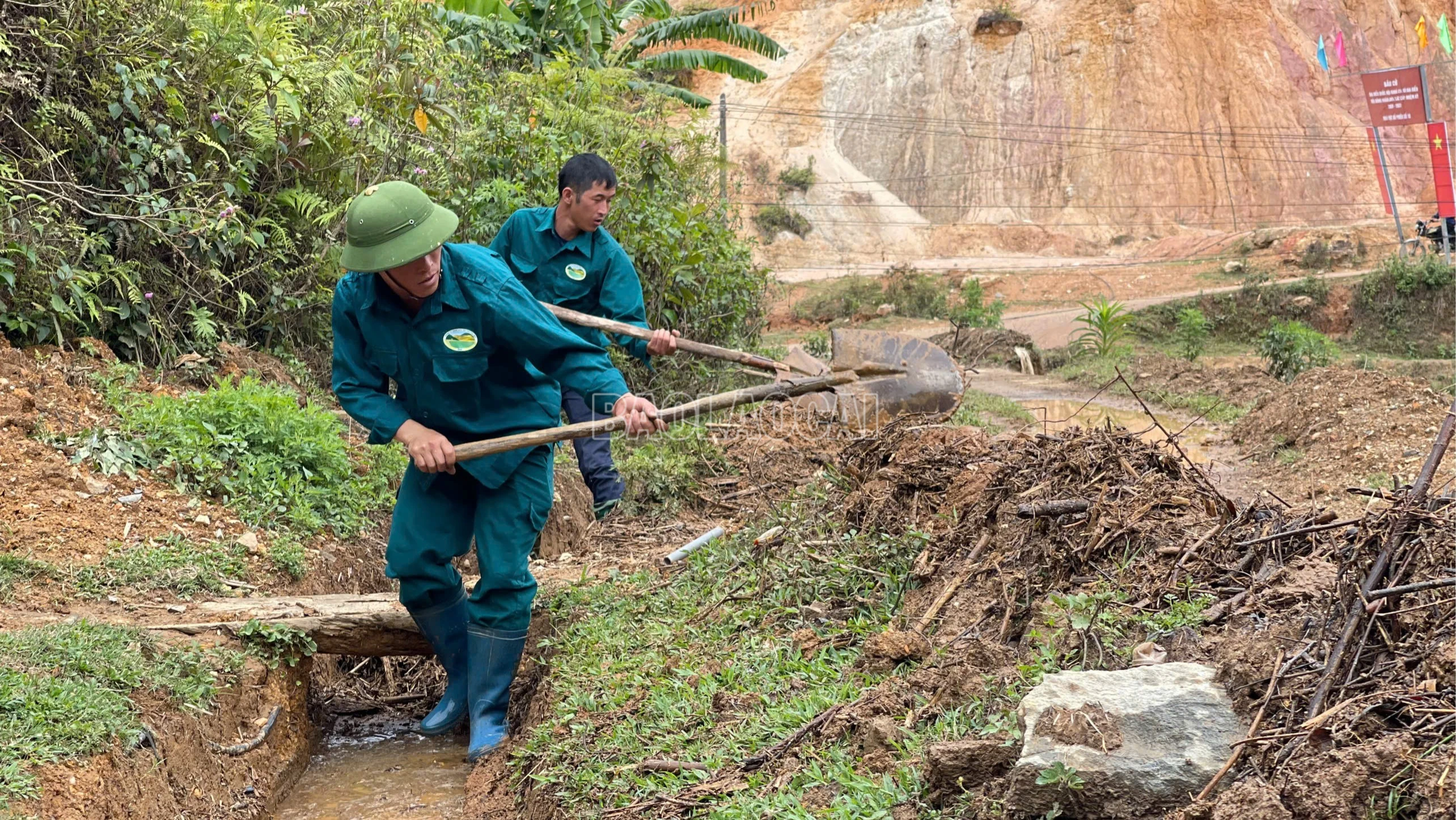
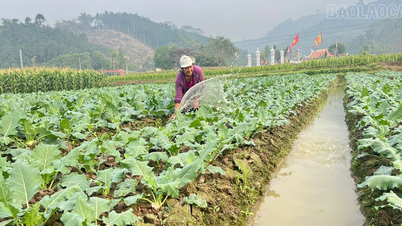
In fact, in the communes of the former Mu Cang Chai area and surrounding areas, the atmosphere of labor has begun to liven up again. In Pung Luong commune, a key area with over 1,200 hectares of rice and about 3,000 hectares of corn, proactively ensuring water resources for production has been identified as a top priority.
Right from the start of the 2026 production season, the People's Committee of the commune directed the Economic Department to closely coordinate with villages and hamlets to develop a detailed plan. In addition to issuing official documents, inter-agency inspection teams from the commune directly visited the grassroots level to control the quality of seeds, fertilizers, and other supplies, ensuring safe and standard-compliant inputs for the people's production.
Besides the seed factor, the irrigation problem is solved through the collaboration between the government and specialized enterprises.
To date, the commune has basically completed the dredging of more than 300 large and small irrigation works. Water regulation and allocation are carried out rationally and scientifically according to each microclimate.
In the Nam Khat area, farmers have finished sowing rice seedlings and begun irrigating the land to prepare for transplanting in early May. Meanwhile, in warmer areas such as La Pan Tan and De Xu Phinh, the pace of canal dredging is being accelerated, ensuring both agricultural production and contributing to the scenic beauty for the "waterfall" tourism season at the Mu Cang Chai Terraced Rice Fields National Special Monument.
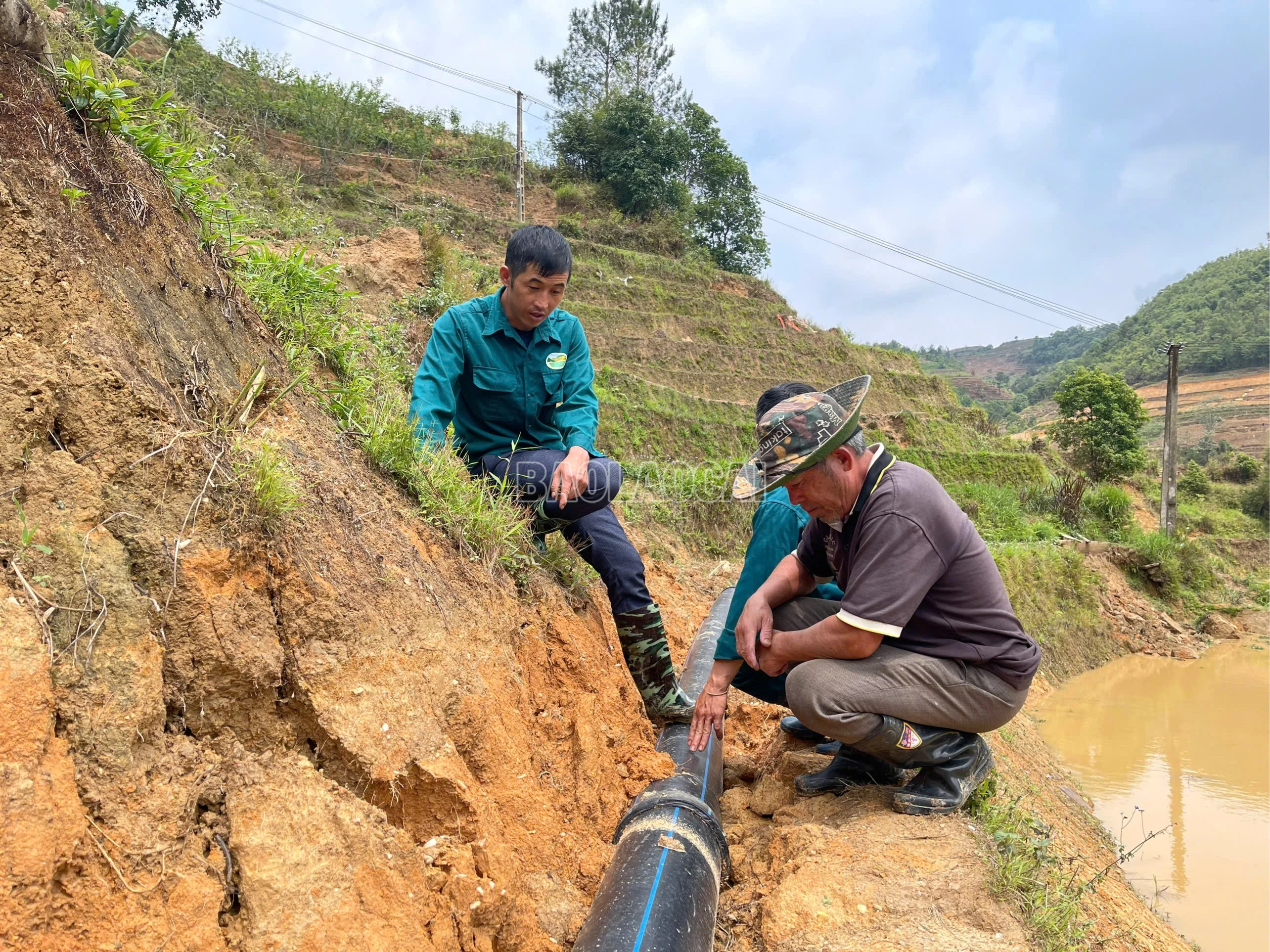
Not only in Púng Luông, but also in Tú Lệ commune – famous for its specialty glutinous rice fields – preparations for the harvest season are in their final stages. With nearly 600 hectares of cultivated land, of which about 300 hectares can only be planted during the main season, ensuring a smooth water flow to every rice paddy is a crucial factor in determining the yield and quality of the local rice.
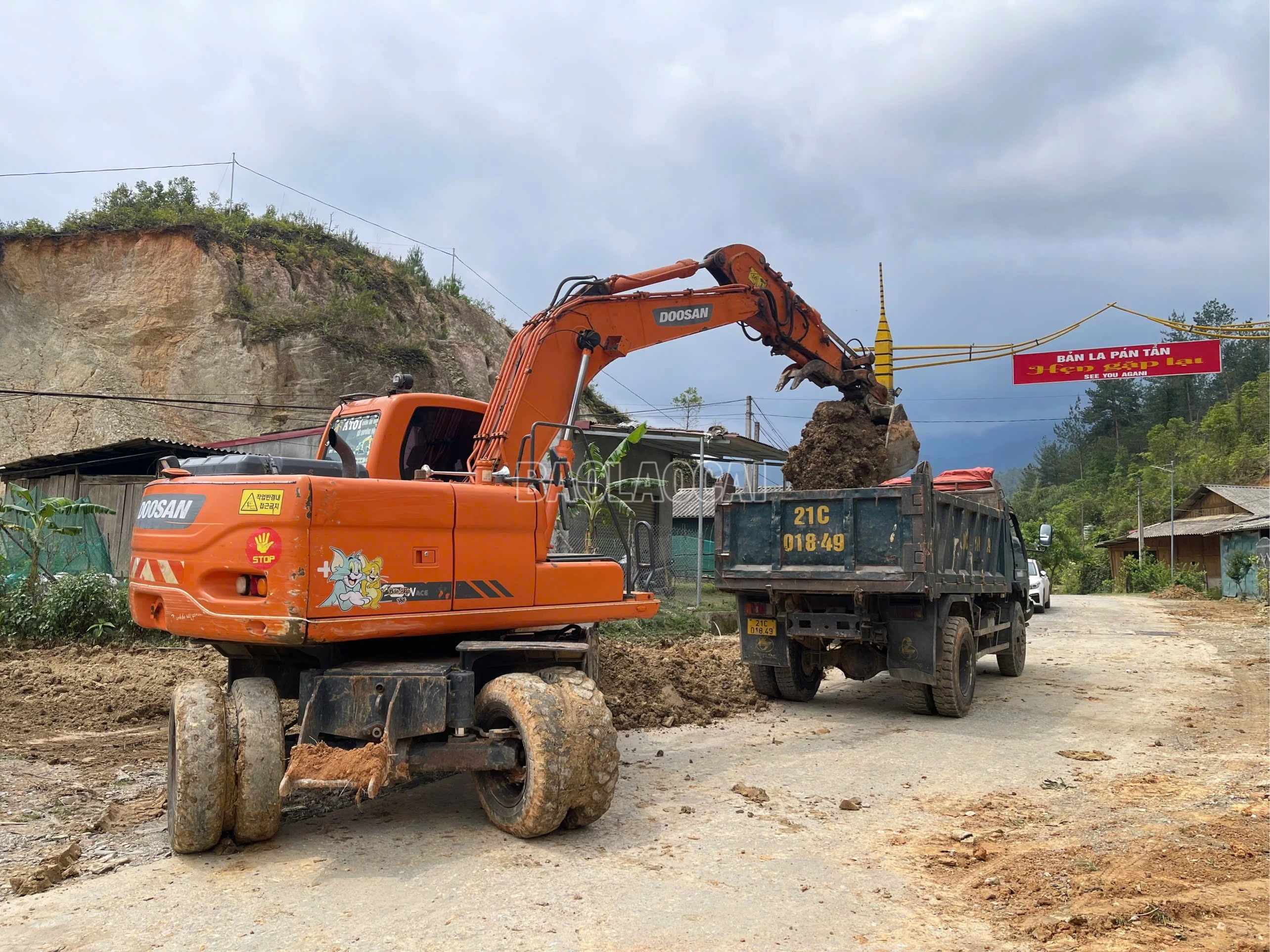
Recently, Tan Phu One-Member Limited Liability Company has focused its manpower and machinery on repairing and dredging the main canal system. Simultaneously, local residents have proactively cleared the water pipes and canals within the fields to serve agricultural production. The close cooperation between the specialized unit and the people, along with recent favorable rainfall, has ensured sufficient water for the entire Tu Le area, allowing farmers to prepare the land for the upcoming crop season.
Assessing the local initiative, Mr. Hoang Trong Nghia - Chairman of the People's Committee of Tu Le commune - affirmed: Thanks to the proactive coordination in dredging the irrigation system early on and making good use of rainwater from recent periods, at this time, most of the rice fields in the commune have enough water for farmers to plow. We are urging the people to focus on land preparation to ensure that by mid-May the entire commune will begin planting within the best timeframe.
However, due to the unique topography of the western region of Lao Cai province, which is heavily fragmented, and the irrigation system mainly scattered across mountain slopes and hillsides, there is always a potential risk of landslides and burial during the rainy season.
According to data from the Nghia Lo Regional Branch of Tan Phu One-Member Limited Liability Company - the unit managing, operating, and protecting 1,619 irrigation works in the western communes and wards of the province - the canal system has a total length of over 2,577 km. Of this, a large proportion consists of earthen canals with a length of 1,186.85 km, leading to unavoidable water loss during operation.
Mr. Do Van Khanh, Director of the Nghia Lo Regional Branch of Tan Phu One-Member Limited Liability Company, shared about the operational pressure: The projects are small-scale and scattered, making management difficult. Especially with the upcoming rainy and stormy season, this system of projects is at high risk of landslides and damage.
To proactively respond to extreme weather events, the unit has developed a 24/7 duty plan, proactively deployed temporary dams on several streams to store water, and prepared sufficient mobile pumps to promptly support key areas at risk of water shortage. In 2026, with a planned irrigation area of over 21,478 hectares, of which the main crop alone accounts for more than 10,209 hectares, ensuring uninterrupted water flow is identified as a top priority, a "command" task, and absolutely no mistakes are allowed.
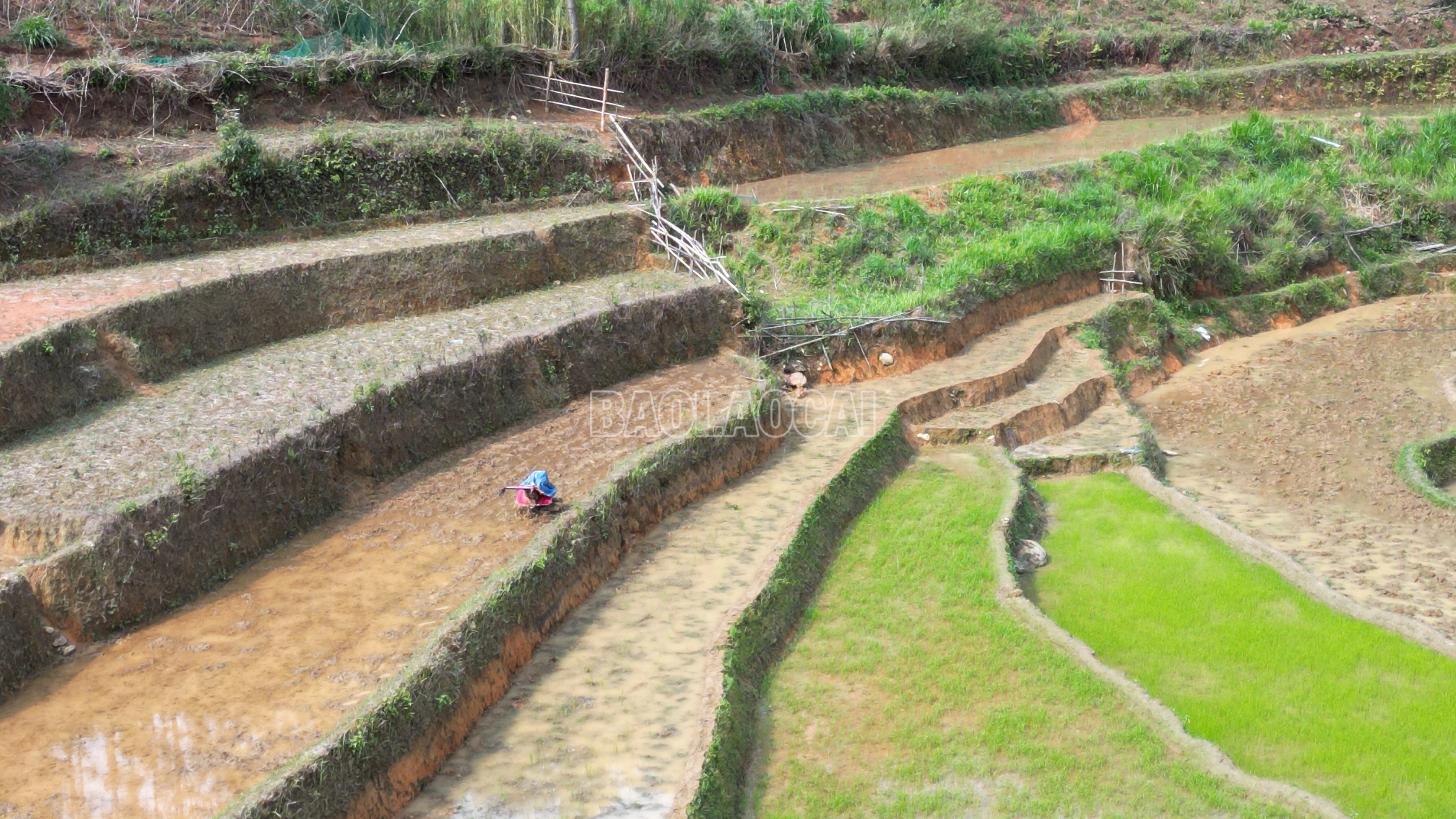
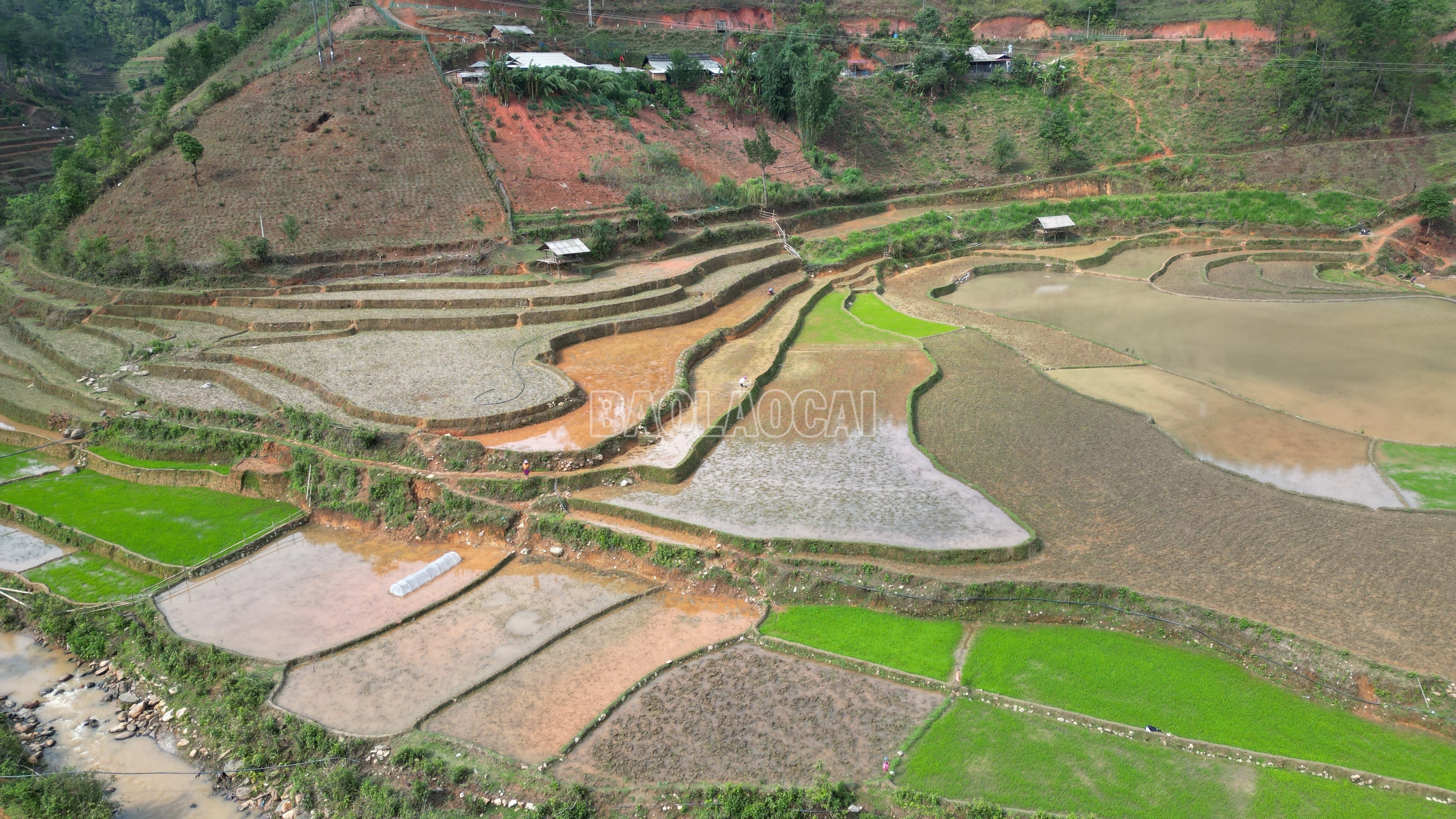
Along the canals stretching across the hills and mountainsides, the role of the irrigation workers directly involved in the work is particularly important. Mr. Trang A Sang, a worker at Tan Phu One-Member Limited Liability Company, in charge of the Pung Luong commune area, diligently inspects and reviews each section of the canal daily to promptly detect and address any problems. With a large volume of work to manage, including 136.3 km of reinforced canals and 129.5 km of earthen canals, the work of people like Mr. Sang always demands proactiveness and urgency, almost like a race against time.
Mr. Trang A Sang, a worker at Tan Phu One-Member Limited Company, said: "Basically, we have repaired all the damaged structures, ensuring the smooth flow of irrigation water to the fields, helping farmers produce the 2026 crop."
The proactive planning of seasonal schedules, control of supplies, and gradual strengthening of irrigation systems in localities such as Púng Luông and Tú Lệ demonstrate that local authorities are increasingly systematic and closely aligned with practical realities.
When water is channeled from the high mountain areas down to the valleys, it strengthens the hopes for a bountiful harvest for the ethnic minority communities in the western part of Lao Cai province. The results of the 2026 Summer-Autumn crop not only have economic significance but also reflect the collective efforts in ensuring production and social welfare in this still disadvantaged region.
Source: https://baolaocai.vn/khoi-nguon-nuoc-gieo-niem-hy-vong-post898735.html
![[Image] Close-up view of the interchange connecting the two expressways and Long Thanh Airport.](https://vphoto.vietnam.vn/thumb/1200x675/vietnam/resource/IMAGE/2026/05/25/1779703378210_ndo_br_z7863716673926-224453a31600126cce10622af6290afd-4549-jpg.webp)
![[Image] Hanoi's urban life under the challenge of a "scorching hot" environment](https://vphoto.vietnam.vn/thumb/1200x675/vietnam/resource/IMAGE/2026/05/25/1779706979265_nang-nong-t5-2026-minh-duy-7-4636-jpg.webp)











































































Comment (0)