

Dr. Chau Dinh Linh (Ho Chi Minh City University of Banking) believes that the key lies in streamlining institutions and managing monetary policy according to a "skillful approach" strategy, simultaneously supporting growth, ensuring the safety of the banking system, and maintaining macroeconomic stability.
 |
| Dr. Chau Dinh Linh (Ho Chi Minh City University of Banking) |
What is your assessment of the macroeconomic targets for 2026?
The target of GDP growth exceeding 10% by 2026, coupled with inflation (CPI) control around 4.5%, is a very ambitious goal, but not without basis.
The important thing is that we have laid the foundation since 2025, while simultaneously unlocking social resources through inclusive and innovative policies. The measure of a nation's success lies not only in its GDP figures, but also in the combination of long-term growth, innovation, and increased real income for its people.
Vietnam is on the right track by recognizing the private sector as a crucial engine of the economy, while simultaneously promoting technological innovation through specific resolutions and policies. As these new drivers are recognized and activated, the economy will have more room for sustainable growth. In my opinion, 2026 will be a year of growth, where we maximize social resources through changes in institutional thinking and governance methods.
To achieve such high growth targets, what direction will monetary policy take in 2026, sir?
I use the phrase "prudence keeps the warm" to describe the direction of monetary policy in 2026. We will pursue a controlled easing approach, prioritizing the stability and liquidity of the system, rather than chasing the goal of lowering interest rates at all costs.
High growth targets are necessary, but monetary policy always has certain limitations. The State Bank must walk a "tightrope": on the one hand, it must inject money to support growth, and on the other hand, it must flexibly control inflation, exchange rates, and the asset quality of the banking system.
In my view, in 2026, monetary policy will continue to prioritize ensuring liquidity and system stability, while promoting banking restructuring, gradually transitioning from Basel II to Basel III, and finalizing related regulations, including Circular 14/2025/TT-NHNN, to enhance risk management capacity and system safety.
So, is there still room to further reduce the policy interest rate this year?
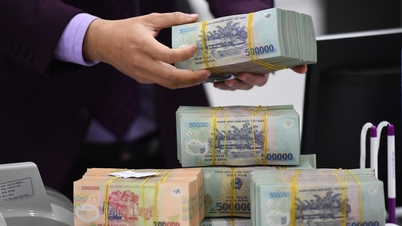
There is room for maneuver, but it's not much and not unlimited, due to numerous uncertainties both domestically and internationally. In my opinion, it's very difficult for interest rates to fall significantly further from their current level. In the short term, the central bank will try to keep interest rates stable, but in the medium and long term, interest rates tend to rise slightly.
The primary reason is the high demand for capital for public investment and the recovery of production and business activities. In this context, the safety of the banking system must be paramount, achieved through the improvement of risk management standards from Basel II to Basel III. In fact, experience in managing flexible but controlled monetary policy over the past years shows that caution is necessary to protect the macroeconomic foundation.
What are the trends in savings and lending interest rates in the near future, sir?
Overall, in the short term, interest rates will remain stable; while in the medium and long term, there is a tendency for a slight increase. Savings interest rates have shown signs of rising, but this is actually due to the previously low interest rate base, and the current increase is not yet significant.
Regarding lending interest rates, rising input costs will create some pressure. However, with the policy of stabilizing interest rates to support economic growth, the likelihood of a sharp increase in lending interest rates in the short term is not high. In addition, in the context of relatively high credit growth targets, banks face fierce competition to attract good customers, thus continuing to face pressure to narrow their net interest margin (NIM).
The banking sector's profitability remains generally positive, but the business model is undergoing a significant transformation. Instead of focusing on the quantity of products, banks are shifting towards managing earnings per employee and diversifying revenue streams through bonds, mutual funds, and insurance. However, this also places increasing pressure on banking personnel.
According to him, how will external factors impact exchange rates in 2026? Will the Fed continue to lower interest rates?
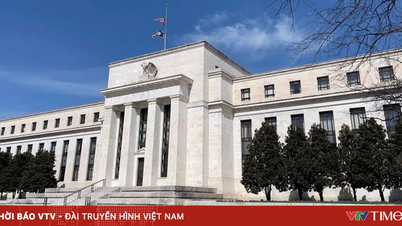
External factors are becoming more favorable. Over the past year, the US Federal Reserve (Fed) has repeatedly cut USD interest rates, while Vietnam's foreign currency supply is quite abundant thanks to remittances, FDI inflows, and record-high exports.
Notably, a significant shift of FDI flows from China to Vietnam is expected in the near future. If the Fed continues to lower interest rates, the gap between USD and VND interest rates will narrow, creating more room for domestic monetary policy management. Not only the Fed, but many other central banks around the world are also trending towards controlled monetary easing.
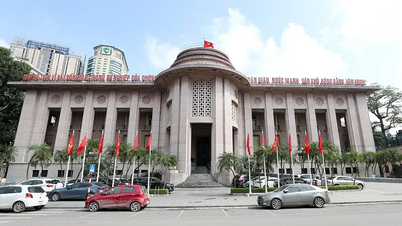
In this context, the State Bank of Vietnam will continue to flexibly utilize tools such as open market operations (OMO), currency swaps, and even direct intervention in the foreign exchange market when necessary to stabilize the exchange rate and the monetary market.
Will the economy's capital absorption capacity improve in 2026 compared to 2025?
The ability of businesses to absorb capital in 2026 is projected to improve significantly thanks to the recovery momentum from 2025 and supportive policies on science and technology , innovation, and intellectual property.
The National Assembly has set a target of achieving GDP growth of 10% or more, GDP per capita of approximately US$5,400-5,500, and controlling inflation around 4.5%. The government continues to prioritize promoting growth while maintaining macroeconomic stability, controlling inflation, and ensuring the major balances of the economy. Meanwhile, monetary and fiscal policies are managed flexibly, with reasonable expansion and targeted approaches.
Credit flows will be concentrated in manufacturing and business sectors, while credit to sectors with potential risks will be tightly controlled. However, there is still room for further monetary policy easing, though not much.
What risks does the 2026 credit growth target pose to the banking system, sir?
In 2026, the State Bank of Vietnam projects credit growth across the entire system to be around 15%, with flexible adjustments based on actual developments to control inflation, stabilize the macroeconomy, and ensure the safety of the credit institution system. However, the pressure is considerable as the credit-to-GDP ratio has already exceeded 140%, falling into the "yellow light" warning zone, while the usual safe threshold is only around 90%.
If credit growth continues to rely primarily on the banking system, risks to the entire financial system will increase, especially in the context of the economy's growing demand for medium and long-term capital. Therefore, developing the corporate bond market and the stock market is crucial to share the capital burden with banks.
From an asset quality perspective, when credit increases rapidly, non-performing loans (NPLs) in categories 3 to 5 tend to rise. However, major banks have now adopted relatively good risk management standards, incorporating risk into their "DNA" in the credit granting process. Controlling credit quality is like filtering water: if it's filtered clean from the source – the appraisal stage – then the financial system will be safer and more sustainable in the long run. The general trend in the banking industry is to move towards stricter standards such as Basel III and the new regulations in Circular 14 to increase capital buffers and enhance resilience in the medium and long term.
Source: https://baodautu.vn/khoi-thong-the-che-va-chien-luoc-kheo-co-thi-am-d504369.html

![[Photo] Standing Committee member of the Party Central Committee Tran Cam Tu working with the Central Inspection Committee](https://vphoto.vietnam.vn/thumb/1200x675/vietnam/resource/IMAGE/2026/05/28/1779969579668_ndo_br_bnd-2495-jpg.webp)











































































































Comment (0)