

Spreading from professional to amateur stages.
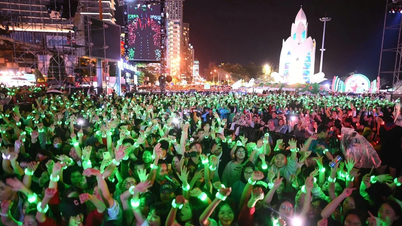
Live performances have long been seen as a space for artists to fully connect with the public through their talent, emotions, and professional skills. However, with the rapid development of the entertainment industry and digital audio technology, the concept of "singing live" is changing; lip-syncing, using pre-recorded vocals, or manipulating vocals with real-time software are no longer isolated incidents on stage today.
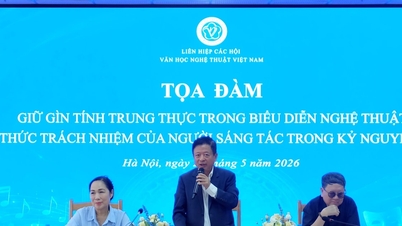
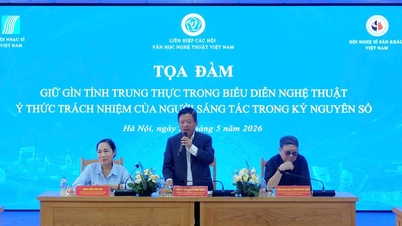
At the seminar "Maintaining Integrity in Performing Arts, the Responsibility of Creators in the Digital Age" on May 29th, many artists, researchers, and cultural managers frankly acknowledged the increasingly common problem of dishonesty in performances, which is prevalent in many art programs.
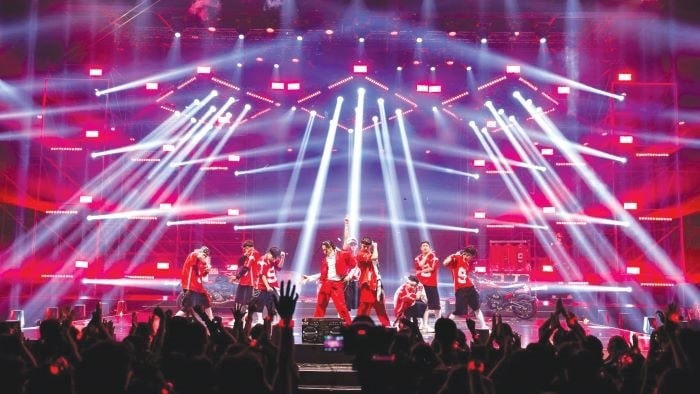
Colonel and artist Vu Ho Tung, former Vice Rector of the Military University of Culture and Arts, believes that technology itself is not at fault; however, when technology is used to replace serious professional training, it easily creates an "artistic illusion," making it difficult for the public to distinguish between genuine talent and products that have been "beautified" using technology.
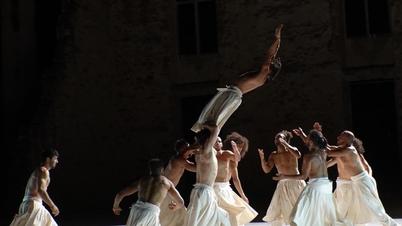
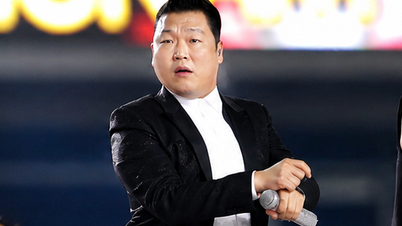
This "illusion" is becoming increasingly common on modern stages. Audiences see the singer holding a microphone, moving with emotion, and the sound almost perfectly reproduced, but in reality, much of it comes from a pre-recorded track that has been technically processed. An elaborately staged performance, spectacular lighting, and visually stunning choreography sometimes obscure the most crucial element: the real singing voice.
Many young artists today rise to prominence from digital platforms with audio products enhanced by various software processing tools. However, when they step onto the live stage, the gap between their "studio voice" and their actual performance ability immediately becomes apparent. Videos revealing the true vocal quality that have circulated on social media recently show that technology is creating a glamorous facade, while the underlying professional skill often doesn't match.
People's Artist Vuong Duy Bien, Chairman of the Vietnam Association for the Development of Cultural Industries, frankly called lip-syncing "fake." Even more worrying is that this phenomenon is spreading from professional stages to mass programs, even in programs for children; he believes that without stronger measures and sanctions, we could become a "lip-syncing superpower."
Having participated in cultural exchange performances in several countries, music researcher and critic Nguyen Quang Long observes that authenticity in art and music is always paramount. The sound system used should only help the audience hear more clearly, not employ techniques to make the vocals sound more appealing or the singer less tired; true art should prioritize this!
Emphasizing genuine and emotional performance skills.
Despite years of criticism, lip-syncing persists in the performing arts. Many argue that this isn't simply a technical choice by the artist. First and foremost, it's a result of the pressures of the modern entertainment industry. Today's performances no longer focus solely on music but have become a combination of sound, lighting, stage design, media, and visual effects.
According to People's Artist Tan Minh, many current entertainment programs require artists to sing and dance continuously at high intensity. "Human stamina is limited," therefore, many programs opt for lip-syncing or singing over pre-recorded vocals to ensure the overall quality of the show.
.jpg)
Economic factors are also a significant reason; a complete live performance requires a high-quality sound system, a well-rehearsed band, professional technicians, and significantly higher organizational costs compared to using pre-recorded music. According to Major General and musician Duc Trinh, President of the Vietnam Musicians Association, the cost of a live performance can be several times higher than a pre-recorded performance. In a context where many producers prioritize profit or optimize costs, lip-syncing becomes a more convenient solution.
In addition, there is a perfectionist mentality; television stations and organizers often want live televised art programs and large-scale festivals to be "absolutely safe," free from errors or technical risks; gradually, this has become a professional habit.
Playwright Nguyen Dang Chuong, Vice President of the Vietnam Association of Stage Artists, stated that in the field of performing arts, point d, Article 6 of Decree No. 79/2012/ND-CP clearly prohibits "using recorded audio to replace the performer's real voice or the real sound of musical instruments"; however, in 2020, the Government replaced Decree 79 with Decree 144, which removed this provision. Could this be one of the fundamental reasons behind the phenomenon of "lip-syncing" in public performances by many groups and individuals in recent times?
Therefore, regulations and management mechanisms need to be improved to curb lip-syncing. More importantly, it is necessary to restore the spirit of serious professional work, artistic self-respect, and respect for the audience in performances. Musician Duc Trinh suggested that just as scientific research emphasizes scientific integrity, the arts also need ethical regulations and integrity for performing artists.
From a training perspective, artist Vu Ho Tung argues that focusing solely on performance techniques while neglecting professional character education can easily create performers who are technically skilled but lack cultural depth and a solid artistic foundation. Art training institutions need to persistently build a strong technical and ethical foundation for their students, avoiding the trend of training "speed stars" or overemphasizing media image. Simultaneously, they should enhance students' musical aesthetics, enabling them to select and appreciate works with artistic, humanistic, and cultural value.
In particular, it is necessary to build a healthy performance environment that emphasizes genuine performance ability and sincerity in artistic emotion. This is also a crucial foundation for the healthy and sustainable development of art and for preserving its authentic values in today's society.
Source: https://daibieunhandan.vn/khong-de-cong-nghe-tao-ao-giac-nghe-thuat-10418640.html
![[Image] Nearly 125,000 Hanoi students completed the Literature exam for the 10th grade entrance exam.](https://vphoto.vietnam.vn/thumb/1200x675/vietnam/resource/IMAGE/2026/05/30/1780117233041_ndo_br_thiet-ke-chua-co-ten-2-png.webp)






































































Comment (0)