

 |
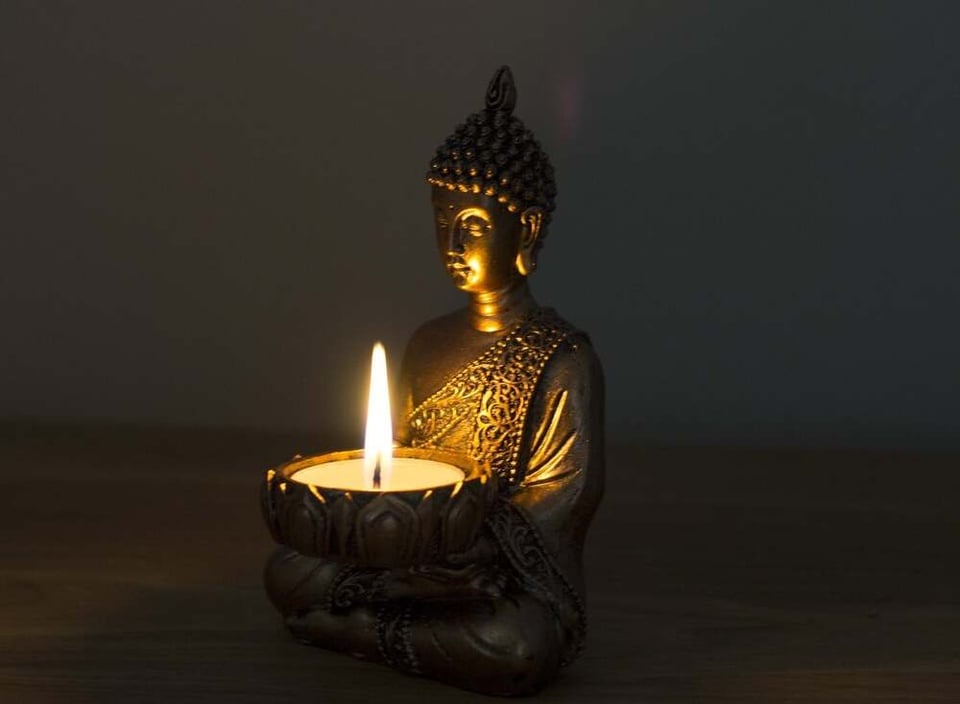
Illustrative image. Source: Phatgiao.org |
The Buddha told us a very beautiful parable about thought and ideas. A young merchant returned home after a long trading trip to find his house burned to ashes by robbers. Just outside the old foundation lay a small, charred corpse. He thought it was the body of his young son. He didn't know that his son was still alive. He didn't know that after burning down the house, the robbers had taken the child with them. And in a state of panic, he believed that the corpse was his son's. He broke his hair, beat his chest, and wept, then held a funeral for his son.
The merchant loved his child very much. The child was his reason for living. He grieved so much that he couldn't bear to part with its urn. He sewed a silk pouch and put the ashes in it, wearing it to his chest day and night, whether sleeping or working.
One night, his son escaped from robbers. He returned to the house his father had rebuilt and knocked eagerly on the door at two in the morning. His father awoke, still deeply distressed and with the bag of ashes still clutched to his chest, and asked, "Who is it?"
"It's me, Dad!" the child called out from through the door.
"You're terrible, you're not my child. My child died three months ago, I still have their ashes right here."
The child continued to pound on the door and cry. It pleaded repeatedly to be let inside, but the father refused. The father clung to the belief that his child was dead and thought this heartless child was only there to bother him. Finally, the child left, and he lost his child forever.
The Buddha taught that when we become trapped by an idea and consider it the truth, we lose the opportunity to see the truth. Even if the truth comes knocking at your door, you will refuse it because you cannot open your mind. Therefore, when you are entangled in an idea about truth or an idea about the conditions of happiness, be careful.
The first precept for practicing mindfulness is to practice freedom from prejudice: “Aware of the suffering caused by fanaticism and intolerance, I vow to practice not being entangled in any doctrine, theory, or ideology, including Buddhist doctrines. I vow to view the Buddha’s teachings as methods of practice to cultivate wisdom and compassion, not as truths to be worshipped and defended, especially not through violent means.”
This practice helps us to be free from the bondage of any dogma. Our world has suffered too much because of ideologies and dogmas. The first aspect of mindfulness practice is freedom. This freedom transcends all notions of freedom that we usually have. If we are trapped by notions, we will suffer and cause our loved ones to suffer as well.
Source: https://znews.vn/bi-troi-vao-mot-y-niem-post1649087.html





























































































Comment (0)