

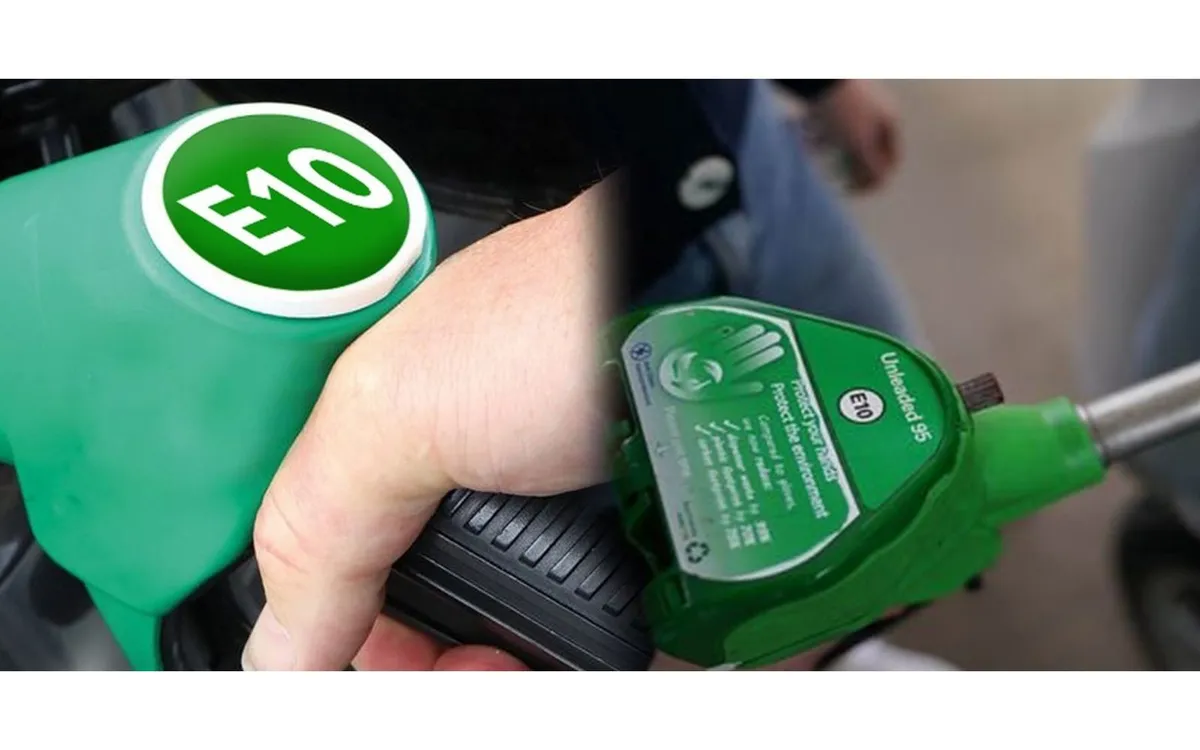
Biofuels have been used safely in many countries.
Biofuels have been used safely in many countries.
Associate Professor, Dr. Pham Huu Tuyen - Director of the Center for Research on Power Sources and Autonomous Vehicles ( Hanoi University of Science and Technology) said that in the US, E10 gasoline has become a popular fuel, widely used for most gasoline-powered vehicles. In addition, the country has also developed fuels with higher ethanol content such as E15, E20, and even E85 for vehicles using flexible fuel (flex-fuel). The US's success stems from building a comprehensive support policy, from subsidies and tax incentives to mandatory regulations on blending biofuels.
Brazil is a prime example of the successful development of ethanol fuel from sugarcane. The country not only widely uses ethanol-blended gasoline but also popularizes vehicles that run entirely on ethanol or flexible fuels. Notably, Brazil has integrated biofuel development with its agricultural sector, creating a closed and sustainable value chain.
In the region, Thailand is a model worth emulating, having implemented E10 gasoline early on, and then gradually upgraded to E20. The Thai government has had a clear incentive policy regarding pricing, while also developing a widespread distribution system, making it easy for people to access and use it.
In India, the government increased the ethanol blending rate in gasoline from 12% in 2023 to 20% last year. In many European countries such as Germany, France, Finland, and the UK, E10 bioethanol is the standard fuel at gas stations for vehicles.
In Vietnam, starting in August 2025, the Vietnam National Petroleum Group (Petrolimex) and the Vietnam Oil Corporation (PVOIL) – a member unit of the Vietnam National Energy and Industry Group (Petrovietnam) – have been piloting the sale of E10 gasoline. As of today, May 20th, E10RON95 bio-gasoline has "covered" the entire network of Petrolimex and PVOIL gas stations nationwide.
According to Petrolimex and PVOIL—the two companies with the largest market share in petroleum products nationwide—since the pilot sale of E10 gasoline began, there have been no negative customer complaints about it.
Reduces emissions and does not affect the engine.
As an expert with many years of research on biofuels, Associate Professor, Dr. Pham Huu Tuyen - Director of the Center for Research on Power Sources and Autonomous Vehicles (Hanoi University of Science and Technology) affirms that E10 gasoline does not change the operating characteristics of modern gasoline engines, while also helping the combustion process to be cleaner, significantly reducing harmful emissions and contributing to the goal of green transportation.
Regarding the combustion process, ethanol is an oxygen-containing compound, so when mixed with gasoline, it helps the fuel burn more cleanly and completely. As a result, harmful emissions such as CO and HC are significantly reduced. In urban traffic conditions in Vietnam – where vehicles frequently move in a stop-and-go manner – this advantage is even more effective.
In terms of performance, E10 gasoline still ensures power and fuel consumption equivalent to conventional gasoline if the correct octane rating (RON) is used. Ethanol has good anti-knock properties, contributing to maintaining engine stability. In practice, users hardly notice any difference in performance when switching from traditional gasoline to E10.
Regarding engine durability, E10 gasoline is compatible with most current vehicles, especially those manufactured within the last 20 years or so. If used correctly and with regular maintenance, this fuel does not cause damage and may even help keep the engine cleaner by reducing deposits in the combustion chamber, according to Associate Professor, Dr. Pham Huu Tuyen.
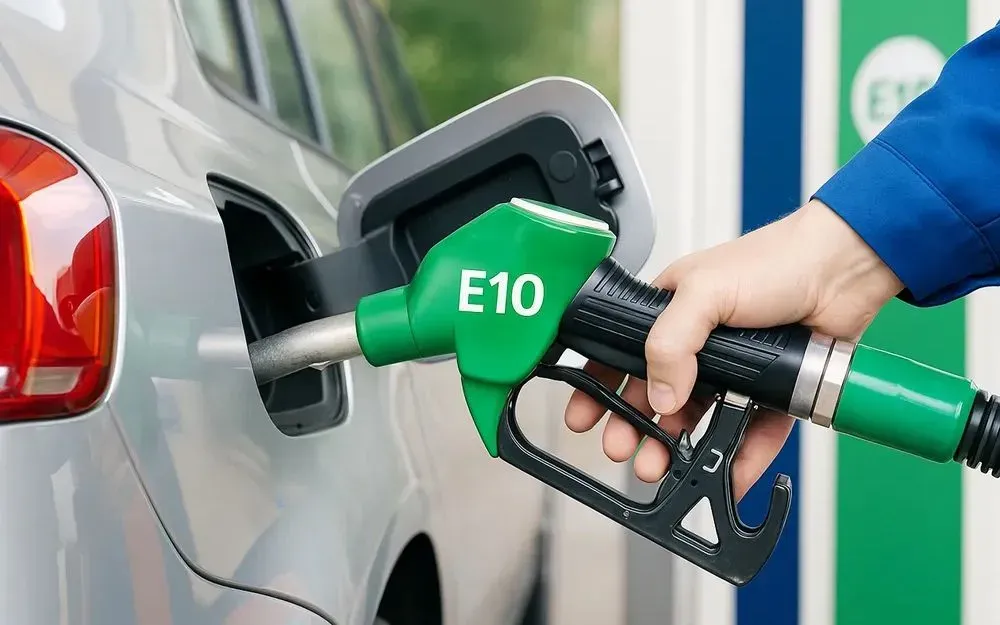
In Vietnam, most cars manufactured from 2011 to the present have the following information in their owner's manuals: "suitable for use with E5 and E10 gasoline".
Sharing this view, Dr. Dao Duy Anh, Deputy Director of the Department of Innovation, Green Transformation and Industrial Promotion (Ministry of Industry and Trade), stated that petroleum is the "blood" of the economy, so no country would inject "toxic blood" into its economy. To launch this biofuel program, the Ministry of Industry and Trade surveyed and assessed the situation of biofuel use worldwide and in Vietnam as early as 2014. During the distribution process, no negative feedback from customers has been received. International experience has shown that the US, Brazil, Europe, China, Thailand, and the Philippines have been using E10 for many years without any significant negative impacts on vehicles, and therefore these countries are encouraging the use of gasoline blended with higher proportions of ethanol.
Furthermore, the Ministry of Industry and Trade is also working with many domestic and international scientists to assess the impacts of biofuels on the performance and lifespan of engines. In fact, since the trial sale of E10 gasoline in Vietnam, leaders at the Ministry of Industry and Trade, PVOIL, and Petrolimex have been pioneers and role models in using E10 gasoline, and in practice, its impact on engines has not changed significantly compared to conventional gasoline.
In particular, E10 bioethanol fuel shows significant effectiveness in reducing harmful gas emissions and contributes to emission reductions thanks to the unique properties of ethanol. Specifically, ethanol is a fuel with oxygen readily available in its molecular structure, so when mixed with gasoline, it helps the combustion process to be more complete. As a result, the amount of unburned CO and hydrocarbons (HC) – two major urban air pollutants – is significantly reduced compared to traditional gasoline. In addition, ethanol is produced from biofuels such as cassava, corn, sugarcane, etc., crops that can absorb CO₂ during their growth. When ethanol is burned, the amount of CO₂ emitted is essentially equivalent to the amount of CO₂ that the plants have absorbed beforehand. Therefore, considering the fuel's life cycle, E10 helps reduce "net emissions" compared to gasoline – which is a fossil fuel that releases additional CO₂ that accumulates in the soil over the long term, according to Associate Professor, Dr. Pham Huu Tuyen.
Use E10 gasoline correctly
According to recommendations from major automakers such as Toyota, Honda, and Ford, most cars manufactured from 2011 onwards can safely use E10 gasoline thanks to their modern electronic fuel injection systems that can optimally regulate fuel consumption. Honda Vietnam states that customers can rest assured using E10 bioethanol gasoline for the models officially distributed by the company. According to the manufacturer's recommendations, Honda motorcycles and cars use fuel with an octane rating of 91 or higher, and for motorcycles, the ethanol content should not exceed 10%. Meanwhile, Subaru cars manufactured in Thailand clearly state in their owner's manuals that they can use both E5 and E10 gasoline. In Vietnam, most cars manufactured from 2011 onwards have the following information in their owner's manuals: "suitable for use with E5 and E10 gasoline".
However, according to the RAC Foundation, a consulting and charity focused on transport, particularly road transport in the UK, vehicles manufactured before 2000, or not equipped with electronic fuel injection, may be at risk of malfunction due to ethanol's highly corrosive properties on rubber seals, fuel lines, or metal parts. Ethanol can also loosen long-standing deposits in the fuel tank, leading to clogged fuel injectors or fuel pumps.
Therefore, users should proactively check the E10 fuel compatibility symbol in the manufacturer's owner's manual. Additionally, when a vehicle is left unused for extended periods, E10 fuel stored in the tank can easily separate, absorb water, and potentially cause starting difficulties. Therefore, vehicle owners should let the engine run for a few minutes each week if not driving to minimize the separation of E10 fuel.
In particular, choosing E10 gasoline, which ensures quality, combined with maintaining a regular inspection and maintenance schedule as recommended by the engine manufacturer, will also help the engine operate safely and stably, advises Associate Professor, Dr. Pham Huu Tuyen.
On the market, in addition to E10RON95-III gasoline, Petrolimex has just added E10RON95-V gasoline - a premium bio-gasoline containing 10% ethanol and meeting Euro 5 emission standards.
Source: https://vtv.vn/khuyen-nghi-dung-xang-e10-dung-cach-de-bao-ve-dong-co-100260520185556381.htm


![[Image] Hanoi's urban life under the challenge of a "scorching hot" environment](https://vphoto.vietnam.vn/thumb/1200x675/vietnam/resource/IMAGE/2026/05/25/1779706979265_nang-nong-t5-2026-minh-duy-7-4636-jpg.webp)


![[Image] Close-up view of the interchange connecting the two expressways and Long Thanh Airport.](https://vphoto.vietnam.vn/thumb/1200x675/vietnam/resource/IMAGE/2026/05/25/1779703378210_ndo_br_z7863716673926-224453a31600126cce10622af6290afd-4549-jpg.webp)





























































































Comment (0)