

Two bottlenecks hindering development.
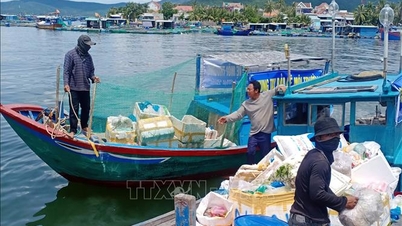
Vietnam has over 3,260km of coastline and an exclusive economic zone of approximately 1 million km² , creating a significant advantage for developing large-scale industrial aquaculture.
In the Fisheries Development Strategy to 2030, aquaculture is identified as a key economic sector aimed at reducing pressure on natural exploitation, protecting resources, and increasing export value. The aquaculture development plan also aims to achieve a production of approximately 1.45 million tons, and to significantly expand offshore aquaculture models applying modern technology. However, the aquaculture industry is facing many difficulties in terms of human resources and science and technology.
Currently, the fisheries sector provides employment for approximately 4-4.5 million workers, but the workforce directly involved in aquaculture accounts for only about 10-15%.
Notably, only about 20% of the workforce in the aquaculture industry is currently formally trained. In the context of transitioning to a modern aquaculture model, workers need not only traditional farming skills but also the ability to apply artificial intelligence (AI), the Internet of Things (IoT), big data, and blockchain to manage the farming environment, monitor aquatic health, traceability, and disease forecasting. However, Vietnam currently faces a serious shortage of high-tech engineers, marine environmental experts, and personnel managing the aquaculture value chain.
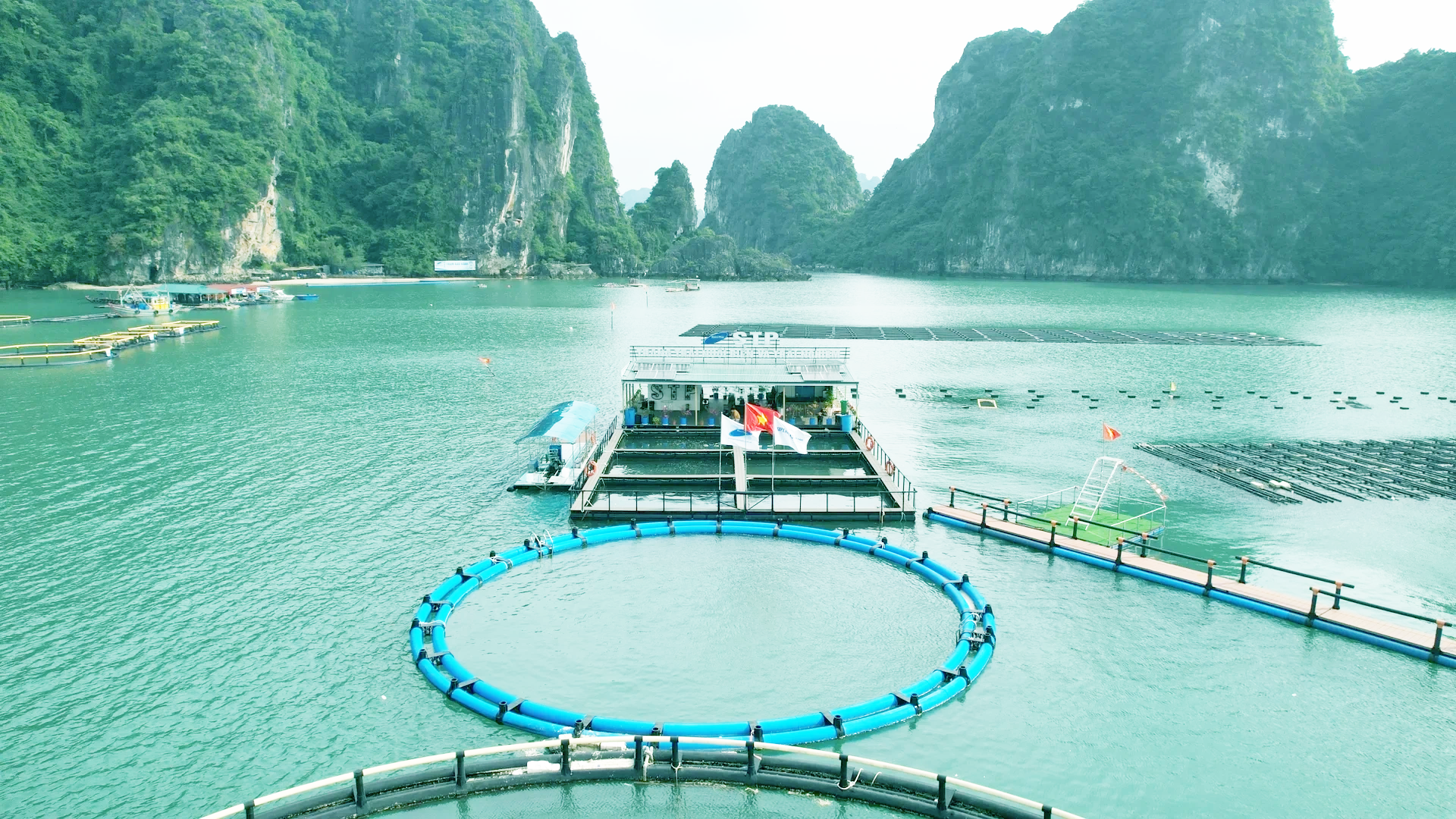
In addition, harsh working and living conditions at sea, coupled with insufficient income, insurance, and social security policies, make it difficult for the industry to attract workers, especially young workers.
According to the Vietnam Academy of Fisheries Science, although HDPE plastic cages, IoT technology, AI, and environmental monitoring systems have appeared in some models, most marine aquaculture activities are still concentrated in coastal areas on a small scale. The proportion of using traditional wooden cages remains high; the level of mechanization and automation is low; and disease warning systems and digital management have not been widely applied.
Vietnam has also mastered the technology for artificial breeding of many economically valuable marine fish species such as sea bass, grouper, yellowfin snapper, and cobia. However, the quality of the fry is not consistent; the source of broodstock still depends heavily on nature; and industrial-scale breeding technology has not yet developed strongly. Notably, with lobster – a high-value export item of the fisheries industry – Vietnam has not yet mastered the technology for producing fry, leaving the supply of fry heavily dependent on imports.
We need a boost in technology and human resources.
In this context, Mr. Nguyen Huu Thanh from the Vietnam Institute of Fisheries Science believes that sustainable industrial aquaculture development should not only focus on upgrading cage materials, but also require a fundamental shift in management thinking towards data-driven and science-technology-based approaches.
According to him, the aquaculture industry needs to focus on three main pillars: developing fast-growing, disease-resistant species; investing in aquaculture infrastructure that can withstand natural disasters and storms; and promoting the Integrated Multispecies Aquaculture (IMTA) model to improve ecological efficiency and reduce environmental impact. This is considered a crucial roadmap for gradually forming a green, modern, and sustainable marine economy.
At the same time, priority should be given to allocating budget to national breeding programs, promoting the application of molecular genetics to create fast-growing, disease-resistant breeds, and supporting businesses in gradually mastering breeding technology. Promoting the localization of marine aquaculture technology, developing HDPE cages and automated equipment will reduce investment and operating costs. Establishing concentrated farming areas linked to logistics, cold storage, and processing systems is also considered a crucial solution to forming a closed-loop marine aquaculture value chain and enhancing the industry's competitiveness.
In particular, according to Mr. Thanh, it is necessary to deploy an automated marine environmental monitoring system and natural disaster risk maps; establish an insurance mechanism for marine aquaculture to reassure businesses investing in high technology; and promote "carbon credits for mangrove forests and seaweed" to create additional income for farmers.
According to Associate Professor Dr. Thai Thanh Binh, Vice Rector of the College of Economics, Technology and Fisheries, sustainable industrial aquaculture development requires a comprehensive strategy for training and attracting human resources with the synchronized participation of the state, schools, and businesses.
First, it is necessary to complete the marine spatial planning to create stability so that businesses can confidently invest long-term, thereby creating conditions for technological development and systematic human resource training; at the same time, the state needs to develop a set of international standards for marine aquaculture skills, strengthen support for vocational training and have appropriate preferential policies to attract engineers and high-tech experts to work in marine areas.
Universities and aquaculture training institutions need to innovate their programs towards a "green and digital" direction; incorporating content such as AI in marine environmental management, IoT in aquaculture, circular economy, and electronic traceability into their curricula. Training must be linked to business practices, expanding the model of collaboration between schools and industrial marine farms so that students can gain direct practical experience.
According to the objectives of the Marine Aquaculture Development Project, by 2030 at least 50% of direct laborers will be trained in industrial aquaculture techniques and occupational safety; therefore, retraining fishermen is also very important; at the same time, practical training centers in Khanh Hoa , Ninh Thuan and Quang Ninh need to be developed so that workers can access new technologies through hands-on training.
Source: https://daibieunhandan.vn/nuoi-bien-cong-nghiep-thieu-nhan-luc-cong-nghe-cao-10418088.html
































































Comment (0)