

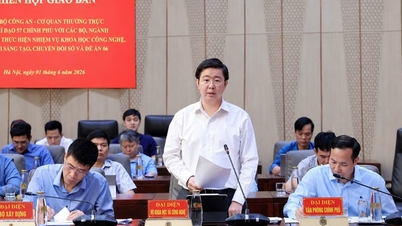
On the afternoon of June 1st, the Government's Electronic Information Portal organized a seminar titled "Is Using E10 Gasoline a Cause for Concern?" to discuss and clarify issues that the public is still concerned about regarding the use of E10 gasoline.
Attendees at the seminar included: Mr. Dao Duy Anh, Deputy Director of the Department of Innovation, Green Transformation and Industrial Promotion ( Ministry of Industry and Trade ); Mr. Bui Ngoc Bao, President of the Vietnam Petroleum Association; Assoc. Prof. Dr. Pham Huu Tuyen - Director of the Center for Research on Power Sources and Autonomous Vehicles, Hanoi University of Technology; Mr. Lo Hai Nam, Head of the Technical Committee of the Vietnam Motorcycle Manufacturers Association (VAMM); and Mr. Do Van Tuan, President of the Vietnam Biofuel Association.
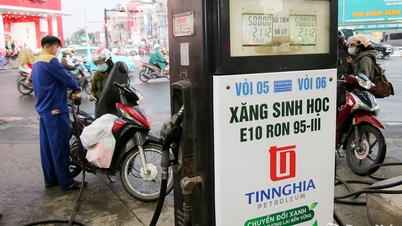
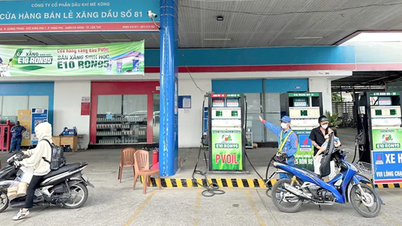
From June 1st, 2026, E10 bioethanol fuel will officially be distributed and sold nationwide, replacing traditional gasoline. The implementation of the bioethanol fuel roadmap is a global trend, consistent with Vietnam's practical conditions, stemming from the requirements for sustainable development, ensuring energy security, protecting the environment, and fulfilling Vietnam's international commitments on reducing greenhouse gas emissions.
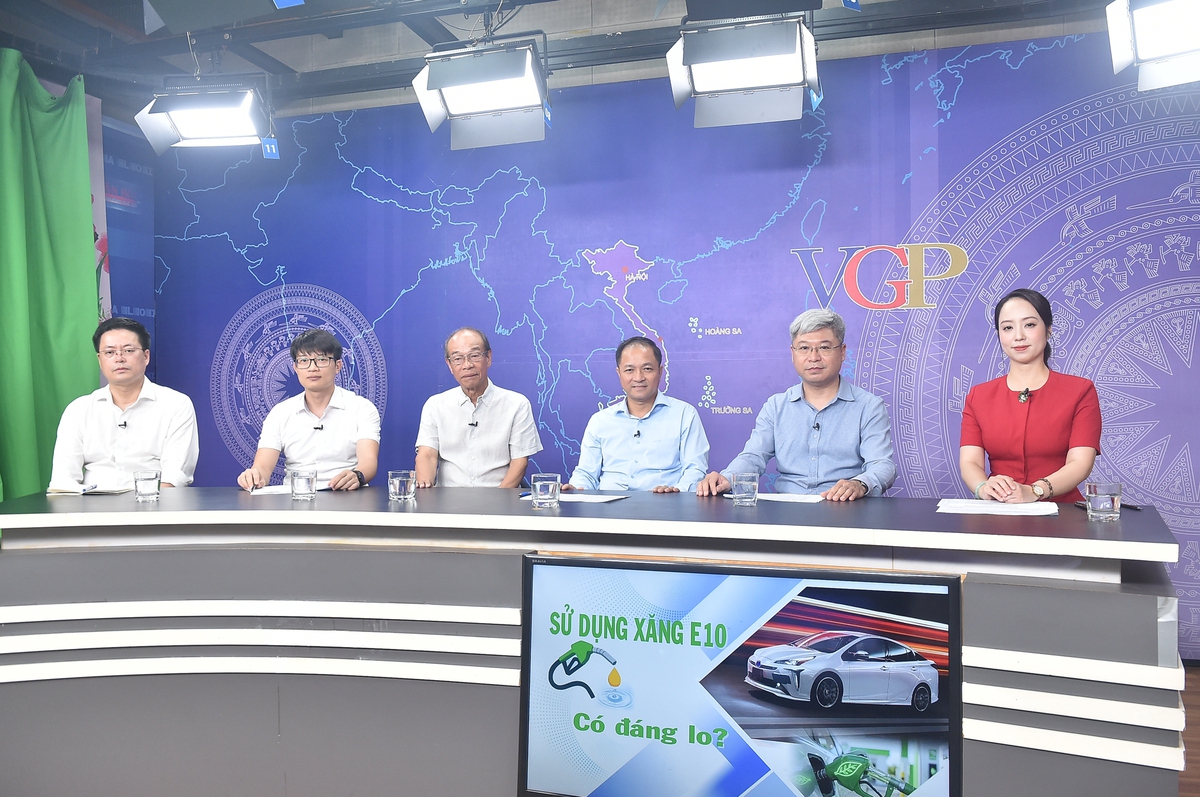
Guests attending the seminar (from left to right): Mr. Do Van Tuan, Chairman of the Vietnam Biofuel Association; Mr. Lo Hai Nam, Head of the Technical Department of the Vietnam Motorcycle Manufacturers Association (VAMM); Mr. Bui Ngoc Bao, Chairman of the Vietnam Petroleum Association; Mr. Dao Duy Anh, Deputy Director of the Department of Innovation, Green Transformation and Industrial Promotion (Ministry of Industry and Trade); Assoc. Prof. Dr. Pham Huu Tuyen - Director of the Center for Research on Power Sources and Autonomous Vehicles, Hanoi University of Science and Technology; MC Minh Ngoc - Photo: VGP/Giang Thanh
According to Deputy Director of the Department of Innovation, Green Transformation and Industrial Promotion, Dao Duy Anh, Vietnam has early on oriented the development of biofuels through Decision 177/2007/QD-TTg of the Prime Minister on the Biofuel Development Plan to 2015, with a vision to 2025. Subsequently, Decision 53/2012/QD-TTg stipulated the roadmap for blending biofuels with traditional gasoline.
Following this roadmap, E5 gasoline was distributed nationwide from December 1, 2015; and from January 1, 2018, E5 RON 92 gasoline completely replaced RON 92 gasoline. However, the implementation phase for E10 gasoline has not been carried out as planned.
In response to the demands of developing a green economy, reducing greenhouse gas emissions, fulfilling the commitment to net-zero emissions by 2050, and simultaneously reducing dependence on fossil fuels and creating outlets for agricultural products, the Ministry of Industry and Trade has developed a new biofuel roadmap starting from the end of 2024. This process is based on an assessment of the implementation of Decision 53, field surveys, consultations with scientists, businesses, and automotive and motorcycle manufacturing associations to evaluate the compatibility of vehicles with biofuels.
Research results show that biofuels meet environmental, energy security, and safety objectives for vehicles in circulation. Based on this, the Ministry of Industry and Trade issued Circular 50, stipulating that from January 1, 2026, the consumption of unleaded mineral gasoline according to current standards will cease.
Mr. Dao Duy Anh affirmed that developing biofuels not only contributes to reducing CO₂ emissions, promoting the circular economy and developing the agricultural value chain, but also helps improve energy self-sufficiency and reduce risks from fluctuations in global fuel supply.
Mr. Do Van Tuan, Chairman of the Vietnam Biofuel Association, emphasized that around 65 countries and territories worldwide, representing about 97% of the world's population, use biofuels. While the number 65 may not reflect all 200 countries, it practically covers almost the entire global population. In the United States, the usage rate of E10 gasoline reaches 98%, with only about 2% being conventional gasoline for areas requiring gas stations.
E10 gasoline is widely used in Europe. Asian countries such as China, India, the Philippines, and Thailand also use E10. Australia uses E10. Japan is being cautious but has a roadmap to use E10 by 2027. Thus, in most regions and countries around the world, E10 has become the standard gasoline.
According to Bui Ngoc Bao, Chairman of the Vietnam Petroleum Association , the transition from mineral gasoline to E10 bio-gasoline from June 1st is a carefully prepared step, unlike many previous fuel transitions which were reactive due to changes in supply or international demands.
Mr. Bao stated that Vietnam has undergone several major transitions, such as switching from the former Soviet Union's GOST fuel standards to ASTM standards, transitioning from leaded to unleaded gasoline, and replacing RON 92 gasoline with E5 gasoline since 2018. Each transition has raised certain concerns, but reality has proven these to be necessary steps in line with development trends.
Unlike previous phases, this biofuel development roadmap is being implemented proactively, based on a thorough assessment of domestic resources, the production capacity of refineries, the potential for developing ethanol feedstock areas, and the goal of gradually reducing dependence on fossil fuels.
Mr. Bui Ngoc Bao emphasized that the use of E10 not only contributes to achieving green growth goals, protecting the environment, and ensuring national energy security, but also creates additional outlets for agricultural products and promotes rural economic development.
Technically, the quality standards of E10 gasoline are essentially the same as those of conventional gasoline and have been thoroughly assessed for suitability for use in Vietnam. After nearly 10 years of implementing E5 gasoline in practice, businesses and regulatory agencies have sufficient grounds to affirm that the transition to E10 is a safe, feasible, and well-prepared step.
E10 gasoline is suitable for most vehicles.
At the seminar, Mr. Lo Hai Nam, Head of the Technical Committee of the Vietnam Motorcycle Manufacturers Association (VAMM), acknowledged that, naturally, when a new product is launched on the market, users are always quite cautious and hesitant about using it. However, based on VAMM's assessment and the research the Association has conducted, it can be confirmed that most of the motorcycle and scooter products currently manufactured and sold by VAMM can meet the requirements for using E10 gasoline.
"For older vehicle models, manufacturers also provide recommendations to users. Based on the hotlines and customer service channels of businesses, customers can refer to and contact directly to check if their product is compatible with E10 gasoline, or receive recommendations on which type of gasoline is suitable for their product," said Mr. Lo Hai Nam.
Associate Professor Pham Huu Tuyen, Director of the Center for Research on Power Sources and Autonomous Vehicles at Hanoi University of Science and Technology, stated that the issue of material compatibility and the impact on durability when using E10 gasoline as a replacement for conventional gasoline is a matter of concern. However, this issue should not be overly worrying because E10 bioethanol has been used for quite some time globally, since the 1980s. Thailand has been using E10 since the 2000s. In the specific context of Vietnam, automobile and motorcycle manufacturers have also confirmed the compatibility of engine components with E10 bioethanol. Manufacturers are also concerned about the suitability of materials for E10 gasoline.
"Compatibility here should also be understood in that the components used in mineral gasoline will also degrade in quality over time. Therefore, the impact of E10 gasoline is equivalent and similar to that of using pure mineral gasoline. So we shouldn't worry about the impact on durability," said Associate Professor Pham Huu Tuyen.
According to the expert, his team also conducted experimental studies on several older generation car and motorcycle engines, specifically those from the 2000s and earlier, and found that in some models, the impact of E10 was completely equivalent to the impact of conventional gasoline. In other, even older models, the impact was negligible.
Despite concerns that E10 gasoline might make vehicles less efficient or consume more fuel due to its lower calorific value compared to conventional gasoline, experts believe the actual impact is minimal.
According to Mr. Lu Hainan, E10 gasoline has a lower calorific value, so to maintain the same engine power, fuel consumption may increase by about 2% compared to conventional gasoline. However, this is a very small difference, hardly noticeable to users during operation.
From an engine engineering perspective, Mr. Pham Huu Tuyen stated that although the energy density of E10 is about 3-4% lower, operational efficiency does not solely depend on calorific value. The oxygen content in ethanol helps the fuel burn more completely in the cylinder, thereby improving combustion efficiency and reducing emissions of harmful gases such as CO and HC. In addition, ethanol has a higher density than mineral gasoline, contributing to partially compensating for the decrease in calorific value.
Test results from Hanoi University of Technology show that engine power and fuel consumption of vehicles using E10 gasoline are basically equivalent to when using conventional gasoline.
Meanwhile, Mr. Bui Ngoc Bao stated that the State has calculated tax policies to ensure economic benefits for consumers when switching to using biofuels.
Specifically, the excise tax on E10 gasoline is lower than that on conventional gasoline; at the same time, this type of fuel also enjoys preferential environmental protection tax rates. Therefore, in addition to environmental benefits, people are still guaranteed economic benefits during its use.
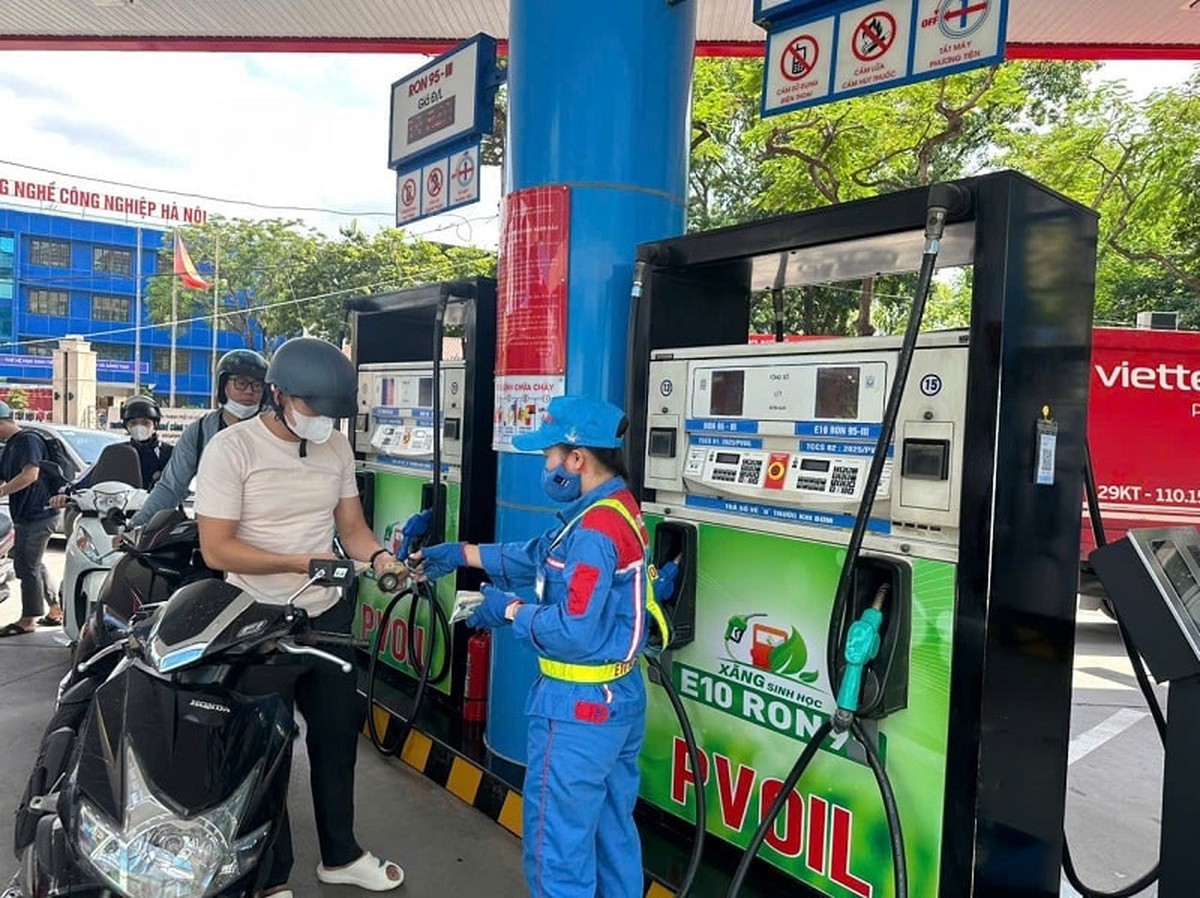
It is necessary to use the correct fuel and perform regular vehicle maintenance.
According to the Chairman of the Vietnam Petroleum Association, many concerns related to engine damage actually stem from using the wrong type of fuel or from fuel systems that are not regularly maintained.
He argued that consumers today often only focus on octane ratings like RON95 or RON92 and don't pay much attention to the fuel quality standards specific to each vehicle model.
For modern vehicles, using the correct type of fuel as recommended by the manufacturer is crucial for protecting the engine and ensuring long-term operational efficiency.
Experts also recommend that people perform regular maintenance, clean the fuel system properly, and choose fuel that meets the vehicle's technical specifications.
Source: https://phunuvietnam.vn/su-dung-xang-e10-co-dang-lo-238260602071217285.htm


























































































Comment (0)