
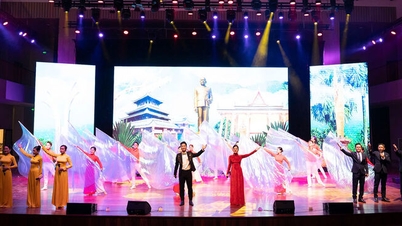
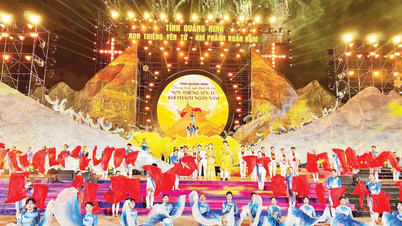
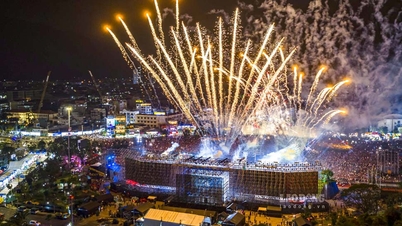
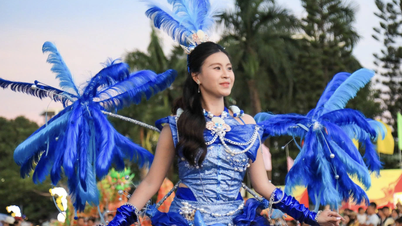
The "Homeland in My Heart" music night was held on August 10th at My Dinh Stadium, Hanoi .
In this development trend, the cultural industry is emerging as a crucial pillar, contributing both to socio-economic development and forming a solid "shield" to protect the Party's ideological foundation against the complex impacts of globalization.
From the very founding of the nation, our Party identified culture as one of the pillars of sustainable development. President Ho Chi Minh 's teaching, "Culture illuminates the path for the nation to follow," has been concretized in the cultural guidelines and policies of the Party and the State.
In particular, since the implementation of the reform policy, the Party and State's strategic policy on cultural development has been clearly affirmed through important resolutions, demonstrating a strategic vision in the new situation, most notably Resolution No. 33-NQ/TW dated June 9, 2014, on building and developing Vietnamese culture and people to meet the requirements of sustainable national development.
The resolution sets out specific tasks: To promote the role of literature and art in nurturing the human soul and emotions; to combat and reject evil, wickedness, baseness, and backwardness; to fight against wrong and negative views and behaviors that negatively affect the building of culture and dehumanize people; to prevent and reverse the decline in political ideology, morality, and lifestyle among a segment of cadres, civil servants, and Party members; to proactively seize opportunities for development and overcome challenges to preserve and perfect the national cultural identity; to limit and overcome the negative impacts and downsides of cultural globalization,...
In the Resolution of the 13th National Congress, regarding the building and promotion of Vietnamese cultural values and human strength, the Party requires: Focusing on improving the quality and effectiveness of all forms of culture and arts. Emphasis should be placed on enhancing ideological and artistic values, while ensuring freedom and democracy in literary and artistic creation; encouraging new explorations to enrich Vietnamese cultural identity; and limiting deviations and manifestations of chasing after vulgar tastes.
In the Strategy for Cultural Development until 2030, approved by the Prime Minister on November 12, 2021, the goal is to perfect the market mechanism in the cultural sector in conjunction with the socialist-oriented market economy, striving for the added value of cultural industries to contribute 7% to GDP.
Furthermore, the Strategy also emphasizes preventing and addressing activities related to the creation and dissemination of literary and artistic works that negatively impact social life. Recently, the Draft Political Report of the 13th Central Committee of the Communist Party of Vietnam at the 14th National Congress of the Party emphasized: Building and perfecting the institutional framework for developing an advanced Vietnamese culture, rich in national identity with fundamental values: national, democratic, humanistic, and scientific; ensuring cultural development is on par with politics, economics, and society, so that culture truly becomes the foundation, endogenous resource, great driving force, and regulatory system for the rapid and sustainable development of the country.
The above policies and orientations demonstrate that the development of culture in general and the cultural industry in particular plays a crucial role in the socio-economic development of the country and in maintaining the socialist orientation. In recent times, many cultural products such as films, songs, literary works, and art programs have contributed to educating the younger generation, guiding their thinking, fostering faith, nurturing national aspirations, helping to push back against the negative influence of foreign cultures, and eliminating deviant and anti-cultural ideas.
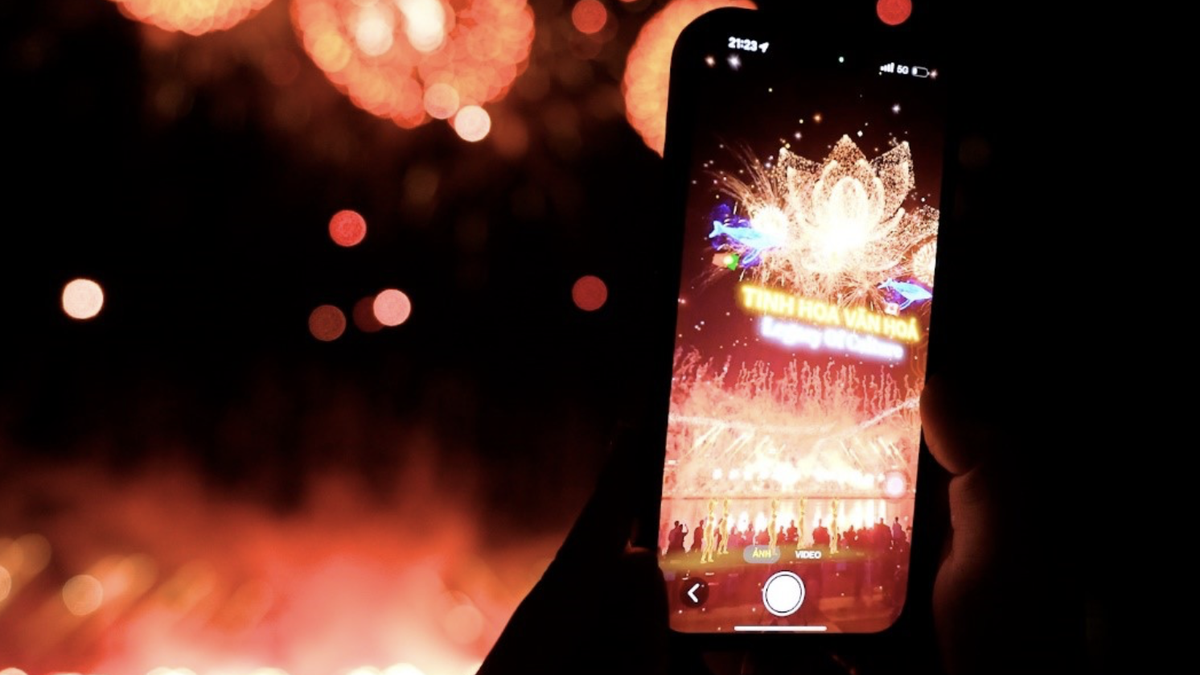
Typical examples include the success of Vietnamese cinema with films like "Living with History," "The Scent of Burning Grass," "Underground Tunnels: The Sun in the Darkness," "Red Rain,"... the rise of revolutionary songs composed and performed by young people such as "Continuing the Story of Peace," "What Could Be More Beautiful," "Proud to Be Vietnamese,"... or the explosion of national concerts praising the country and national history such as "Homeland in My Heart," which have amplified national pride and patriotism within the community.
However, the field of culture and arts is also becoming a hotbed of conflict, where hostile forces seek to undermine and spread extremist and reactionary ideologies. They exploit literature and art to distort history, deny revolutionary achievements, slander historical figures, or exaggerate past mistakes, aiming to influence the perceptions of uninformed and naive segments of the population, creating an ideological vacuum and leading to social division.
On the other hand, in the process of promoting the development of the cultural industry, we are facing internal challenges. First and foremost is the risk of extreme commercialization, catering to the low tastes of a segment of the public, producing sensational, attention-grabbing, and anti-cultural products that can erode aesthetic values, diminish ideological orientation, and even be exploited to spread false views and deny the achievements of the revolution.
Secondly, the competitiveness of domestic cultural industries is limited, as the creative-production-distribution value chain is not synchronized, market data and high-quality human resources are lacking, and many domestic cultural products have not met the requirements and expectations of society.
Thirdly, the digital transformation process is uneven, leading to large gaps between localities and regions, creating disparities and inequalities in access to culture. These factors put the cultural industry at risk of being overwhelmed by foreign products, potentially diminishing its role in guiding and maintaining ideological stability if timely corrective measures are not taken.
The challenges mentioned above require fundamental and comprehensive solutions. First, it is necessary to identify the development of culture in general, and the cultural industry in particular, as a strategic task closely linked to the Party's ideological and theoretical work. Culture must be considered a "front" on par with economics, politics, national defense, and security; therefore, priority should be given to investing in cultural products with high artistic and ideological value, reflecting national aspirations while being attractive and engaging to the public. The State needs to have mechanisms to encourage creativity and support artists and cultural enterprises so that they can commit themselves to serving the nation in the long term. Continue to promote the application of digital technology in the development of the cultural industry to spread positive values and combat harmful and toxic information on social media.
Every work of literature and art, every media program, every entertainment product should be seen as a "building block" that fosters faith, awakens patriotism, and helps our nation move forward on the path of integration and development.
HA NHAN - Nhandan.vn
Source: https://nhandan.vn/kien-tao-niem-tin-giu-vung-tran-dia-tu-tuong-post933109.html































































Comment (0)