

Unique heritage
Among the heritage sites that contribute to the tourism appeal of the eastern area of Ho Chi Minh City today (formerly Ba Ria - Vung Tau), the French-style architectural works are of particular value.
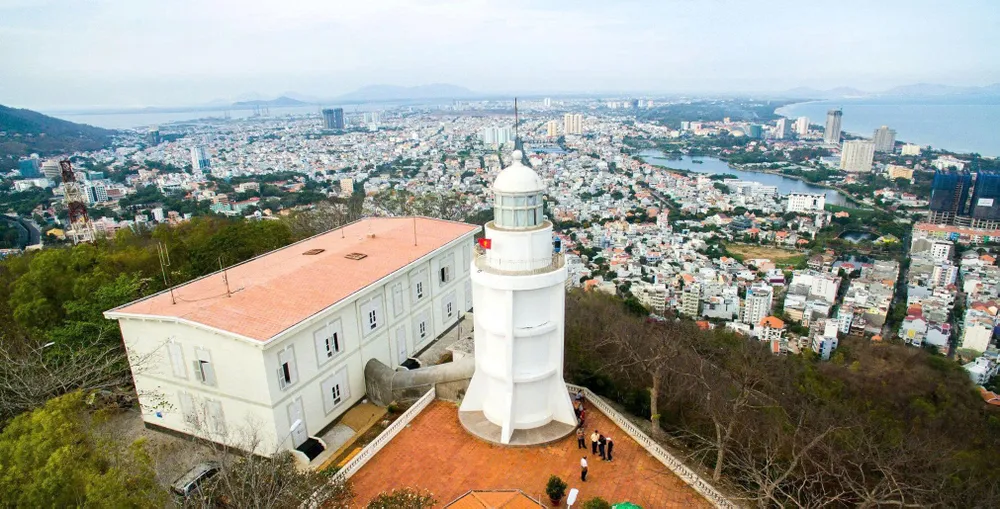
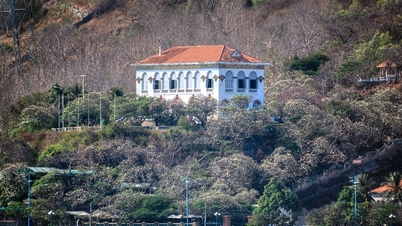
According to Mr. Pham Chi Than, former Director of the Ba Ria - Vung Tau Museum, the locality used to have hundreds of French-style architectural works over 100 years old. Over time, only more than 20 French-style houses remain, mainly in the form of PO villas (Pavillon des officiers - residences for officers). Existing French architectural works include: the Bach Dinh historical site on Mount Lon; the lighthouse on Mount Nho; the Grand Hotel (Nguyen Du Street); the Vung Tau Revolutionary Tradition House (Ba Cu Street); the Vung Tau Ward People's Committee office (Ly Thuong Kiet Street); the Vietsovpetro Vietnam-Russia Joint Venture, PV Gas Company (Le Loi Street)...
Architect Nguyen Duc Lap, Chairman of the Ba Ria - Vung Tau Architects Association, stated that French architectural works built in Vung Tau marked the beginning of the French urbanization process there. Each building possesses its own unique and impressive characteristics, enduring through time and historical changes. The appearance of these old French architectural works in the eastern part of Ho Chi Minh City is evidence of the formation of a city with a European style blended with distinctive local culture.
Architecturally, the old French buildings have a clear layout, with walls 30 cm thick; a well-defined vertical structure; often featuring arched windows; and wide, airy corridors… To suit the Vietnamese climate and culture, these French buildings share a common feature: a double-layered roof system, with tiles on top and a ceiling underneath. The roof is designed to protrude to withstand heavy rains and intense sunlight in Vietnam. “With this characteristic, French buildings are cool in summer and very warm in winter, and also have the advantage of being sturdy and durable,” architect Nguyen Duc Lap commented. These old villas were once used as libraries, galleries, offices of agencies and organizations, museums, and some even as cafes… The unique charm of French architecture in the heart of the coastal city has created a harmonious, intimate, and captivating blend, rarely found in other coastal cities.
Distinctive symbol
Not only historically significant, some old French architectural works have become symbols of the eastern part of Ho Chi Minh City today. These include the Bach Dinh historical site, the lighthouse, and the Revolutionary Tradition House. The most prominent is Bach Dinh, a building with a distinctly 19th-century French architectural style. The building is 15 meters high, 28 meters long, and 15 meters wide, comprising three floors: a basement, a ground floor, and an upper floor. The exterior of Bach Dinh is decorated with ancient patterns and portraits of ancient Greek saints, along with the faces of beautiful European women. Chrysanthemums and sunflowers border the building, adding to its splendor. A pair of emerald green peacocks, adorned with sparkling silver dots, spread their wings and dance, giving the building an elegant appearance.
Preserving and conserving the old French colonial architecture in Vung Tau ward is essential. On the one hand, these buildings bear the imprint of historical cultural, economic , and social significance; on the other hand, these structures have long become a unique cultural feature and an attractive tourist destination. Naturally, preserving and conserving this French architecture requires professional support in architecture, history, and other related fields.
Mr. Vu Hong Thuan, Chairman of the People's Committee of Vung Tau Ward
The Vung Tau Lighthouse is also a beautiful ancient architectural structure and has become a symbol of Vung Tau for many years. Built by the French in 1862, it stands at an altitude of 149 meters above sea level. In 1913, the French rebuilt the lighthouse, raising its height from 149 meters to 170 meters above sea level. The Vung Tau Lighthouse is considered one of the oldest lighthouses in Vietnam and Southeast Asia. For many years, it has served not only as an ordinary architectural structure but also as a guide for ships navigating Ganh Rai Bay safely.
The Vung Tau Revolutionary Tradition House (No. 1 Ba Cu Street, Vung Tau Ward), formerly the headquarters of the Viet Minh Committee, is a spacious, well-equipped, two-story villa located near the beach in the Bai Truoc area. In 1991, the building was recognized as a national historical monument by the Ministry of Culture and Information and renamed the Vung Tau Revolutionary Tradition House. Today, it has become a venue for cultural, sports , and tourism activities in Ho Chi Minh City.
Source: https://www.sggp.org.vn/kien-truc-phap-co-o-phia-dong-tphcm-post835130.html
![[Photo] General Secretary and President To Lam presides over a meeting with the Central Organizing Committee.](https://vphoto.vietnam.vn/thumb/1200x675/vietnam/resource/IMAGE/2026/06/03/1780482764658_a1-bnd-4741-3342-jpg.webp)
![[Image] Shipbuilders exposed to steel and record-breaking heat.](https://vphoto.vietnam.vn/thumb/1200x675/vietnam/resource/IMAGE/2026/06/04/1780545781745_ndo_br_img-5402-4683-jpg.webp)
![[Photo] Secretary of the National Assembly Party Committee, Chairman of the National Assembly presides over the meeting of the Standing Committee and Executive Committee of the National Assembly Party Committee.](https://vphoto.vietnam.vn/thumb/1200x675/vietnam/resource/IMAGE/2026/06/03/1780480353201_ndo_br_bnd-2585-jpg.webp)



































![[Video] Sunset at Lap An Lagoon – Where the sun sets over the fishing nets](https://vphoto.vietnam.vn/thumb/1200x675/vietnam/resource/IMAGE/2026/05/31/1780192137701_beach-landscape-sea-water-nature-grass-745871-pxhere-com.jpeg)





![[Photo] General Secretary and President To Lam attends the 14th Congress of the Vietnam Trade Union](https://vphoto.vietnam.vn/thumb/402x226/vietnam/resource/IMAGE/2026/06/04/1780543339765_anh-man-hinh-2026-06-04-luc-10-22-07.png)
















Comment (0)