

The socio -economic situation in the first five months of 2026 continued to show many positive signs, with industrial production, total consumption, exports, foreign investment attraction, and business activities all experiencing positive growth. This is an important basis for the Government to remain committed to its double-digit growth target this year.
At the regular Government meeting in May 2026 on the socio-economic situation in May and the first five months of 2026, held on June 3rd, Prime Minister Le Minh Hung stated that, in the context of the continuing complex and unpredictable global situation, the Government and the Prime Minister have closely followed the resolutions and conclusions of the Central Committee and the National Assembly; leading and directing the synchronous implementation of socio-economic development tasks, improving institutions, and promoting growth... The tasks for the remaining months of the year are very challenging, requiring ministries, sectors, and localities to implement synchronous solutions to promote growth while maintaining macroeconomic stability, controlling inflation, and ensuring the major balances of the economy.
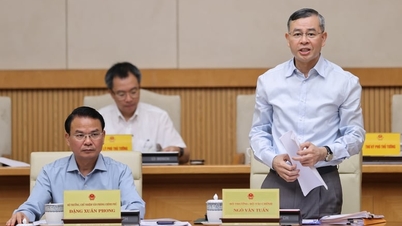
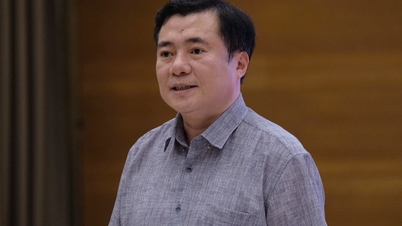
Reporting at the session, Minister of Finance Ngo Van Tuan stated that, despite being significantly impacted by the global economy, the domestic macroeconomic situation remained fundamentally stable, with many growth indicators achieving positive results. In the economic picture for the first five months of 2026, industrial production continued to play a bright spot. The Industrial Production Index (IIP) in May increased by 8.8% compared to the same period last year. Overall, for the first five months, the IIP increased by 9.1%, the highest level in the last four years.
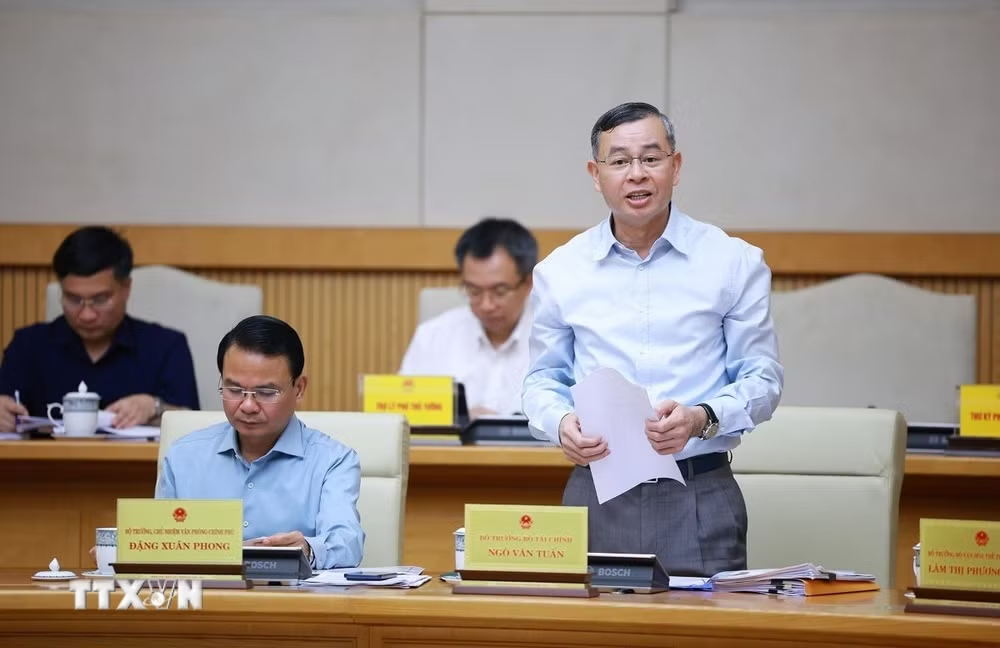
Notably, the processing and manufacturing sector continued to play a leading role with a 9.5% increase, contributing 7.4 percentage points to the overall growth of the entire sector. Several sectors recorded strong growth, such as metal production (up 20.2%); motor vehicle production (up 18%); chemical production (up 16.9%); and non-metallic mineral products (up 16.2%).
In addition, investment continues to be a crucial driver of economic growth. Total investment disbursed from the State budget in the first five months of the year is estimated at VND 254,100 billion, equivalent to 24% of the annual plan and an increase of 11.2% compared to the same period last year.
In particular, registered foreign direct investment (FDI) in Vietnam reached US$24.81 billion, a sharp increase of 34.9% compared to the same period last year. Disbursed FDI reached US$9.75 billion, a 9.6% increase and the highest level in the past five years. Of this, the manufacturing sector continued to attract the largest amount of foreign investment.
In the business sector, the number of newly established businesses continues to increase sharply. In the first five months of the year, more than 94,800 businesses registered nationwide, a 42.1% increase compared to the same period last year. Alongside this, nearly 47,800 businesses resumed operations, bringing the total number of businesses entering and re-entering the market to over 142,600.
Total retail sales of goods and consumer service revenue increased by more than 11%, the highest since 2024. Tourism continued its strong recovery with international visitors reaching nearly 11 million, an increase of nearly 15% and the highest level ever recorded.
State budget revenue in the first five months reached nearly 1.34 trillion VND, equivalent to 53% of the annual forecast and a 15.3% increase compared to the same period last year. Meanwhile, budget expenditure is estimated at 843.7 trillion VND, a 3.1% increase, focusing on socio-economic development, national defense, security, and investment.
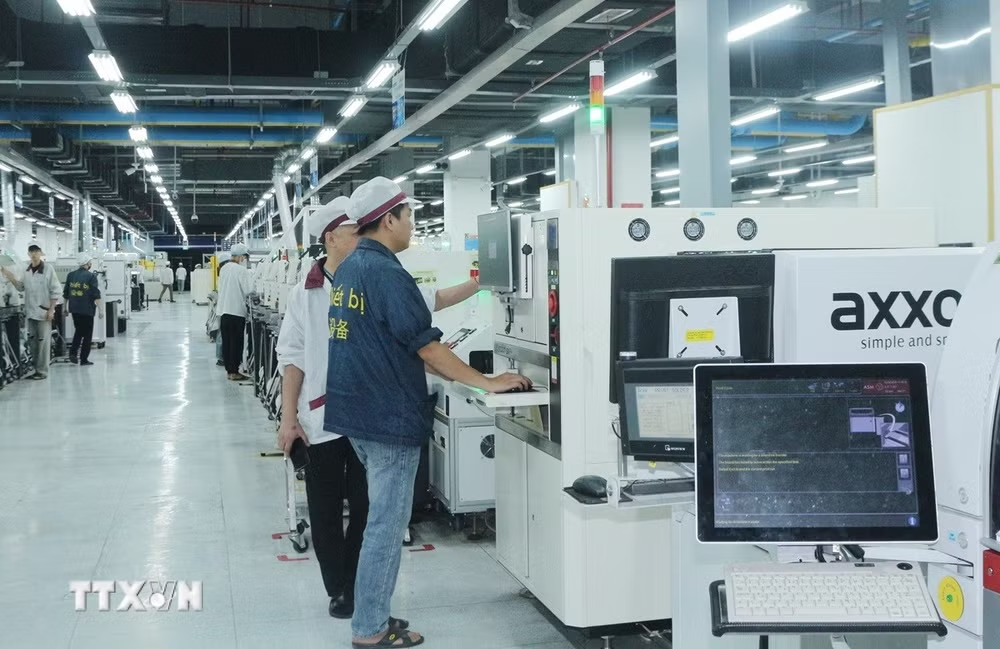
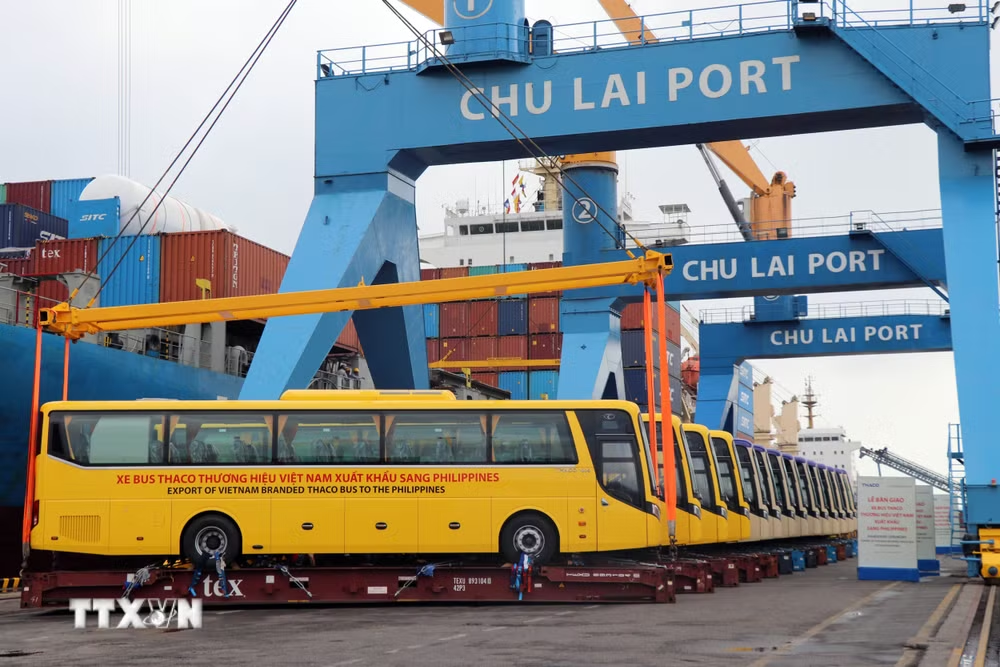
Import and export activities continued to maintain positive growth momentum, with total turnover reaching US$445.12 billion, a 25% increase compared to the same period last year. Of this, exports reached US$215.66 billion (a 19.5% increase) and imports reached US$229.46 billion (a 30.8% increase).
Alongside positive results, the economy also shows signs that require special attention, such as inflationary pressure, the risk of extreme weather impacts on agricultural production, and the need to ensure the supply of electricity and fuel to support high growth targets. The trade balance has shifted to a deficit of $13.8 billion, in contrast to a surplus of $5.1 billion in the same period last year. The domestic economic sector recorded a large deficit, while the FDI sector continued to maintain a surplus.
"According to estimates for the first six months and for the whole year, the demands are particularly high in the coming period, requiring decisive action and great effort to ensure double-digit growth," the Prime Minister emphasized.
The head of government emphasized the task of accelerating the disbursement of public investment, in which the Ministry of Finance must urgently submit to the Government a plan for allocating the medium-term public investment plan for the period 2026-2030 within June.
"Ministries, sectors, and localities should focus on removing obstacles related to land clearance, construction material supply, and investment procedures; regularly inspect the sites and immediately address any arising issues; resolutely reallocate capital and replace incompetent, sluggish, and irresponsible investors, project management boards, and officials that affect the progress of key national projects," the Prime Minister emphasized.
Adhering closely to the viewpoint in Conclusion No. 18-KL/TW, which is "overcoming the difficulties of 2026 and achieving breakthroughs in the 2027-2030 period," the Ministry of Finance proposes that the operating principle for the coming period be to steadfastly pursue the goal of double-digit growth, while closely monitoring and controlling inflation to ensure macroeconomic stability.
In addition, the Ministry proposed that the Government direct ministries and localities to accelerate the disbursement of public investment while improving the efficiency of public investment, especially in the 12 ministries and localities with low or no disbursement rates, and key projects.
Accordingly, the Ministry of Construction will take the lead in reviewing and proposing measures to definitively resolve the issue of supply and price of construction materials; at the same time, resolutely handle cases of obstruction, localized hoarding to increase prices for profit; and implement a regional coordination mechanism for construction materials for key projects.
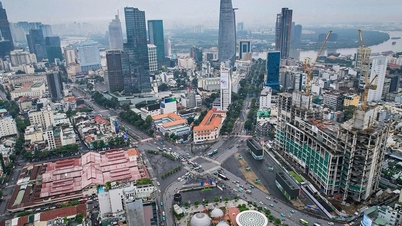
The Prime Minister's directives are also being concretized by many localities through programs to remove investment bottlenecks and free up resources for growth. At the conference to implement Plan No. 243/KH-UBND on continuing to remove difficulties and obstacles for long-standing projects, Chairman of the People's Committee of Ho Chi Minh City Nguyen Van Duoc emphasized that the city considers the task of removing difficulties and obstacles for long-standing projects as a key, regular, and continuous political task; contributing to freeing up all resources, unlocking capital, and channeling it into economic development, achieving the goal of double-digit growth.
According to Mr. Nguyen Van Duoc, after one year of implementing Plan No. 34/KH-UBND dated August 7, 2025, the city has achieved positive results in resolving difficulties and obstacles for long-standing projects and works, basically completing the "surgical removal" of the "blood clot" affecting the city's socio-economic development in the past.
Meanwhile, in Can Tho, Mr. Truong Canh Tuyen, Chairman of the People's Committee of Can Tho City, requested that departments and agencies review and compile a complete list of projects that have been and are being implemented using both public and private capital sources to recalculate the value, as it is likely to increase compared to the reported figures. At the same time, he requested that departments and agencies review projects scheduled to commence or be completed from now until the end of the year, including both public and non-budgetary investment projects, in order to guide and support investors in accelerating the implementation progress.
Alongside unlocking local investment projects and resources, macroeconomic management tools continue to be implemented synchronously to support growth. Regarding monetary policy, the State Bank of Vietnam manages interest rate stability and liquidity; directs commercial banks to accelerate cost reductions, creating room for substantial reductions in lending rates; strictly controls foreign currency flows and bad debts; and closely monitors the monthly balance of payments.
Regarding production, business, and import-export, the Ministry of Finance requests that each ministry, locality, corporation, and state-owned enterprise closely adhere to the scenario, clearly identifying the potential for growth, especially in the 22 localities where industrial production is lower than projected.
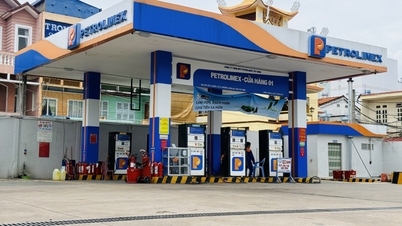
In addition, the Ministry of Industry and Trade ensures the supply of gasoline, oil, and electricity for growth, promotes trade according to each industry and market, and closely monitors and addresses the trade deficit issue. It promotes consumption while enhancing the contribution of the domestic market to growth and shifting the economic structure towards a green and sustainable direction, creating a market for domestic businesses.../.
Source: https://www.vietnamplus.vn/kinh-te-5-thang-khoi-sac-tang-toc-cho-muc-tieu-hai-con-so-post1114379.vnp
![[Photo] Secretary of the National Assembly Party Committee, Chairman of the National Assembly presides over the meeting of the Standing Committee and Executive Committee of the National Assembly Party Committee.](https://vphoto.vietnam.vn/thumb/1200x675/vietnam/resource/IMAGE/2026/06/03/1780480353201_ndo_br_bnd-2585-jpg.webp)


![[Photo] General Secretary and President To Lam presides over a meeting with the Central Organizing Committee.](https://vphoto.vietnam.vn/thumb/1200x675/vietnam/resource/IMAGE/2026/06/03/1780482764658_a1-bnd-4741-3342-jpg.webp)









































![[Video] Sunset at Lap An Lagoon – Where the sun sets over the fishing nets](https://vphoto.vietnam.vn/thumb/1200x675/vietnam/resource/IMAGE/2026/05/31/1780192137701_beach-landscape-sea-water-nature-grass-745871-pxhere-com.jpeg)

























Comment (0)