

 |
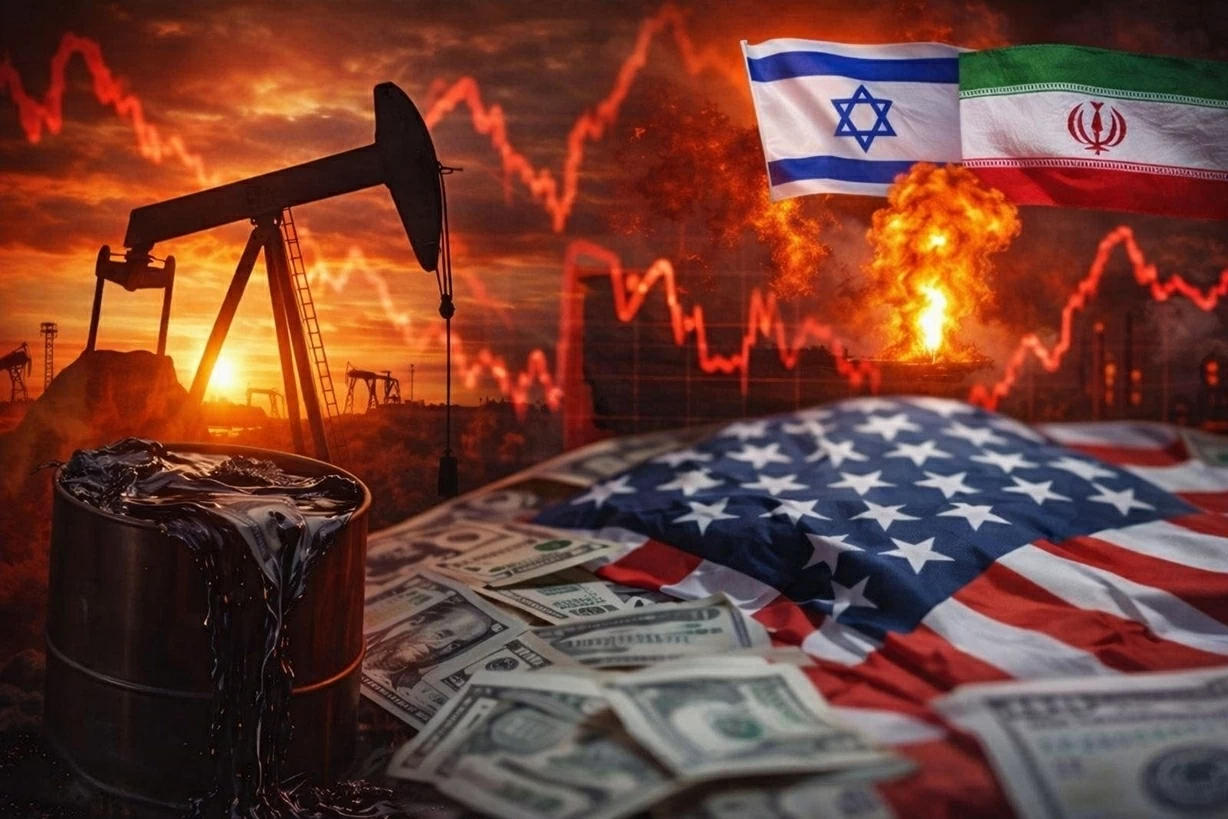
| The US economy is being caught in a new "energy shock" amidst the turmoil in the Middle East. (Image created by AI) |
That's a conclusion from the "Middle East Conflict Clouds the Economic Outlook" analysis report recently published by Pacific Investment Management Company (PIMCO), the world's largest asset management company.
According to experts, the US economy is being swept into a “new energy shock” amidst the Middle East turmoil, at a time when growth is weakening, policy space is shrinking, and markets are becoming fragile. The worrying aspect is not just the rising price of gasoline; this familiar shock is subtly distorting the trajectory of inflation, capital flows, and monetary policy, making Washington's management challenge extremely difficult in a period of high risk and uncertainty.
The shock of the Middle East
The first impact is energy. Prolonged conflicts in the Middle East disrupt global oil and gas supplies, especially if a worst-case scenario occurs in the Strait of Hormuz, driving up energy prices sharply and quickly impacting production, transportation, and consumption costs.
However, the U.S. is now in a different position. Thanks to two decades of shale oil boom, the U.S. has shifted from a net importer to a net exporter of energy, reducing its vulnerability compared to import-dependent economies.
But "immunity" doesn't mean "freedom from impact." According to the American Automobile Association (AAA), retail gasoline prices in the U.S. have risen by about 20% in just a few weeks. With energy accounting for about 5% of the consumer basket, this shock could push the CPI up by about 1 percentage point. More importantly, high energy costs erode real income, weakening consumption, which accounts for more than two-thirds of U.S. GDP.
Meanwhile, the increase in domestic production cannot immediately offset the price shock due to the need for adjustment time, while the price shock occurred instantly, meaning the short-term impact on growth remains negative.
The second impact is through monetary channels and capital flows. When geopolitical risks increase, the USD often becomes a safe-haven asset, accompanied by expectations of maintaining high interest rates, pushing bond yields up and tightening financial conditions. A strong USD helps reduce import costs and somewhat curb inflation, but puts pressure on exports and the profits of multinational corporations.
The third impact is on monetary policy, putting the Fed in a dilemma between inflationary pressures from energy prices and the risk of slowing growth, amid a weakening labor market.
The current oil price shock is even more difficult to manage as inflation expectations become more sensitive; if energy prices remain high, pressure will spill over into wages and service prices.
Therefore, the room for maneuver is narrowed: easing too early could easily lead to uncontrolled inflation, while further tightening would put pressure on growth. In other words, tensions in the Middle East are "tying the hands" of the Fed, significantly narrowing its policy control space in the short term.
Benefit or face double risks?
Overall, the Middle East shock has placed the US economy in a dual position, presenting both relative advantages and double risks.
On the positive side, the US is in a much better position than many developed economies thanks to its role as an energy exporter; a strong USD continues to solidify its role as a financial center and attract global capital flows.
In addition, several domestic factors are also providing support. Fiscal policy, through recent tax cuts, is adding resources to households. Data from the US Internal Revenue Service shows that average tax refunds have increased by about 10% year-on-year, equivalent to thousands of dollars per household, creating additional resources for consumption. The estimated scale of the impact is equivalent to 1-1.5% of GDP.
However, these benefits are not enough to offset the accumulating risks.
First, there is the risk of inflation returning. When energy prices rise, the impact is not limited to gasoline but extends to other goods and services. In addition to the direct impact from energy, the spillover effect could cause the prices of goods and services to increase by an additional 0.2-0.4 percentage points.
Secondly , there is the risk of declining consumption. As real income erodes, people tend to cut spending or draw from savings to maintain their standard of living. Data from the National Accounts System (NIPAs) shows that the US household savings rate has fallen from 5.5% to around 3.6% in 2025. This narrows the room for compensation when real income erodes, a significant drag on GDP.
Thirdly , there is financial risk. The market's rapid adjustment of interest rate expectations toward higher rates has tightened financial conditions. Rising real yields, a flatter yield curve, and higher costs of capital—a combination unfavorable for investment and growth.
Finally , there's the fundamental aspect of the economy. According to the U.S. Census Bureau, unlike the post-pandemic period when incomes were strongly supported and demand was pent up, the economy is now entering an energy shock with a weaker foundation. "Resilience" is waning as household income growth slows, the labor market is less vibrant, while consumption is only partially sustained by reduced savings.
According to PIMCO analysts, the US economy is unlikely to fall into crisis, but it is also unlikely to benefit. Instead, the economy must balance controlling inflation and maintaining growth, as supply shocks are both driving up costs and stifling production.
The outlook depends heavily on developments in the Middle East conflict and policy responses. If tensions ease and energy prices stabilize, inflationary pressures may be temporary, giving the Fed more room to adjust. Conversely, prolonged conflict will increase the risk of a persistent energy shock, with more severe consequences for global growth.
For the US specifically, structural advantages helped mitigate damage, but not enough to avoid the downturn. The Middle East "test" therefore not only measures the resilience of the US economy, but also tests its ability to manage policy. The outcome is not about whether the US wins or loses, but about the shrinking margin of safety for the world's largest economy.
Source: https://baoquocte.vn/kinh-te-my-truoc-phep-thu-o-trung-dong-373437.html





































































































Comment (0)