

From single-value production to a multi-value economy
In the final days of the year, the mushroom farm of the Bio Fine Mushroom and Cordyceps Cooperative (Quoc Oai commune, Hanoi) is bustling with activity. Dozens of workers are involved in harvesting, caring for, pre-processing, and preparing various types of oyster mushrooms and wood ear mushrooms. Mr. Nguyen Huy Chieu, Director of the Cooperative, said: "Previously, member households in the Cooperative only engaged in pure agriculture . Since switching to mushroom cultivation, their family economies have steadily improved. Currently, the Cooperative cultivates 2 hectares of mushrooms in the open air (mainly oyster mushrooms and wood ear mushrooms) and 800 square meters of mushrooms indoors (mainly cordyceps and abalone mushrooms...). The farm's products, such as oyster mushrooms, abalone mushrooms, and wood ear mushrooms, have been recognized with OCOP 3-star and 4-star ratings."
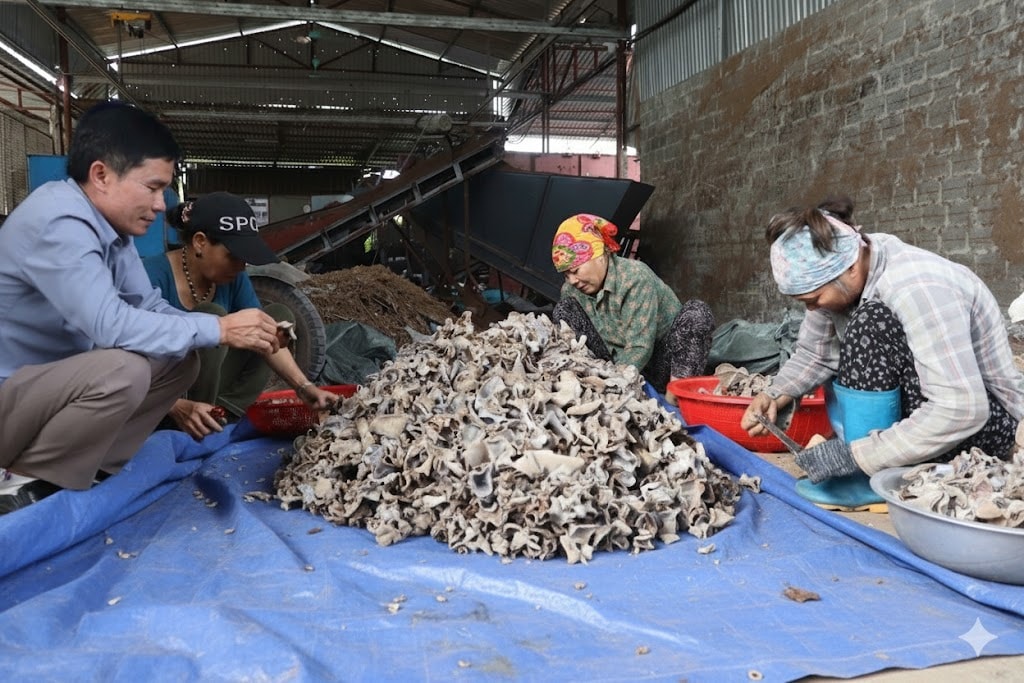
At this time, the farm is focusing on the year-end market. It is expected that this year's Tet (Lunar New Year) season, the cooperative will export approximately 8 tons of dried wood ear mushrooms and about 200 kg of fresh oyster mushrooms daily. All products are wholesaled by the cooperative to traders who then distribute them to traditional markets, stores, and supermarkets. "The wholesale price of dried wood ear mushrooms is 180,000 VND/kg, slightly higher than in previous years," Mr. Chieu happily stated.
With economic development, the farm provides stable employment for 4 permanent workers and more than 10 seasonal workers. Mr. Chieu expressed his desire for the city to support production in a value chain linked to tourism to increase production value.
On December 23rd, the Hanoi Department of Agriculture and Environment organized a workshop titled "Solutions for Developing Farm Economy Linked to Supply Chains in the City." At the workshop, the Hanoi Department of Agriculture and Environment stated that the city has approximately 1,570 farms meeting the criteria of Circular 02/2020/TT-BNNPTNT. Of these, livestock farms account for 81%, followed by aquaculture (8.7%), crop farming, mixed farming, and forestry. Deputy Director of the Hanoi Department of Agriculture and Environment, Nguyen Dinh Hoa, affirmed that farm economy in the city has seen strong development in recent years in terms of quantity, quality, and production structure. From primarily small-scale crop farming models, Hanoi's farm economy has shifted towards reducing crop production and increasing livestock farming and mixed farms, aligning with the requirements of commodity production and the large consumer market of the capital city.
A key point agreed upon by delegates at the workshop was that farm economics can only be truly sustainable when linked to value chains. Experience shows that farms with strong connections to businesses and cooperatives in all stages, from seeds and input materials to production, processing, and product consumption, consistently achieve higher and more stable economic efficiency.
To date, 183 effective supply chains have been established in Hanoi, with many exemplary models such as: the Bao Minh high-quality rice chain; the organic rice and Dien pomelo chain of Nam Phuong Tien Cooperative; the Dai Ang high-tech aquaculture chain… Notably, 289 farms have implemented production linkages associated with product consumption, mainly in the fields of pig and poultry farming, through cooperation with large enterprises such as CP Vietnam, Japfa, and Song Dat.
Thanks to supply chain linkages, many farms have boldly invested in high technology, mechanization, digital transformation, the application of electronic production logs, traceability using QR codes, and production according to VietGAP, GlobalGAP, and organic standards. Currently, the city has 58 farms meeting VietGAP, organic, and GlobalGAP standards, and 21 farms with OCOP products, gradually establishing the brand of Hanoi agricultural products in the market. Not only limited to agricultural production, many farms have expanded into deep processing, extending shelf life and increasing product value by 20-30%. This is the direction that helps farmers escape the vicious cycle of "bumper harvest - low prices," and become more proactive in the face of market fluctuations.
Farm economics not only helps increase income per unit of cultivated land, but also plays a crucial role in the restructuring of the agricultural sector, rural economic development, and the construction of new rural areas. Many farming households, from having fragmented production and unstable incomes, have risen to become farm owners with annual revenues of billions of dong, contributing to the socio-economic development achievements of the capital city and making Hanoi one of the leading localities nationwide in achieving the goal of eliminating poverty.
Give a boost to the farm economy.
To stimulate the development of farm economics, at the workshop, many opinions suggested that for farm economics to truly become a lever to help farmers get rich, strong and synchronized mechanisms and policies are needed. Associate Professor Dr. Ho Ngoc Ninh, Deputy Head of the Faculty of Tourism and Foreign Languages (Vietnam Academy of Agriculture), said that the farm-tourism model is currently a very effective direction for sustainable economic development. Hanoi needs to approach it from an ecological perspective, standardizing the model with a clear set of criteria on food safety, environment, services, fire prevention and control, tourism carrying capacity, etc., to avoid spontaneous development that poses potential legal and environmental risks.
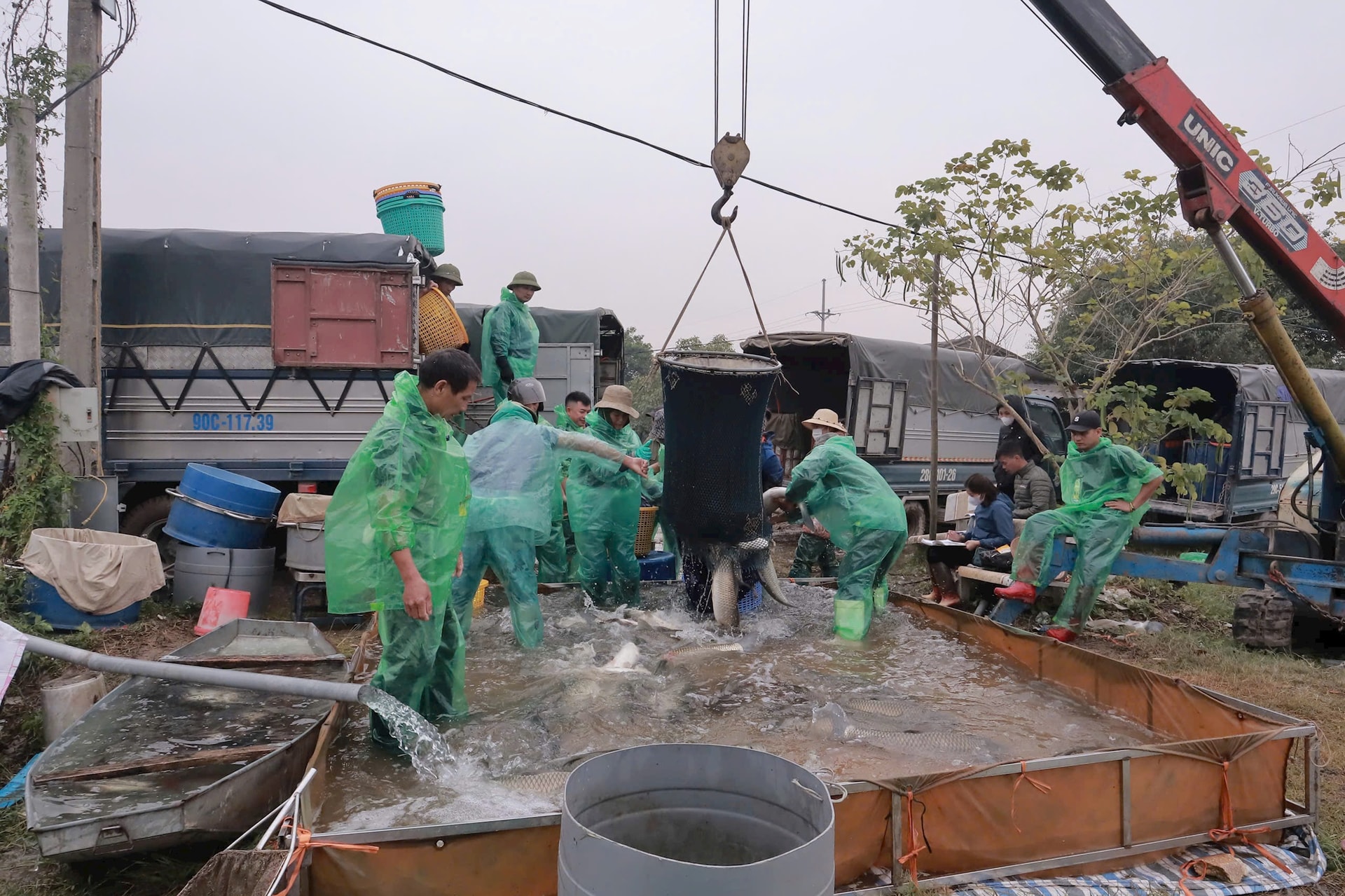
Ms. Hoang Thi Hong Van, representing the Department of Cooperative Economics and Rural Development, emphasized that farm economics plays a crucial intermediary role between household economies and agricultural enterprises, forming the foundation for sustainable agricultural raw material areas and value chains. However, many farms currently face limitations in scale, capital, technology, and management capacity, requiring focused and targeted support. Specifically, this includes clearly defining the types and criteria for agricultural farm economics, integrated non-agricultural production and service activities; developing ecological, organic, and circular economy agricultural models; developing mechanized services; preliminary processing, processing, preservation, and support for farms producing and trading specialized crops and livestock…
State resources should be prioritized for breakthrough areas such as infrastructure serving concentrated production zones, application of science and technology, digital transformation, traceability and brand building; strengthening and improving the quality of training and education; focusing on supporting training and education to enhance production and business management capacity, technical expertise, and market access knowledge for farm owners…
In particular, Professor Tran Dinh Long, Chairman of the Vietnam Plant Breeding Association, believes that Hanoi needs to pay more attention to building agricultural product brands and developing high-quality plant and animal breeds – key factors determining product value. "A single farm cannot achieve large-scale success; it must link many farms, jointly invest in processing, and build brands. Only then will the value be sustainably increased," Professor Long emphasized.
Practical experience in Hanoi shows that farm-based economy is not only an effective production organization model but is also becoming a fundamental solution in sustainable poverty reduction. Through land consolidation, application of science and technology, value chain linkages, and expansion into processing, services, and agricultural tourism, many farming households have shifted from fragmented, low-income production to systematic business, with stable employment and increasing income. More importantly, farm-based economy has created more local jobs for rural workers, contributing to preventing re-poverty and improving the quality of life for people in suburban areas.
With Hanoi having essentially achieved its goal of eliminating poverty, continuing to develop farm-based economies linked to supply chains, cooperatives, and businesses is a sustainable approach to increasing income, reducing multidimensional poverty, and narrowing the gap between rural and urban areas. When each farm truly becomes a "nucleus" of local economic development, the capital's rural economy will have a solid impetus, making a positive contribution to socio-economic growth and the construction of advanced, model new rural areas.
Source: https://hanoimoi.vn/kinh-te-trang-trai-don-bay-giup-nong-dan-thoat-ngheo-728080.html
![[Image] A brilliant symphony and explosive power in the skies of Da Nang.](https://vphoto.vietnam.vn/thumb/1200x675/vietnam/resource/IMAGE/2026/05/31/1780196945787_anh-man-hinh-2026-05-31-luc-10-08-51.png)















![[Video] Sunset at Lap An Lagoon – Where the sun sets over the fishing nets](https://vphoto.vietnam.vn/thumb/340x192/vietnam/resource/IMAGE/2026/05/31/1780192137701_beach-landscape-sea-water-nature-grass-745871-pxhere-com.jpeg)



































































Comment (0)