

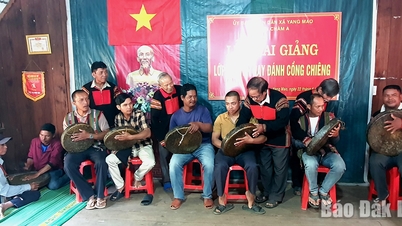
The Central and Central Highlands regions of Vietnam are home to a diverse array of unique cultures, from the Sa Huynh and Cham Pa cultures along the coastal strip to the gong culture and traditional festivals of ethnic minority groups. As administrative boundaries change, preserving these values becomes even more crucial, especially as many localities are focusing on developing tourism and service economies based on heritage.
Restructuring local tourism products and routes.
In Kep 1 village (Ia Ly commune, Gia Lai province), a newly inaugurated communal house, standing 26 meters tall, retains the distinctive features of traditional architecture but is reinforced with more durable materials. The celebration of the new communal house was held according to the traditional rituals of the Jrai people. To the resonant sound of gongs, the villagers performed the ceremony that has been intertwined with their community for generations. This space is not only for remembrance but also offers visitors experiences ranging from cotton cultivation, spinning, dyeing, and weaving to exploring the garden of tomb statues, the water droplet, and the pristine Princess Waterfall.
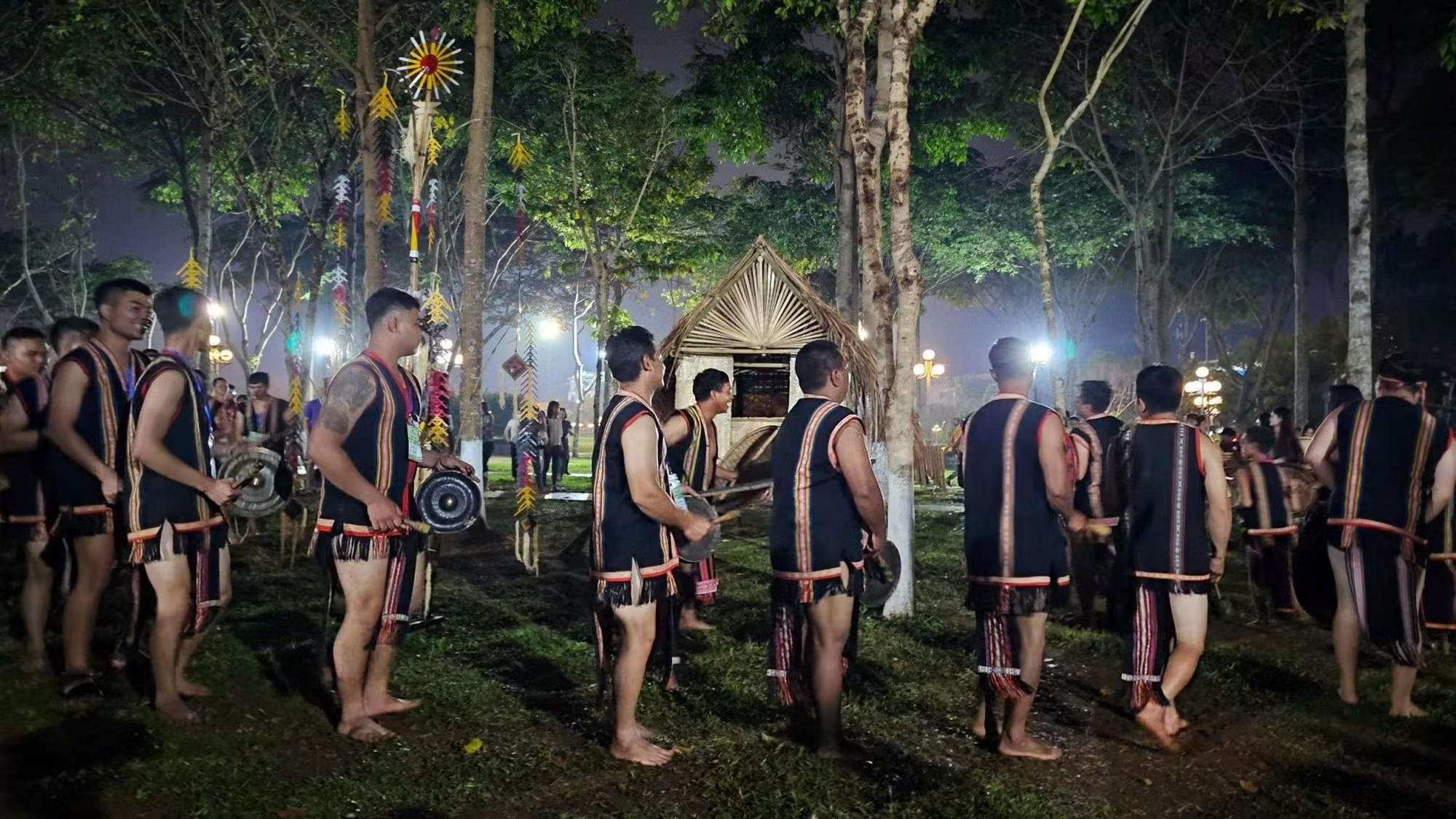
According to Mr. Nguyen Huu Que, Vice Chairman of the Gia Lai Provincial People's Committee, the communal house (nha rong) is not only a cultural structure but also a nucleus for developing community tourism. This is a concrete way to implement the orientation of cultural development linked to the economy, turning heritage into a local resource. When put into operation, the communal house will become a highlight of the village. Therefore, preservation is not only the responsibility of the government but also requires the direct participation of the community. Along with that, promotion and organization of experiential activities will continue to be strengthened, gradually forming unique tourism products from the local cultural life.
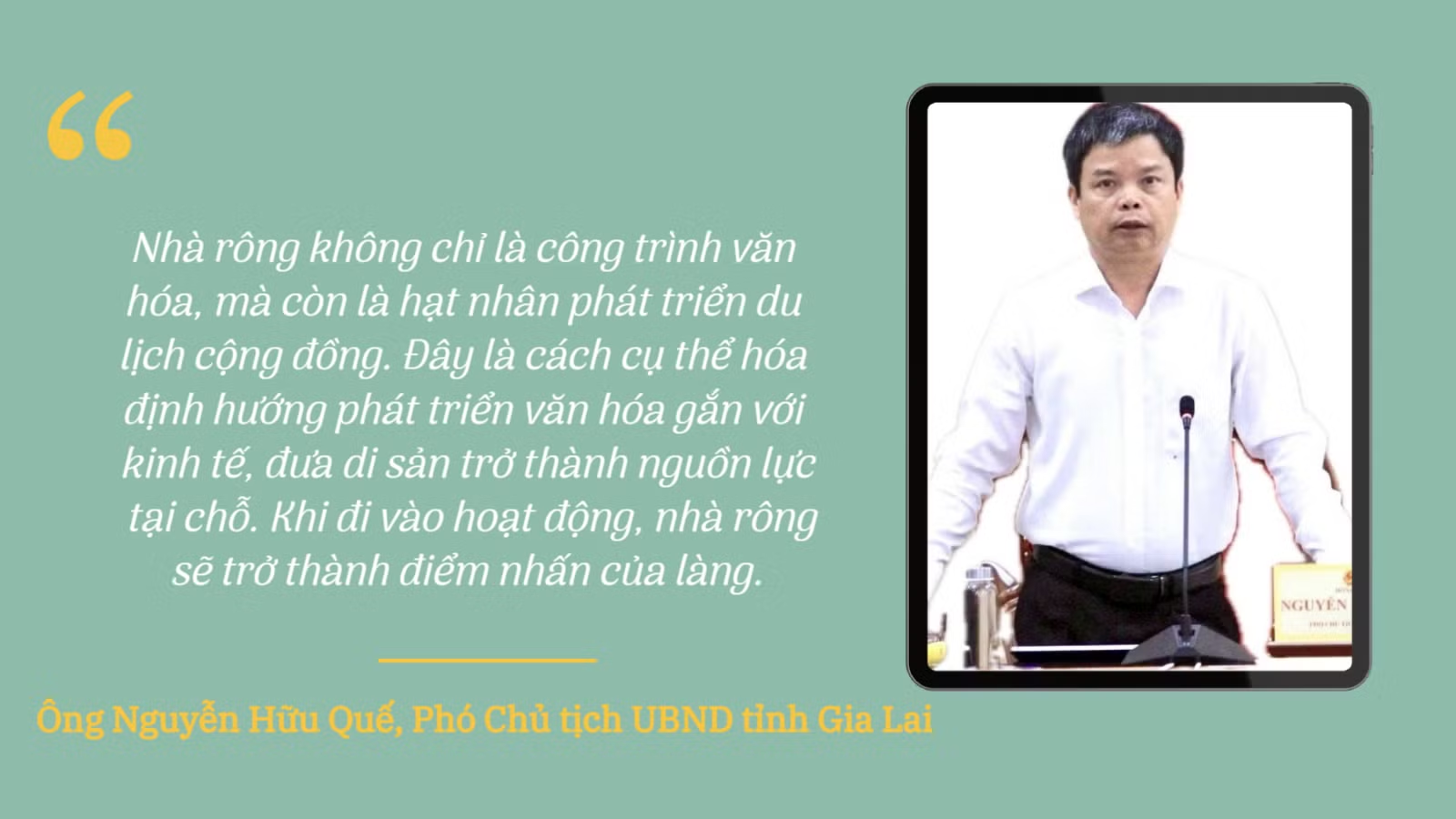
In the current development strategy, tourism is identified not only as an economic sector but also as a channel for disseminating cultural values. From July 2025, Gia Lai, a newly established province with a large population of approximately 3.5 million, will hold a strategic position connecting the South Central region and the Central Highlands. According to Ms. Nguyen Thi Kim Chung, Deputy Director of the Department of Culture, Sports and Tourism, this is a favorable condition for forming inter-regional tourism axes and expanding development space. The province's outstanding advantage lies in the convergence of heritage, from the traditional folk singing style of Bài Chòi to the Central Highlands' gong culture, facilitating the development of diverse tourism types.
Besides established tourism products, Gia Lai is developing many specialized tourism products. Notable examples include tours exploring the Tay Son movement, connecting the upper and lower Tay Son routes; tours discovering Cham culture; and a heritage axis linking Quy Nhon - An Nhon - Tay Son - Vinh Thanh - Pleiku. Simultaneously, ecotourism routes linked to natural resources are also emphasized. Many large-scale events such as the Central Highlands Gong Culture Festival, the International Traditional Martial Arts Festival, and culinary and tourism programs have contributed to attracting visitors and gradually shaping the local tourism brand.
Notably, Gia Lai has been chosen to host the National Tourism Year in 2026. This presents an opportunity for the locality to accelerate promotion, improve infrastructure, and enhance product quality. Looking ahead to 2030, Gia Lai aims to develop sustainable tourism, based on culture, nature, and people; while simultaneously promoting digital transformation and regional linkages.
"Returning to the original source"
In the current development orientation, the requirement is not only to expand the scale of tourism, but also to preserve and promote cultural and ecological values during the exploitation process. This is also a way for localities to adapt to new tourism trends, as the demand for in-depth experiences and "returning to the roots" is becoming increasingly evident.
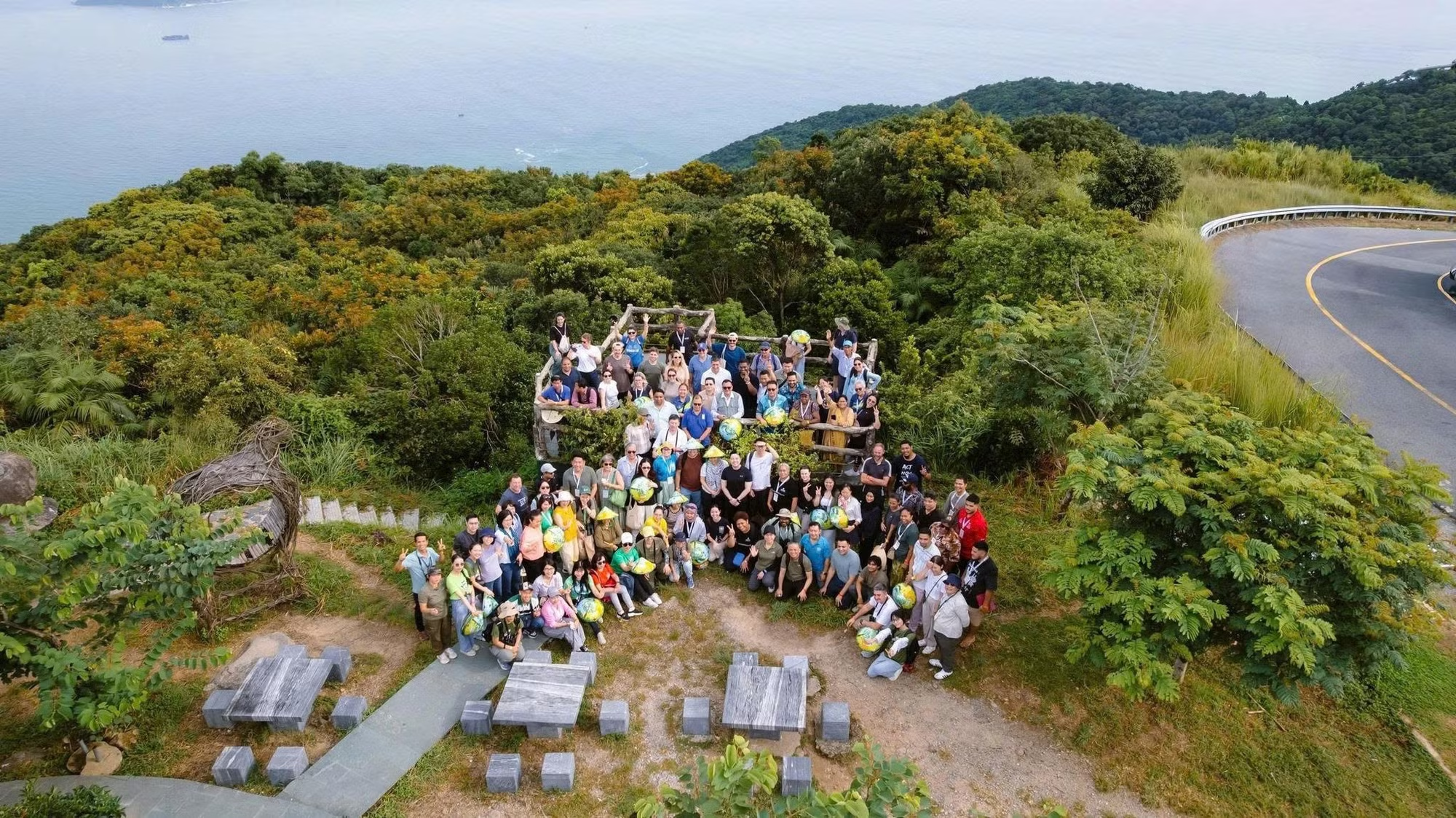
According to Mr. Nguyen Duc Quynh, Chairman of the Da Nang Hotel Association and General Director of Furama Resort Da Nang, the global tourism trend is shifting from quick sightseeing to in-depth experiences, where tourists seek a balance between physical, mental, and emotional well-being. This forms the basis for Da Nang's orientation towards becoming a destination that helps tourists "rejuvenate" by exploiting the marine, forest, and mountain ecosystems in close proximity.
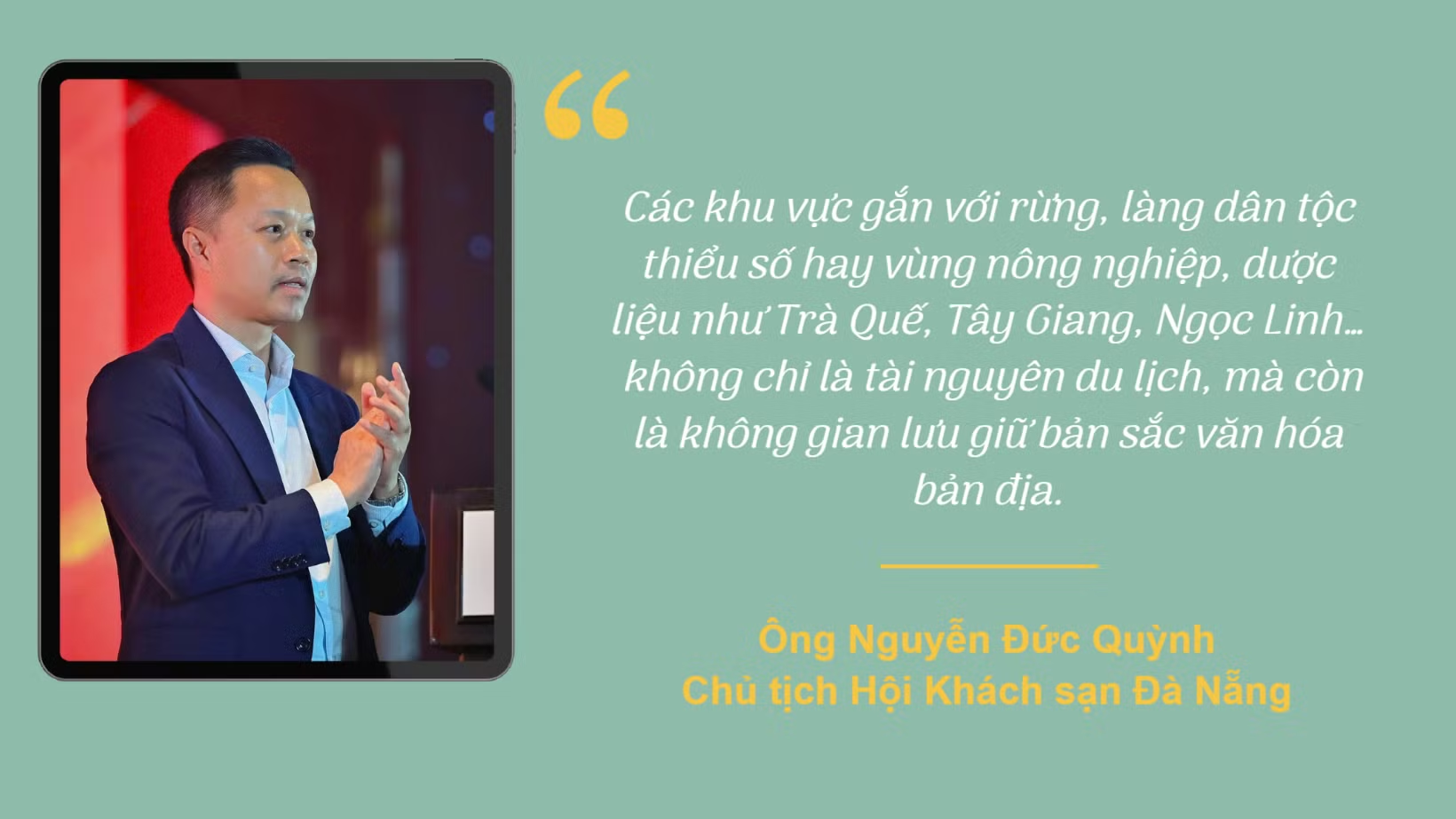
In fact, the city is expanding its development space westward, where the natural ecosystem and distinctive community life are still preserved. Areas associated with forests, ethnic minority villages, or agricultural and medicinal plant regions such as Tra Que, Tay Giang, Ngoc Linh… are not only tourism resources, but also spaces that preserve local cultural identity.
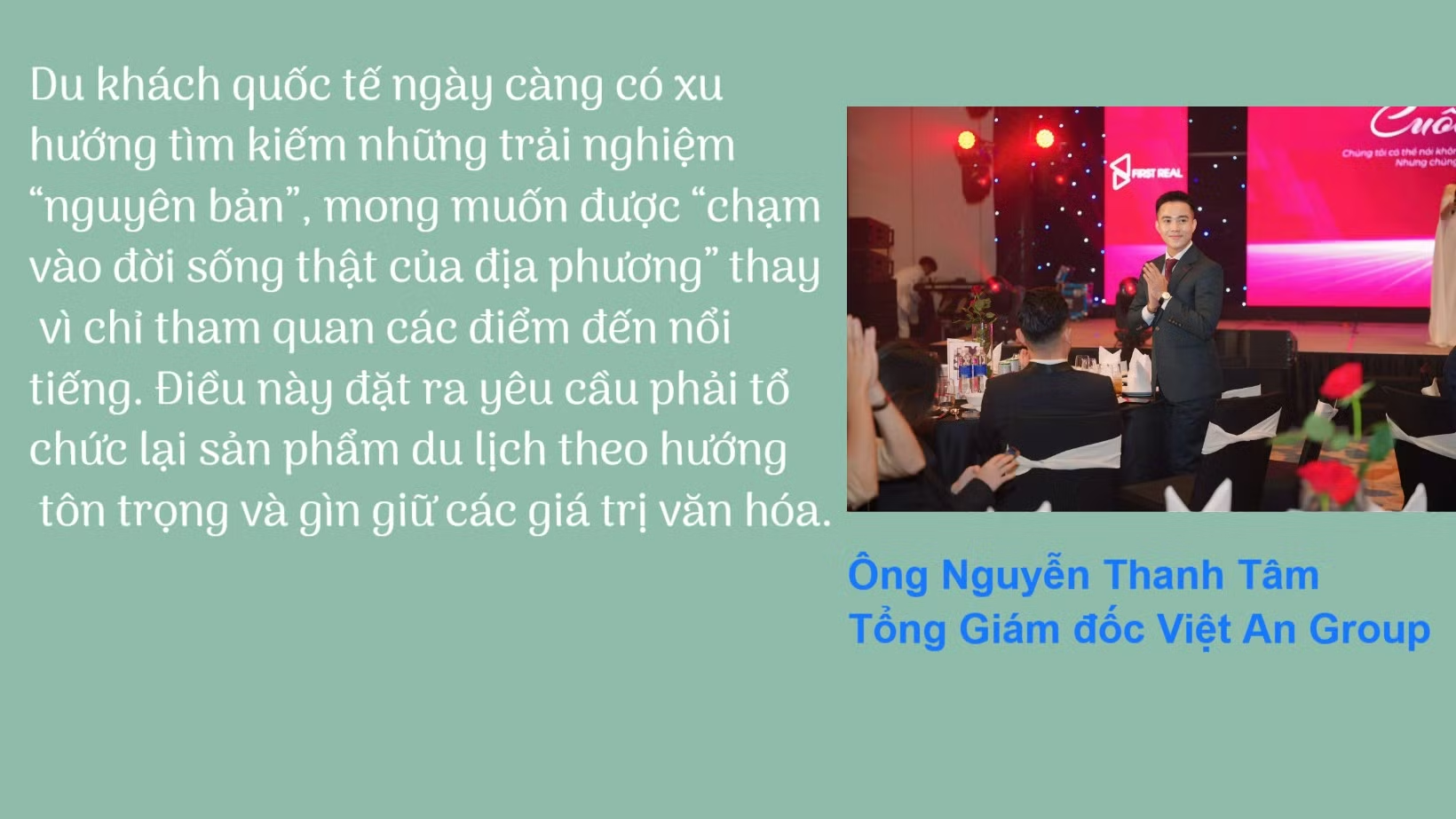
Mr. Nguyen Thanh Tam, General Director of Viet An Group, believes that international tourists are increasingly seeking "authentic" experiences, wanting to "connect with the real life of the locality" instead of just visiting famous destinations. This necessitates reorganizing tourism products in a way that respects and preserves cultural values.
Based on that orientation, many products in Da Nang have been adjusted towards in-depth experiences. Tours exploring Son Tra Peninsula, hiking in the forest, observing wildlife, or experiencing the sea by yacht not only serve sightseeing purposes but also emphasize connection with the natural environment and local culture.
The combination of forests, seas, and agricultural spaces and traditional craft villages is gradually forming interconnected experiential journeys. The core element in these journeys lies not in the number of destinations, but in the ability to help tourists "touch" nature, culture, and the local way of life in an authentic way.
"Returning to the roots" is one of the strategies and ideas suitable for the new Da Nang space, given the city's many unique resources, from culture to nature. It requires systematic and in-depth research into tourist needs based on the existing market; identifying local cultural values that attract tourists and linking them to distinctive and unique products."
Mr. Cao Tri Dung, Chairman of the Da Nang Tourism Association
Part 1: Unlocking Soft Resources
Source: https://giaoducthoidai.vn/ky-2-ton-trong-va-giu-gin-ban-sac-post778323.html
![[Photo] General Secretary and President To Lam and his wife begin their official visit to Thailand.](https://vphoto.vietnam.vn/thumb/1200x675/vietnam/resource/IMAGE/2026/05/27/1779881249412_anh-man-hinh-2026-05-27-luc-18-10-51.png)
![[Photo] The courage of new recruits of Brigade 144 on the training ground.](https://vphoto.vietnam.vn/thumb/1200x675/vietnam/resource/IMAGE/2026/05/27/1779881651341_anh-man-hinh-2026-05-27-luc-18-32-52.png)












![[Video] Weather forecast for tonight and tomorrow, May 28, 2026: Northern Vietnam to see a drop in temperature, Central Vietnam to continue experiencing intense heat.](https://vphoto.vietnam.vn/thumb/402x226/vietnam/resource/IMAGE/2026/05/27/1779887047052_thumb-toi-2705-png.webp)





























![[Photo] The courage of new recruits of Brigade 144 on the training ground.](https://vphoto.vietnam.vn/thumb/402x226/vietnam/resource/IMAGE/2026/05/27/1779881651341_anh-man-hinh-2026-05-27-luc-18-32-52.png)

















Comment (0)