

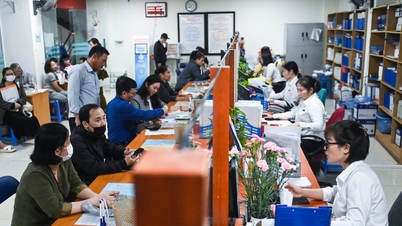
Looking back at one year of operating the two-tiered local government model in Ho Chi Minh City, administrative reform and digital transformation have achieved many positive results. The city has processed a large volume of administrative procedures with an on-time rate of over 99.5%, an online processing rate of over 88%, and 100% of documents exchanged electronically. These figures show that the city's administration is moving strongly towards modernization, transparency, and better service to citizens and businesses. However, practice also raises a noteworthy issue: the capacity of officials and civil servants is uneven, while new requirements demand greater multitasking, rapid adaptability, and advanced digital skills.
This reality was clearly pointed out by the Secretary of the Ho Chi Minh City Party Committee, Tran Luu Quang, at the conference summarizing one year of the overall organizational model of the city's political system. He requested that the cadre team strive to "surpass themselves," change their way of thinking and working to meet the requirements of new development based on the principle of shifting from quantity to quality.
The head of the Ho Chi Minh City Party Committee set the requirement that each official must not only be proficient in their professional skills but also know how to exploit data, interact in the digital environment, ensure information security, apply new technologies, and continuously update their knowledge. A more streamlined apparatus means that each official and civil servant must handle a larger workload, have a broader scope of management, and meet higher demands for serving the people. Technology is the tool to improve labor productivity in this context.
More importantly, digital skills are not just about the performance of civil servants, but are directly related to the rights and interests of citizens. Every digitized document, every online procedure, every seamlessly connected data helps citizens and businesses save time, costs, and effort. Therefore, digital competence must become a genuine criterion in evaluating officials and civil servants.
Prime Minister 's Directive No. 14 on promoting the training and assessment of digital knowledge and skills for officials and public employees has concretized this requirement: by the end of 2026, 100% of officials and public employees must have an understanding of digital transformation, master digital knowledge and skills, and effectively use digital platforms and services to support their work. This is a reform requirement aimed at building a team of civil servants capable of operating a digital administration.
Notably, the directive not only requires learning but also emphasizes the assessment of digital skills – a new and particularly important point. As data becomes a development resource and the digital environment the primary workspace, digital skills must be considered a core competency for officials and civil servants. Assessment should not be based on the number of certificates or courses taken, but rather on the ability to apply technology to practical work, the efficiency of handling documents, labor productivity, and the level of citizen satisfaction.
The civil servant workforce is the key factor determining the success of the digital transformation process and the building of a digital government. As digital skills become an integral part of public service capabilities, each official and civil servant needs to step out of their comfort zone, proactively learn, adapt, and innovate.
A modern administrative system is measured by the quality of its operational staff. In the new development requirements of Ho Chi Minh City, digital skills are the new measure of public service capacity – a condition for building a professional, efficient, people-oriented, and ever-improving administrative system.
Source: https://www.sggp.org.vn/ky-nang-so-thuoc-do-moi-cua-nang-luc-cong-vu-post855495.html





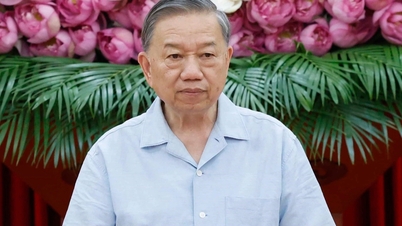
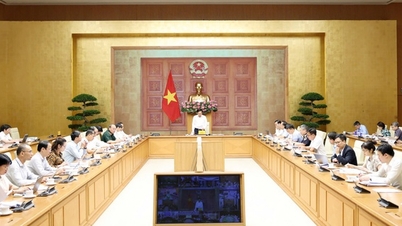
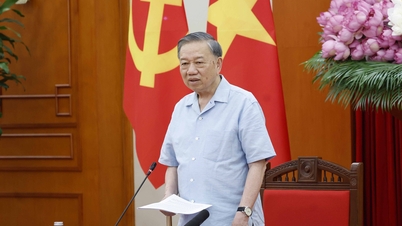
![[Photo] General Secretary and President To Lam presides over a meeting on preparations for the review of one year of operation of the three-tiered government system.](https://vphoto.vietnam.vn/thumb/1200x675/vietnam/resource/IMAGE/2026/06/02/1780391821195_a1-bnd-4595-9717-jpg.webp)





















































































Comment (0)