

Promoting sustainable digital transformation in education.
According to Mr. Nguyen Mai Trong, Principal of A Xing Primary and Secondary School (Lia Commune, Quang Tri Province ), the Ministry of Education and Training's implementation of digitizing all unified textbooks and building a shared, free digital learning resource ecosystem brings many practical benefits to schools, teachers, and students, especially in disadvantaged areas.
For schools, this is a crucial condition for accessing authentic, synchronized, and up-to-date learning materials, thereby improving the quality of management and teaching organization; at the same time, it reduces investment costs in paper learning materials, increases flexibility in combining in-person and online teaching, promotes digital transformation, and gradually forms a digital education environment.
For teachers, the digital learning resource ecosystem provides a rich source of resources for designing engaging lessons, innovating teaching methods and assessment; contributing to reducing the pressure of preparing learning materials, creating opportunities for sharing and learning professional experiences, and simultaneously enhancing their ability to apply information technology and digital skills.
For students, digital learning materials help them access diverse forms of learning such as text, images, videos , and interactive exercises, thereby increasing interest and learning effectiveness; supporting self-study anytime, anywhere, and contributing to narrowing the knowledge access gap between regions. In particular, this model is of great significance for ethnic minority students as it creates a more flexible, visual, and appropriate learning environment tailored to their specific circumstances.
Sharing the same view, Mr. Nguyen Van Hoang, Principal of Nguyen Hue High School (Hung Yen), stated that the Ministry of Education and Training's policy on digitizing textbooks and building a shared, free digital learning resource ecosystem is a major direction with strategic significance and brings many practical benefits to general education.
The digital learning resources ecosystem helps schools gradually modernize their teaching and learning activities, save on investment costs for learning materials, create a foundation for building a synchronized digital education environment, and thereby improve the efficiency of management and organization of teaching and learning in line with digital transformation.
Access to standardized, authoritative, and diverse learning resources such as text, images, videos, and interactive materials will support teachers in innovating teaching methods, testing, and assessment in a way that develops students' qualities and competencies; while reducing the pressure of creating fragmented and disjointed learning materials from scratch.
A wealth of free and easily accessible learning resources, available anytime and anywhere, helps students increase their opportunities for self-study and personalized learning, contributing to narrowing the knowledge access gap between regions, especially in disadvantaged areas.
Overall, this policy is expected to contribute to improving the quality of general education, ensuring equity in access to education, and promoting sustainable digital transformation in the education sector.
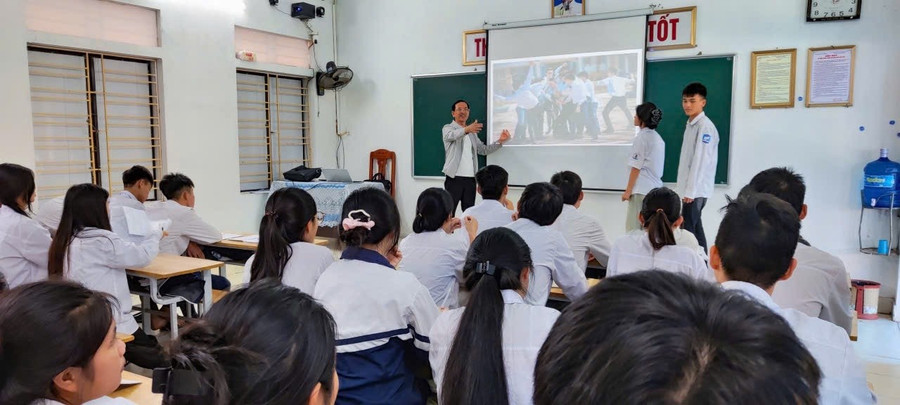
It is necessary to ensure that the conditions for implementation are met.
Offering her feedback, Ms. Dinh Thi Thuy, a teacher at Phenikaa Secondary and High School, suggested that the shared digital learning resource ecosystem in the future should focus on convenience, ease of use, a user-friendly interface, and aesthetics. The system needs to operate stably, avoiding network congestion when deployed simultaneously on a large scale.
Digital learning resources must be abundant, regularly updated, closely aligned with the new general education curriculum, and, most importantly, have a specialized and authoritative body to assess their quality. Learning resources should not only transmit knowledge but also contribute to shaping learners' awareness, behavior, and personality in the digital environment, ensuring both educational and humanistic values.
According to Mr. Nguyen Van Hoang, Principal of Nguyen Hue High School (Hung Yen), in order to proactively approach and effectively implement the policy of digitizing textbooks and building a shared digital learning resource ecosystem, schools need to implement many solutions simultaneously.
First, regarding infrastructure and technical conditions, it is necessary to gradually invest in and upgrade the information technology system, ensure stable Internet connectivity, and equip schools with minimum teaching equipment to access digital learning materials, in accordance with the actual conditions of each educational institution.
In parallel, the training of the teaching staff needs to be emphasized, especially improving teachers' digital skills, their ability to exploit, use, and integrate digital learning materials into lessons; encouraging teachers to innovate teaching methods and be flexible in organizing learning activities.
Regarding implementation, the school needs to develop a specific plan with a suitable roadmap; integrate the use of digital learning materials into professional development activities, classroom observation, and demonstration lessons, while also promoting the role of subject departments and core teaching staff.
Furthermore, management and guidance also play a crucial role, requiring schools to issue regulations and guidelines for the proper and effective use of digital learning materials, ensuring information security and compliance with copyright, ethics, and cultural regulations in the digital environment.
However, according to Mr. Hoang, the implementation of this policy may also encounter numerous difficulties and challenges.
This is due to the uneven infrastructure and equipment between schools and localities; a segment of students do not have full access to digital learning equipment. In addition, the digital skills of the teaching staff are uneven, and some teachers are still hesitant to change and are not yet familiar with teaching in a digital environment.
The large volume of learning materials, without proper guidance on how to utilize them, can lead to overload and confusion in selection and use. Furthermore, the requirements for information security, copyright protection, and content quality necessitate strict adherence to current regulations by schools and teachers.
"These are inevitable difficulties during the transition period and need to be viewed objectively in order to gradually overcome them," said Mr. Nguyen Van Hoang.
Source: https://giaoducthoidai.vn/ky-vong-vao-he-sinh-thai-hoc-lieu-so-dung-chung-post764771.html



![[Photo] Standing Committee member of the Party Central Committee Tran Cam Tu working with the Central Inspection Committee](https://vphoto.vietnam.vn/thumb/1200x675/vietnam/resource/IMAGE/2026/05/28/1779969579668_ndo_br_bnd-2495-jpg.webp)



















































































Comment (0)