

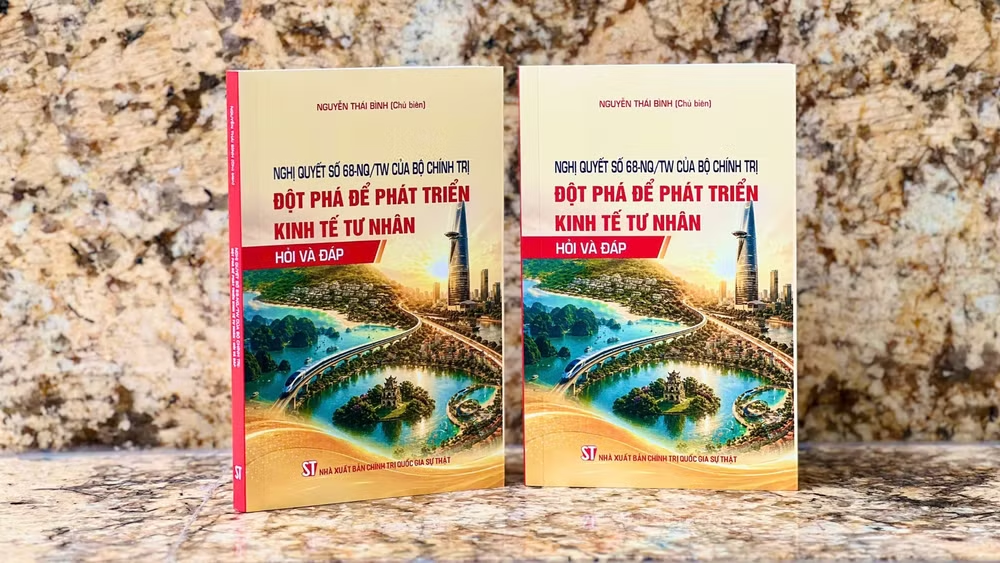
In the process of national renewal and international integration, the development of the private economy is not only an objective requirement of the socialist-oriented market economy but also one of the important driving forces promoting growth, innovation, and enhancing national competitiveness.
In response to practical demands, the Politburo's issuance of Resolution No. 68-NQ/TW, dated May 4, 2025, on the development of the private economy is considered a significant milestone in the Party's economic development thinking, as it for the first time affirmed that the private economy is "the most important driving force of the national economy."
In this context, the book " Resolution No. 68-NQ/TW of the Politburo: Breakthroughs for the Development of the Private Economy - Questions and Answers," published by the National Political Publishing House, has become a valuable document both theoretically and practically, contributing to helping cadres, Party members, the business community, and a wide readership better understand the Party's new policies on the development of the private economy in the new period.
The book's content reflects the strong innovative spirit of Resolution No. 68-NQ/TW through a system of 97 questions divided into three parts: General understanding of the private economy; Core content and breakthrough thinking in Resolution No. 68-NQ/TW of the Politburo; Mobilizing the participation of the entire political system in promoting the development of the private economy.
In particular, the book devotes a significant portion (50 questions) to core content related to the innovative thinking of the Resolution, as well as the system of solutions aimed at promoting the role of the private economy, giving readers a multifaceted view of one of the four breakthrough resolutions that ushered the country into a new era.
Instead of presenting highly theoretical arguments or using many difficult-to-understand technical terms, the editorial team (Nguyen Thai Binh as editor-in-chief) chose a question-and-answer format with short, direct questions addressing issues of public concern such as: What is the private economy? What is the role of the private economy in a socialist-oriented market economy? Why is Resolution 68 considered a breakthrough in thinking? What new mechanisms and policies will pave the way for the development of private enterprises?
This presentation style makes it easy for readers to follow, look up, and grasp the content, and is particularly suitable for grassroots officials, businesses, entrepreneurs, students, and a wide range of readers nationwide.
In the book, readers will also find information about new mechanisms and policies aimed at creating a favorable environment for the development of the private economy. From administrative procedure reform, ensuring property rights, supporting credit, developing capital markets to encouraging businesses to invest in high technology, digital transformation, green transformation, etc., everything is presented clearly and easily understandable. Through this, readers can clearly see the spirit of accompanying and fostering development of the State towards businesses and entrepreneurs in the new era.
The analyses of opportunities, challenges, requirements for management innovation, enhancing competitiveness, and participation in global supply chains are highly practical, making the book a valuable reference for the business community.
With its moderate length yet comprehensive coverage of an important resolution, this book is not only a resource for studying and understanding the resolution but also a useful guide to help readers better understand the current development landscape of Vietnam's private economy. At the same time, the book contributes to inspiring confidence, aspirations, and motivation for development within the private business community – a force expected to become one of the key pillars driving the country's rapid and sustainable development in the new era.
Source: https://nhandan.vn/lam-ro-tu-duy-dot-phat-trien-kinh-te-tu-nhan-tu-nghi-quyet-68-post964614.html




![[Photo] First session of the 14th Congress of the Vietnam Trade Union](https://vphoto.vietnam.vn/thumb/1200x675/vietnam/resource/IMAGE/2026/06/03/1780465947883_ndo_br_img-3852-jpg.webp)












































![[Video] Sunset at Lap An Lagoon – Where the sun sets over the fishing nets](https://vphoto.vietnam.vn/thumb/1200x675/vietnam/resource/IMAGE/2026/05/31/1780192137701_beach-landscape-sea-water-nature-grass-745871-pxhere-com.jpeg)
































Comment (0)