

A century-old fish sauce village
Earlier this year, Binh Dinh province put into use a coastal road over 100 km long connecting Quy Nhon city to Hoai Nhon town. This road passes through coastal fishing villages and pristine landscapes, with beautiful beaches that many people love. Among them, De Gi fishing village is a stop that leaves a lasting impression on many tourists.
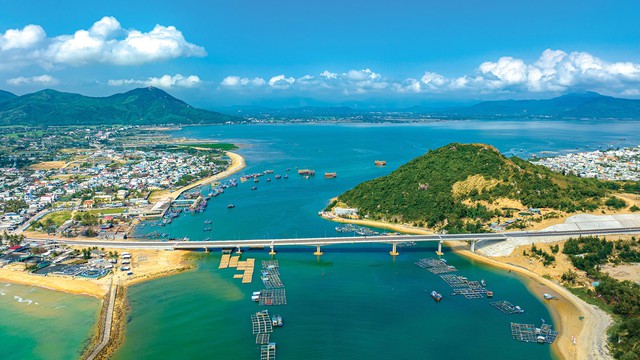
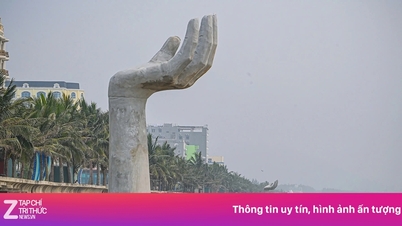
De Gi Sea Bridge
Many elders in the De Gi fishing village recount that, several hundred years ago, a high-ranking official of the Le dynasty, having offended the Trinh lord, fled south and established the De Gi fishing village. The De Gi saltwater lagoon, located nearby, has been the source of livelihood for the villagers for centuries through fishing and aquaculture. Salt production and fish sauce making also developed during the village's establishment.
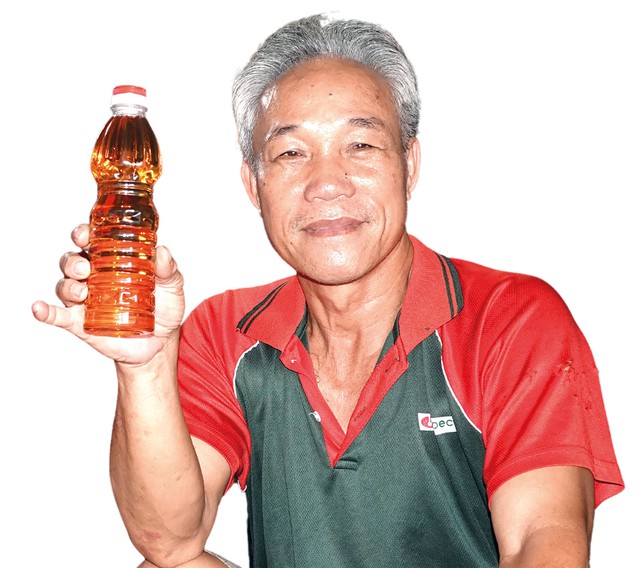
Mr. Do Thanh Truc talks about the traditional fish sauce making craft in De Gi.
Now, many families living near the De Gi lagoon still maintain the traditional craft of making fish sauce, passed down through 3 or 4 generations. Mr. Do Thanh Truc (67 years old, from An Quang Tay village) said that his family has a long tradition of making fish sauce, and the secret to retaining customers is that the fish sauce must be clean and of guaranteed quality. The raw fish used to make the fish sauce must be fresh, washed clean, and drained. Depending on the size of the anchovies, the salt is used in a ratio of three parts fish to one part salt, or three and a half parts fish to one part salt. When salting the fish, the fish and salt must be mixed thoroughly, then put into jars or containers, sealed tightly, and fermented for over 6 months to a year. Each month, Mr. Truc's family sells about 500-700 liters of fish sauce.
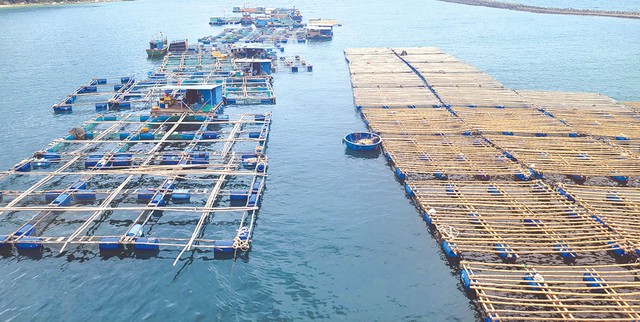
Aquaculture area at the foot of the De Gi sea bridge.
According to Mr. Nguyen Huu Du, head of An Quang Tay village, the village has about 650 households, of which more than 200 households make traditional fish sauce, while the remaining households mainly work in fishing and aquaculture in the sea and De Gi lagoon. Although it's also anchovy fish sauce, De Gi fish sauce always has a slightly stronger aroma than fish sauce from other villages. This may be because De Gi salt is saltier, the anchovies caught in De Gi are fresher, and they are transported to the fish sauce makers within a very short time.
Mr. Nguyen Trung Hieu, Vice Chairman of the People's Committee of Cat Khanh commune, said that the traditional fish sauce making village of De Gi was recognized by the People's Committee of Binh Dinh province in 2016. In 2017, the village was awarded a trademark certificate for De Gi fish sauce by the Intellectual Property Office (Ministry of Science and Technology). Currently, about 312 households in the two hamlets of An Quang Dong and An Quang Tay make fish sauce using traditional methods. On average, the De Gi fish sauce making village sells about 100,000 liters of fish sauce to the market each year.
Developing tourism cities and marine economic services.
According to Mr. Nguyen Trung Hieu, the De Gi lagoon area has much untapped tourism potential. De Gi is famous for its specialties, such as sour fish, grouper, snapper, blood cockles, blood eels, crabs, etc. In particular, the scad fish salad in De Gi is very delicious. Decades ago, in his book "The Landscape of Binh Dinh ," the poet Quach Tan remarked that De Gi lagoon has a lot of fish, more than other lagoons. The fish is also tastier than all other lagoons, and the best is the fish used in salads.
In the middle of the De Gi lagoon lies Vung Boi, likened to a small oasis, a place where many people come to experience life on a deserted island with activities such as: fishing, swimming, snorkeling, camping and having bonfires all night, paddleboarding… In the early morning, you can watch the sunrise at Hon Lang, located right in the middle of the De Gi estuary, visit the De Gi fishing port, stroll through the seaside village, visit the ancient Thanh Hoang Temple, the Nam Hai Mausoleum, and explore the De Gi fish sauce making village…
Since the construction of the coastal road and the De Gi sea bridge (connecting the eastern communes of Phu Cat and Phu My districts), many families in De Gi have developed food and beverage services to cater to tourists. The number of tourists visiting De Gi for sightseeing, swimming, and enjoying seafood has also increased. Some families have organized tours for tourists to visit, fish, and enjoy seafood in the De Gi lagoon. Many investors have come to Cat Khanh commune to explore investment opportunities in the fields of commerce, urban development, and coastal tourism.
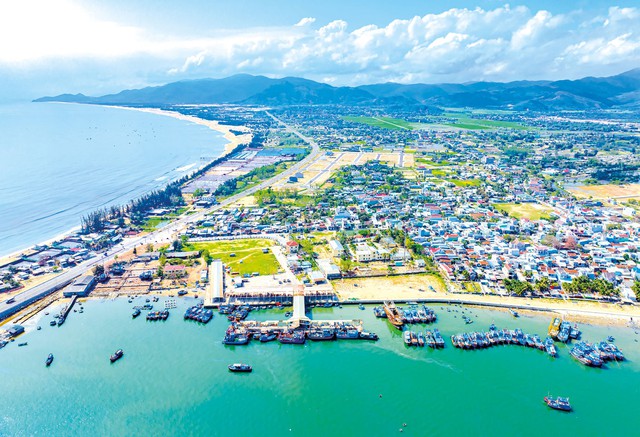
De Gi fishing village
The People's Committee of Cat Khanh commune has planned and called for investment in the fields of commerce, services, tourism, etc. Currently, the People's Committee of Binh Dinh province has approved the planning of the An Quang urban and tourism area project (Cat Khanh commune), covering 89.2 hectares with a total investment of 5,228 billion VND, and assigned the People's Committee of Phu Cat district to coordinate with the investor to carry out land clearance work.
"The Chairman of the People's Committee of Binh Dinh province has approved the plan to establish Cat Khanh town. In this plan, Cat Khanh commune is oriented towards developing into a tourism and service center for the marine economy, linked with seafood processing and tourism and service development... Strong development of various service sectors will boost production and development, aiming to shift the town's economic structure. People will be encouraged to expand their service businesses, especially in densely populated areas such as An Quang Tay, An Quang Dong, Thang Kien, and Ngai An; developing Dong Lam market, De Gi market, and De Gi fishing port to supply consumer goods to the people, as well as to market agricultural and seafood products and other products produced by the people...", said Mr. Nguyen Trung Hieu.
The saltwater lagoon is called Danshui (freshwater).
De Gi Lagoon, covering over 2,000 hectares, is surrounded by five communes: Cat Khanh and Cat Minh (Phu Cat District) and My Cat, My Chanh, and My Thanh (Phu My District, Binh Dinh Province). To the north of De Gi Lagoon is Lac Phung Mountain (Phu My District), to the south is Ba Mountain, to the west is the La Tinh River basin with its small freshwater rivers, and to the east is Bach Sa Cave.
Although De Gi is a saltwater lagoon, historical texts, including Dai Nam Nhat Thong Chi, record it as Dam Thuy lagoon (freshwater). According to folk legends recorded in Quach Tan's book "Nuoc Non Binh Dinh," the name Dam Thuy is related to King Gia Long of the Nguyen dynasty.
When Lord Nguyen Dinh Vuong was attacked by Lord Trinh in the north and the Tay Son army in the south, he and his grandson Nguyen Anh (who later ascended the throne and took the regnal name Gia Long) boarded a boat to flee to Gia Dinh. Due to lack of preparation, halfway through their journey, the entire group became thirsty and had to stop at Bach Sa cave. However, surrounded by saltwater, and fearing encountering the Tay Son army upon reaching the village, Nguyen Anh looked up to the sky and prayed: "If Heaven has not yet overthrown the Nguyen dynasty, please grant us fresh water." As soon as he finished speaking, Nguyen Anh ordered his troops to dig deep into the sand cave, and fresh water gushed forth. Therefore, the lagoon was named Dam Thuy (meaning Fresh Water).
Source link


![[Photo] Prime Minister Pham Minh Chinh attends the Conference on the Implementation of Tasks for 2026 of Vietnam Television.](/_next/image?url=https%3A%2F%2Fvphoto.vietnam.vn%2Fthumb%2F1200x675%2Fvietnam%2Fresource%2FIMAGE%2F2026%2F01%2F10%2F1768047311329_ndo_br_dsc-3214-jpg.webp&w=3840&q=75)





























![[Infographics] Resolution No. 79-NQ/TW of the Politburo on the development of the state-owned economy](https://vphoto.vietnam.vn/thumb/402x226/vietnam/resource/IMAGE/2026/01/10/1768038914679_chp_3-11-23.jpeg)





























Comment (0)