

Recently, a colleague gave me a book with lots of interesting information about a purely agricultural village on Phu Quy Island. Phu My Village - one of the nine villages on Phu Quy Island in the year Ky Dau (1909).
Prior to the aforementioned period, Phu Quy had 12 villages. Due to insufficient numbers of able-bodied men, the authorities allowed a merger, with Phu Ninh and My Xuyen villages combining to form Phu My. Currently, Phu My and An Hoa villages are combined to form Phu An hamlet, belonging to Ngu Phung commune.
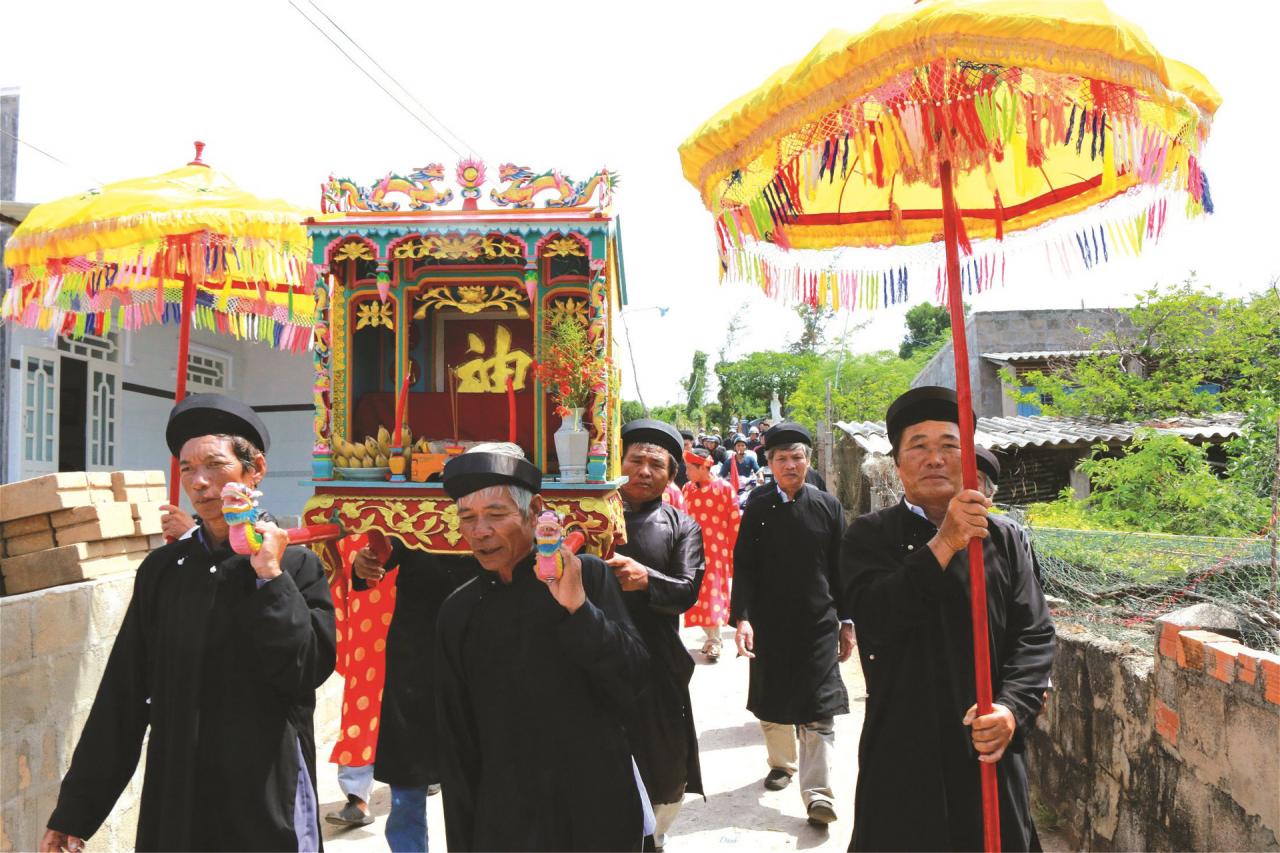
In the introduction, the authors state: “In each of us, no matter where we live or work, our hearts always remember our birthplace… It is regrettable that throughout history, our ancestors who pioneered and developed this land did not write down its history… Therefore, their descendants wish to find the village's written records and places of worship.” And since 1993, they have been collecting stories and legends, leading to the publication of this book.
Structurally, the book is divided into four sections. The first section clearly indicates the geographical location and boundaries. Phu My village is located on an inter-communal road, with an area of 40,000 m², bordered as follows: To the east by the sea of Coi hamlet (Phu Long village), to the north and west by Long Hai commune, and to the south by An Hoa village (Phu An hamlet, Ngu Phung commune).
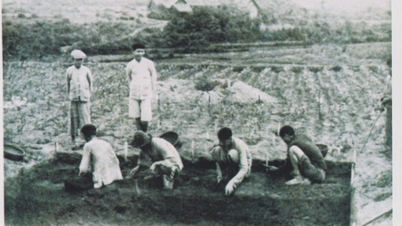
From the early days of the merger (February 25, 1909), Phu My village had a population of about 200 people, living mainly by farming, livestock breeding, and fishing with nets along the riverbanks; life was very difficult.
Secondly, regarding religious beliefs, despite economic difficulties, the entire population, driven by their faith and reverence for the deities, unanimously joined hands to build temples, shrines, and mausoleums for worship.

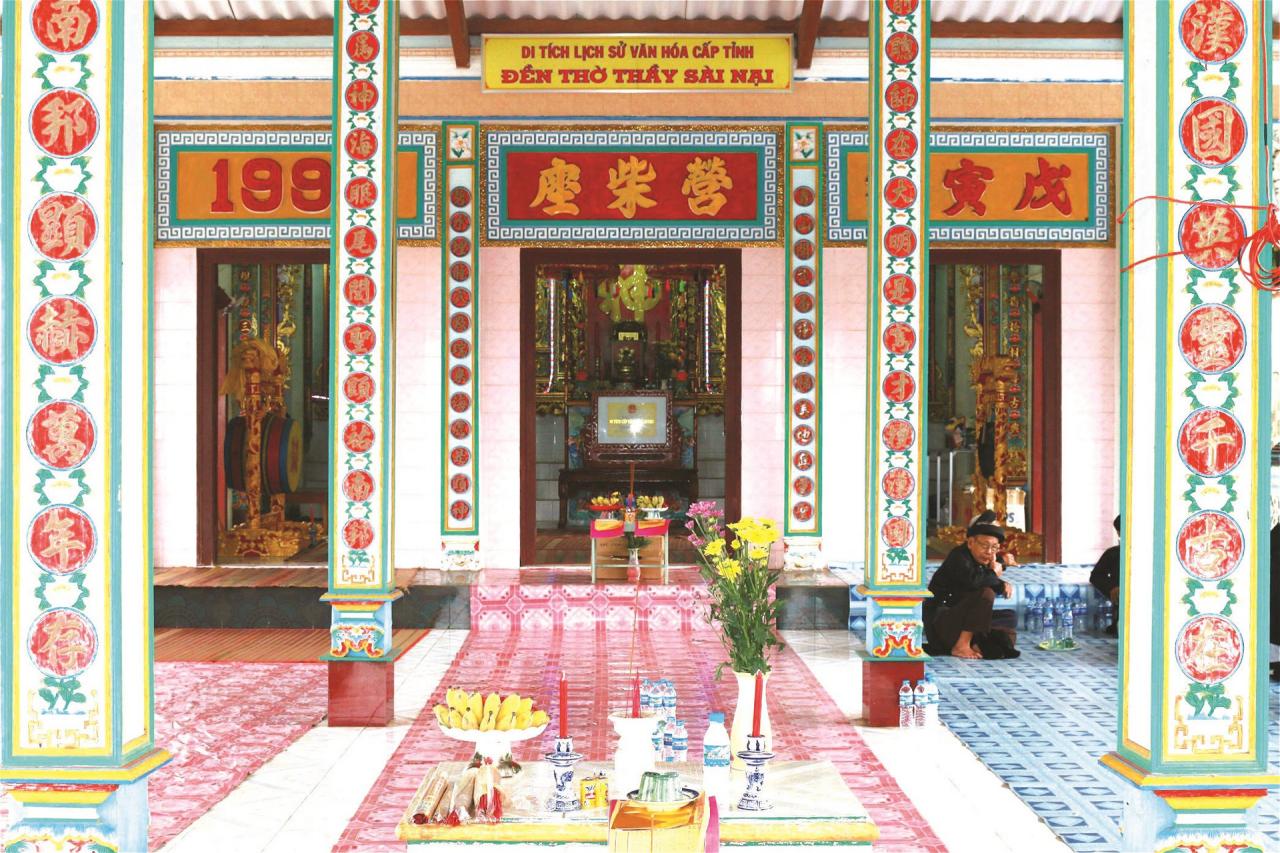
According to statistics, Phu My village has five folk religious sites, including: a shrine dedicated to the White Horse Eunuch deity, a mausoleum dedicated to the South Sea god, a shrine dedicated to Master Nai, a communal house dedicated to the King of Heaven, a shrine dedicated to Quan Cong, and a Buddhist temple. Notably, the stories behind the establishment of these religious sites contain many interesting details, such as the following account of the construction of Master Nai's shrine.
One morning, while the children were playing hide-and-seek at Bau Bung, a young boy suddenly appeared, possessed by a spirit, claiming to be Master Nai. This left the villagers bewildered and skeptical, so they invited him back to the village for questioning. Upon arriving at the village entrance, the boy revealed that he was Master Nai, whose tomb was located on a promontory jutting out into the sea (today the area of Master Nai's tomb, in Long Hai commune). Seeing the people on the island's faith, he wanted to use his spirit to guide the villagers, saying: "If you agree to build a shrine in my honor, I will protect your village, ensuring your health and well-being, and bringing peace and prosperity to the nation."
The villagers were delighted to hear this and earnestly requested the master to show them where they could build a shrine. As soon as they finished speaking, the young boy led them to the place the master had chosen (the present-day shrine of Master Nai). However, the land intended for the shrine had a very large banyan tree, so big that it would take four people to encircle it. Because the banyan tree's trunk stood in the center of the chosen shrine site (locally known as the heart of the shrine), it needed to be moved. Young men from the twelve villages (before the merger) were mobilized to clear the surrounding area, but the banyan tree's trunk could not be uprooted, causing everyone distress. Suddenly, a young boy possessed by a spirit ran up, claiming to be Master Nai, and asked the villagers to prepare offerings (porridge, sugarcane, incense, candles, etc.) for him to feed the spirits. After the spirits had consumed the offerings, they would help him uproot the large banyan tree.
An altar was set up with offerings, and after the prayers were finished, the boy stood up, picked up the banyan tree, and carried it away. A shrine was built using bamboo and thatch, with earthen walls. After many renovations, the shrine of Master Sai Nai is now as spacious as it is today. With its typical tangible and intangible cultural values of the locality, on September 7, 2010, the People's Committee of Binh Thuan province recognized the Sai Nai Shrine as a provincial-level historical and cultural relic according to Decision No. 1993/QD-UBND.
Until now, when discussing folk beliefs on Phu Quy Island, people usually only mentioned the worship of the God of the South Sea, the worship of Master Nai, Ban Tranh, etc., but few people mentioned the worship of Quan Cong (Quan Thanh De Quan). Now, thanks to this book, we have a clearer understanding.
According to the authors Nguyen Huu Phuong, the idea of establishing a temple dedicated to Quan Thanh (also known as Ong Pagoda, or Quan Linh Temple in Chinese characters) originated from Chief Bui Quang Gieo. At that time, he personally discussed the matter with the village's ceremonial committee to raise funds for the temple's construction. However, due to difficult economic conditions, the village could not afford it. Therefore, Chief Bui promised that if the village agreed, his family would lend the capital for the temple's construction. The remaining amount would be repaid through loans from the villagers, gradually repaid when the village was able to.

Before constructing the pagoda, Mr. Bui Quang Gieo personally went to the imperial capital of Hue to contract with builders and choose the style (like Tu Dam Pagoda). The three statues of Quan Cong, Quan Binh, and Chau Thuong were also cast on this occasion (at 0:00 on November 3rd, 1912). In 1914, the groundbreaking ceremony took place, and in 1917, the pagoda was completed. The villagers of Phu My held a ceremony to celebrate the arrival of Quan Cong as a Buddhist monk.
Sections 3-4-5-6 list the village chiefs throughout different periods, the renovations of the temples, the list of district chiefs throughout historical periods, and the development of education using the national script on the island.
"The Chronicle of Phu My Village Through the Ages" primarily recounts the stories of its temples and shrines, imbued with mystical legends. However, driven by pride in their homeland's historical and cultural traditions, the authors, led by Nguyen Huu Phuong, have painstakingly compiled and edited this book to preserve the memories of their village, along with some valuable historical information. While some limitations remain, the book initially helps young people better understand the roots of local culture and history. It also serves as a useful reference for exploring the rich folklore of this beautiful island.
Source































![[Video] Sunset at Lap An Lagoon – Where the sun sets over the fishing nets](https://vphoto.vietnam.vn/thumb/1200x675/vietnam/resource/IMAGE/2026/05/31/1780192137701_beach-landscape-sea-water-nature-grass-745871-pxhere-com.jpeg)



















Comment (0)